The Grey family, originally from Northumberland, are a consistent feature of English history from the Southampton plot of 1415 to Monmouth’s rebellion nearly three centuries later.

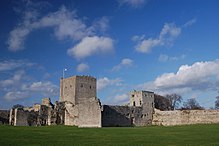
Sir Thomas Grey (1384-1415) of Castle Heaton was a soldier and one of the three principals in the Southampton plot against Henry V, revealed to him by Edmund Mortimer, 5th Earl of March, at Portchester Castle. His connection to the House of York was that a marriage had been arranged between his son and Isabel, the (very) young daughter of Richard of Conisbrough, Earl of Cambridge. The betrothal was cancelled as one of the consequences of the plot’s failure. It may have been related to Grey’s purchase of the Yorkist lordship of Tyndale. (The sale of which demonstrates how relatively hard-up the second Duke of York was at this time.)
Sir John Grey of Groby (1432-61) was the son of Edward Grey, Baron Ferrers of Groby and a grandson of the third Baron Grey of Ruthin . Married to Elizabeth Wydeville, by whom he had two sons, he fought for Henry VI at the Second Battle of St. Albans and was killed there.


Lady Jane Grey (1537-54) was the daughter of Henry Grey, who had become Duke of Suffolk on his marriage to Frances Brandon, Henry being Sir John’s

great-grandson. Edward VI had named Jane as his heir and her father, together with John Dudley, Duke of Northumberland and Archbishop Cranmer sought to implement this on  Edward’s 1553 death, contrary to Henry VIII’s succession legislation. She married Northumberland’s son Lord Guildford Dudley and planned to create him Duke of Clarence but their coup was thwarted and the principals imprisoned. Wyatt rose in early 1554, apparently in favour of the Grey-Dudley faction, so Jane, her husband, father and father-in-law were beheaded close to the St. Albans anniversary. This “Streatham portrait” is possibly a retrospective of Jane, having been painted years after her death. She was also the great-niece of Viscount Grane, formerly Deputy of Ireland, who was beheaded in July 1541.

Ford Grey, Earl of Tankerville (1655-1701) was also Viscount Glendale and Baron Grey of Werke. As a veteran of the Rye House Plot, he escaped from the Tower and joined the Duke of Monmouth in exile before joining the Duke’s rebellion two years later. At Sedgemoor, he led the rebel cavalry but was captured, whereupon he gave evidence against his co-commanders and his attainder was reversed in 1686. Within another nine years, he was appointed to William III’s Privy Council and served in several other offices.

This genealogy connects Sir Thomas to Henry Grey Duke of Suffolk, Lady Jane Grey’s father, through his Mowbray brother-in-law. This shows Tankerville’s male line descent from Sir Thomas’ grandfather.


Subscribe to my newsletter

  1. I suggested a look in the north east archives for any facts about the Grey family to the “missing princes project” as they are a prominent Northumberland family. The wife of the owner of Chillingham Castle is a “Grey” and many streets and monuments in Newcastle are named after them. I was told however they think it is a different branch

    Like

    1. There may well be a connection. After all, some people didn’t think that Robert Catesby was William’s descendant, just a cousin from a different branch.

      Like

  2. […] can be connected to these Greys. This chart for his great-grandfather, John Grey of Howick, shows him to be descended from the Sir […]

    Like

  3. “The Grey family, originally from Northumberland”. I understood the Grey family were originally from Grays in Essex; a John Grey born 1140? Happy to be corrected:

    http://www.thehistorydatabase.com/PFAMILYTREES/ENGLAND/GREY.HTML

    I have the last Grey, 23 generations later, as Roger Grey, 10th Earl of Stamford, who died in 1976:

    http://www.thehistorydatabase.com/PFAMILYTREES/ENGLAND/GREY.HTML#Roger Grey 10th Earl Stamford 1896-1976

    Like

    1. They may or not be related but these Greys have a centuries-long connection with Northumbria.

      Like

  4. […] but, by the early sixteenth century, this had passed to Henry Grey, Duke of Suffolk, father of Jane (below […]

    Like

  5. […] Television history is rarely focused upon Anne (left), except as the final act of the Stuart drama like this or her unfortunate reproductive history in this series. Discussion is, therefore, reduced to the cliches of her fragile family, her weight and her fondness for brandy. She is also omitted from most dramatisations of the time, such as Lorna Doone or By the Sword Divided. Anne was the first Queen Regnant of England to have given birth, albeit through the reigns of her uncle, father, sister and brother-in-law but not her own. She was also the first Queen Regnant of England to be widowed, (except by a few minutes). […]

    Like

  6. […] Bishop of London and Westminster, on 9 July 1553 about Henry VIII’s daughters, at which time Jane was proclaimed. As we know, Ridley (b.c.1500), together with Hugh Latimer, Bishop of Worcester, was […]

    Like

  7. […] six miles north-west of Leicester was Bradgate House, the childhood home of Lady Jane Grey, ostensibly the subject of the Streatham Portrait. The second episode of this year’s series, […]

    Like

  8. […] In the 1960s the parts that had survived the centuries were in use as a hotel and perhaps the rooms used by John and Elizabeth deployed as rooms for paying guests.  Alas in 1978 a disastrous fire took hold and Astley, reduced to a shell , was abandoned.  Various proposals to rebuild proved to be too financially prohibitive and the ruins were declared a Scheduled Ancient Monument.  However in 2005 the Landmark Trust came forward with a solution and what was left of Astley was saved by the novel idea of building and incorporating modern accommodation within the ruinous walls.  Astley arose, like a Phoenix out of the flames, as they say, and today its possible to stay in what was once the marital home of the Greys. […]

    Like

  9. […] of those that lived in the castle are well known such as Queen Catherine Parr and the unfortunate Lady Jane Grey.  Their stories are well documented elsewhere and I won’t touch upon them here as I want to […]

    Like

  10. […] of those that lived in the castle are well known such as Queen Catherine Parr and the unfortunate Lady Jane Grey.  Their stories are well documented elsewhere and I won’t touch upon them here as I want to […]

    Like

  11. […] Lord Guildford Dudley, husband of the short-reigning Jane (Grey) can get a mention as  ‘disputed’ on the Wiki entry about Consorts, Eleanor, I […]

    Like

  12. […] “Streatham portrait“, which post-dates it’s purported subject’s death by about forty years. From the spelling of the title, the background is evidently Plymouth Colony […]

    Like

  13. […] castle has a pretty interesting history back from the 12th century, but the Greys during the Wars of the Roses are of particular interest. Henry Grey, 4th Baron Grey, was an […]

    Like

  14. […] Earl of Leicester who was imprisoned with his brothers  after his father’s plot to put Lady Jane Grey, his daughter in law,  on the throne went pear shaped.     The Dudley graffiti which  is […]

    Like

  15. […] wish I had a pound for every word written about the executions of Hastings, Rivers, Grey and Vaughan at the hands of Richard III. I should certainly be able to expand my portfolio of […]

    Like

  16. […] second was principally about the penultimate “Tudor”, Mary I, as well as Edward VI and Jane, who Lipscomb reckons as rightly belonging among our monarchs and with a slightly longer reign (by […]

    Like

  17. […] as you read this, being erroneously identified regularly in books and online article/searches as Lady Jane Grey or even Mary […]

    Like

  18. […] in the failure of Edward VI and his half-sisters to reproduce, left the throne to the Brandon/ Grey descendants of his sister Mary ahead of the Stewart descendants of his sister Margaret, who did […]

    Like

  19. […] beforehand. Of course, the family in question may have fared differently anyway if Lady Katherine Grey, her Seymour husband, and son and Arbella Stuart, the latter’s wife, had not been imprisoned, […]

    Like

  20. […] we ignore Lady Jane Grey, then the monarch with probably theshortest reign was Edward V. (Right now I can’t think of […]

    Like

  21. […] Richard makes it to third place, with Edward V in second. But both are eclipsed by the unfortunate Lady Jane Grey, who was beheaded by the Tudors. Where is the outcry against this crime? Hmm…the Tudors are […]

    Like

  22. […] his quarrel with Reginald, Lord Grey de Ruthin, now flared. The details are elusive, but it seems to Grey disputed the ownership of part of […]

    Like

  23. […] 1402, Owain made two important captures. First, his old enemy, Grey de Ruthin. Grey was released after payment of a large ransom. Then, after the Welsh victory at the Battle of […]

    Like

  24. […] here, Richard II was starved to death (probably) in its rancid dungeons, and Anthony Woodville and Sir Richard Grey were executed here for treason in […]

    Like

  25. […] is said to have been one of those instrumental in establishing Lady Jane Grey as Queen. However, this backfired badly. Queen Mary did not execute Parr and his lady – no […]

    Like

  26. […] persuades him to omit his illegitimate half-sisters from the succession in favour of Lady Jane Grey. There is a large shadow over the royal court in the shape of a portly deceased […]

    Like

  27. […] useful account of the murder can be found here. It appears that Lord Grey of Ruthin was involved since his men were part of the […]

    Like

  28. […] of all the later Howard dukes, down to the present day. After Howard’s death, she married Sir John Grey KG of Ruthin, who, confusingly, had a brother also called John. The one with the KG was […]

    Like

  29. […] is, with many thanks to Tony Riches. Uncrowned features claimants from several centuries, including Jane, Edward V, Edward the Black Prince and Henry Frederick […]

    Like

  30. […] Sir Thomas the poet (left) was his son, who managed to offend Henry VIII, but not fatally, whilst his son’s rebellion pressaged the end of the Greys. Much later, Wallis Warfield is one of their […]

    Like

  31. […] Grey was the father of the ill-fated Lady Jane Grey, the Nine Days’ Queen. A great grandson of Elizabeth Woodville, through her son , Thomas, […]

    Like

Leave a reply to THE MYSTERY OF HENRY GREY, DUKE OF SUFFOLK’S HEAD – murreyandblue Cancel reply