This very good blog post details the career and planned future of Henry Fitzroy, Duke of Richmond, who might have succeeded Henry VIII had he not died suddenly at seventeen and a legitimate half-brother been born a year and a quarterlater. It also states his original and current burial places, the latter being St. Michael’s Church, Framlingham, together with his wife, Lady Mary Howard
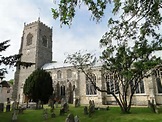
framlingham

Henry Fitzroy, whose mother was Elizabeth Blount, is one of the few adults in the disputed male line from Katherine de Valois’ widowhood. Her sons from this relationship(/s) were Edmund and Jasper, surnamed either Beaufort or Tudor, the second dying without issue in 1495. Edmund had only one son, later Henry VII. He had several sons – some died in infancy and Arthur as a teenager without issue in 1502, leaving Henry VIII. Henry Fitzroy and Edward VI were Henry VIII’s only sons not to die in infancy. That leaves seven men, five of whom are guaranteed to share a Y-chromosome, plus Fitzroy and Jasper, just in case their mothers’ private lives were even more complicated.

We also know precisely where to find Owain, the last proven Tudor – somewhere within the pre-Reformation bounds of Hereford Cathedral. So the evidence to test John Ashdown-Hill’s theory is definitely at hand.

The other point to remember is that the earldom of Richmond was under attainder from 1471-85, so the future Henry VII did not hold it until he “unattainted” himself after Bosworth.


Subscribe to my newsletter

25 responses to “Where to find that “Tudor” Y-chromosome?”

  1. McArthur, Richard P. Avatar
    McArthur, Richard P.

    What is the ground for saying Henry Fitzroy’s illegitimacy would have been set aside had he lived and Edward not been born?

    Like

    1. This is widely reported.

      Like

    2. I’m not sure that Henry would have legitimized Fitzroy, but he would have tried to give him the throne — if he had lived and there was no Edward. Parliament gave Henry the right to leave the crown by will to whomever he pleased after he had bastardized both his daughters. Henry would have left the crown to Fitzroy, since (as far as he was concerned) the male bastard had a better claim than did the two female bastards.

      Like

  2. Reference for Henry Tudor’s attainder before 1483?

    Like

    1. The Complete Peerage states that Owen Tudor was attainted in 1461, following his execution. Therefore:
      1) If Henry was his grandson, as was officially the case, this would have affected him, depriving him of titles, property and the right to inherit either through Owain.
      2) If Henry wasn’t his grandson, as seems more likely in the light of Harriss, Field and Ashdown-Hill’s research, he wouldn’t be affected by the attainder but couldn’t inherit anything from Owain.

      However, Henry was probably attainted in person, along with Jasper, a decade later.

      Liked by 1 person

      1. Exactly, you have proved my point. An act of attainder did not attach to a title, but to a person – taking that person’s rights including the rights to land and titles, including the right to pass those on to their heirs. However, Henry inherited nothing from or through Owen.
        The title was created for his father, Edmund so Henry (a small boy) was not affected by the attainder of his grandfather.
        The title was deemed forfeit and he was placed in a safe household.
        If Henry was an attainted man, why repeat it in 1483?

        Like

      2. Henry was, as pointed out, attainted in person in 1471 and thus could have no titles, property or claim thereto in England.
        It was obviously repeated in 1483 because a general attainder upon certain of his followers but omitting the man himself would have sounded strange.

        Liked by 1 person

      1. The cases of the Woodville and alleged Talbot marriages are different. The Woodville one was witnessed.

        The Lateran forbade priests from officiating in ‘three-handed’ weddings – that is, those where only the bride, groom and priest were present. According to Commynes, this is exactly the type of service Stillington claimed to have performed.

        Like

      2. There is no difference at all. It is quite easy to persuade a “bride”‘s mother etc to claim to have attended.
        You are changing your story, which is characteristic of fiction writing, in that you claimed the Lateran Council to have banned all secret marriages. They discouraged them but recognised many such cases, as we have detailed.

        Like

      3. FWIW, this is a link to the actual canons of the Lateran Council of 1215. Canon 51 is the one that deals with secret marriages:

        https://sourcebooks.fordham.edu/basis/lateran4.asp

        The first sentences of this canon read: “Since the prohibition of the conjugal union in the three last degrees has been revoked, we wish that it be strictly observed in the other degrees. Whence, following in the footsteps of our predecessors, we absolutely forbid clandestine marriages; and we forbid also that a priest presume to witness such. Wherefore, extending to other localities generally the particular custom that prevails in some, we decree that when marriages are to be contracted they must be announced publicly in the churches by the priests during a suitable and fixed time, so that if legitimate impediments exist, they may be made known.”

        IMO, this would apply equally to the Talbot and to the Woodville marriages.

        Like

      4. So either both of Edward IV’s ceremonies were valid or both invalid, making the second invalid because it overlapped the first? He was either a bigamist or a bachelor, as we said.
        This “have my cake and eat it” policy is typical of the Cairo dwellers and goes back to Henry VII himself, if not further:
        “The youth calling himself Richard Duke of York is a Flemish boatman’s son and thus not an English subject” AND “That youth is convicted of treason, which is only legally possible if he is an English subject”.

        Liked by 1 person

  3. This is where I feel that the traditional arguments are circular. There is the claim that Richard and stillington lied about the whole marriage and only picked Eleanor Talbot because she was dead and could not refute it.
    A very good case against this is why in the world would they botch the whole thing so badly. stillington was a canon lawyer and he would have KNOWN he had to have a witness. How much effort would it have been to bribe a servant to say they had been there. WHY would stillington therefore tell the council he had been the only one there.
    It is the same as saying that the boys were legitimate because she died in 1468. Again why choose her? What on earth did stillington and Richard talk about in the three days they were planning this subterfuge…….the weather

    Like

    1. Henry VIII was another inconsistent one. “Anne Boleyn is guilty of high treason because she was married to me and committed adultery. ” Then, instead of divorcing her , he annulled the marriage, as though it had never happened, cancelling her guilt at the same time. No wonder the Cairo dwellers like the “Tudors “, because they behave the same way.

      Liked by 1 person

      1. PS On behalf of the editors, we firmly deny inventing “David” to post counter-productive “Aunt Sally” comments.

        Like

  4. […] for an opportunity to do this literally and test the theory that Harriss, Fields, Ashdown-Hill and even Dan Jones have expounded, with […]

    Like

  5. […] with Owen Tudor, founder of the Tudor dynasty (unless Owen was not the father of the eldest, Edmund as has been hypothesised). In any case, it does not appear Charles’ unfortunate medical condition was passed to any of […]

    Like

  6. […] a correllation in a distant relative. So it is possible with Richmond too. A skilled examination of his remains would not only identify them as his or not but if it was then probably clear up the cause of his […]

    Like

  7. […] 1471 Roger was captured by Jasper Tudor and executed (without any legal justification) at Chepstow. It becomes clear why the Vaughans were […]

    Like

  8. […] 1453 he was Warwick‘s Sheriff of Glamorgan, and also in receipt of an annuity from Edmund Tudor, Earl of Richmond. Clearly, he was already influential in much of Wales. In 1455, he, with his […]

    Like

  9. […] prove who was Edmund Tudor’s father, however I would suggest that if Ancestry had been providing DNA tests in the 15th century they might have discovered that Edmund and Jasper didn’t have any Welsh […]

    Like

  10. […] of the whole series; the hunt for a lost Tudor royal. Why would I be so interested in a lost Tudor? Ah, read on and all will be […]

    Like

  11. […]  days before William Snrs execution Henry VII  appointed a commission, on 8 February 1495, under Arthur, Prince of Wales, ‘to enquire of the lands and possessions in North Wales and the marches thereof, and the […]

    Like

  12. Amber Goldsmith Avatar
    Amber Goldsmith

    What about the Earls of Huntingdon? Per Wikipedia:

    “Francis Hastings was born in 1514 at Ashby de la Zouch Castle in Ashby-de-la-Zouch, Leicestershire. He was tutored by John Leland during his youth. His mother, Anne Stafford, Countess of Huntingdon, had an affair with King Henry VIII in 1510, [just after Henry’s accession to the throne in 1509], the discovery of which led her husband to remove her to a convent, and her brother to leave court in a rage.

    As late as 1513, Anne was the courtier who received the second most expensive New Year’s gift from Henry, indicating that their relationship continued until then, [as well as possibly their affair]. However, there are no contemporary references to the possibility of Francis being an illegitimate son of the Tudor monarch.

    His father – George Hastings, 3rd Baron Hastings – was created the first Earl of Huntingdon by Henry VIII of England on 3 November 1529, with Francis becoming the 2nd Earl of Huntingdon upon his death in 1544. He was awarded stewardship over two abbeys in 1530.”

    The Earls of Huntingdon have an unbroken male line from Francis Hastings, 2nd Earl of Huntingdon, to the current Earl: William Hastings-Bass, 17th Earl of Huntingdon (b. 1948). If the Earl of Huntingdon is willing to provide a DNA sample, it could be compared to other samples for the Tudor Y-chromosome.

    Like

Leave a reply to William Herbert, Earl of Pembroke – murreyandblue Cancel reply