Before the English Reformation, Archbishops were often related to the King, a spare brother from a branch of the Royal family. There were commoners, increasingly so as the years went on. Then the Reformation ensured that the clergy were no longer required to be celibate.

Focussing particularly on the province of Canterbury, there have been three Archbishops of clear Royal descent since 1536:
1) Reginald, Cardinal Pole (1500-58) – a great-nephew of Richard III and a Catholic who wasCardinal_Reginald_Pole ordained late in life, consecrated in 1556 and died on the same day as Mary I, his cousin.
2) Charles Manners-Sutton (1755-1828) – descended220px-Charles_Manners-Sutton_(1755–1828),_Archbishop_of_Canterbury from Anne of Exeter, he was the grandson of the 3rd Duke of Rutland and served from 1805.
3) Justin Welby (1956-) – has been Archbishop since 2013 and was previously thought to be the first incumbent of partial Jewish descent. Earlier this month we learned, through a Charles Moore article following a DNA test, that his biological father was Anthony Montague Browne, a descendant of James I and Joan, traditionally surnamed Beaufort. Ironically, the paternity of Joan’s father is now at issue and she may have been a Swynford.JustinWelby
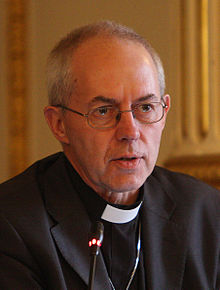
Subject to that question, this trio of primates would have Edward III as a common ancestor


Subscribe to my newsletter

  1. […] we said last year, late mediaeval prelates were often well-connected. Indeed, as this ODNB article shows, […]

    Like

  2. […] article from which the above passage is taken contains an interview with the Right Reverend Justin Welby. Bad marks ITV News – that second sentence/paragraph is […]

    Like

  3. […] was and has a preceptor to teach him lessons, a thing that is not done towards the little nephew of Cardinal Pole, who is poorly and strictly kept and not desired to know anything” (L&P XVI, […]

    Like

  4. […] in sixteenth century England. However, the ODNB reveals that David had a separate existence from Reginald and the clinching argument is that he was demonstrably Vicar-General of Coventry and Lichfield […]

    Like

  5. […] the years from 1518, before he left England again in 1536, Reginald Pole occupied a number of ecclesiastical ranks, including that of Dean of Exeter. During the early […]

    Like

  6. […] below begins: “….Charing Palace is the remains of an 11th-century bishop’s palace used by Archbishops of Canterbury as a stopping place between Canterbury and their London residence of Lambeth Palace. The village of […]

    Like

  7. […] I can’t imagine Justin Welby galloping into battle in full armour, cutting and slicing whatever came within […]

    Like

  8. […] Here is a selection of useful inventions. I was surprised to find out how old the stair lift was but Henry VIII and his maternal grandfather could both have availed themselves of it and 1536 was just in time for the former’s riding accident. The fire extinguisher only dates to 1818 but many people really needed one under Lancastrian and pseudo-Lancastrian monarchs, particularly Henry’s elder daughter. […]

    Like

  9. […] a few Archbishops of Canterbury and an Archdeacon (perhaps), we now come to an expert on art – Old Masters and Jacobite art […]

    Like

  10. […] Richard III’s Book of Hours is housed in the Library of Lambeth Palace, the residence of the Archbishop of Canterbury, which is located just across the Thames from the Houses of Parliament. It was put on display for a […]

    Like

  11. […] promptly left the country and didn’t return for five years. Heavens above. Can you imagine our present Archbishop of Canterbury becoming embroiled in such a shocking display? No, nor […]

    Like

Leave a comment