In 1475, before embarking for his campaign to (re)conquer French lands for England, Edward IV wrote a will stating that, in the event of his death, he desired to be buried at the Royal Chapel of St. George’s at Windsor Castle. He wanted to be placed under the ground with an effigy of a corpse on top. The book by Anne Sutton and Livia Visser-Fuchs, “The Royal Funerals of the House of York at Windsor” (Richard III Society, 2005), provides the actual text from Edward IV’s will. After naming Richard Beauchamp, bishop of Salisbury (Sarum) his executor, the king goes on to address what to do with his body:
“… and oure body to bee buried in the Church of the Collage of Saint George within oure Castell of Wyndesore by us begonnne of newe to bee buylded, in the place of the same Church by us limited and appointed and declared to the Reverende Fader in God oure trusty and welbeloved the Bisshop of Sarum, where we will oure body be buried lowe in the grownde, and upon the same a stone to bee laied and wrought with the figure of Dethe with scochyne of oure Armer and writings convenient aboute the bordures of the same remembring the day and yere of oure decease, and that in the same place or nere to it an Autre bee made metely for the rome as herafter we shall devise and declare.”
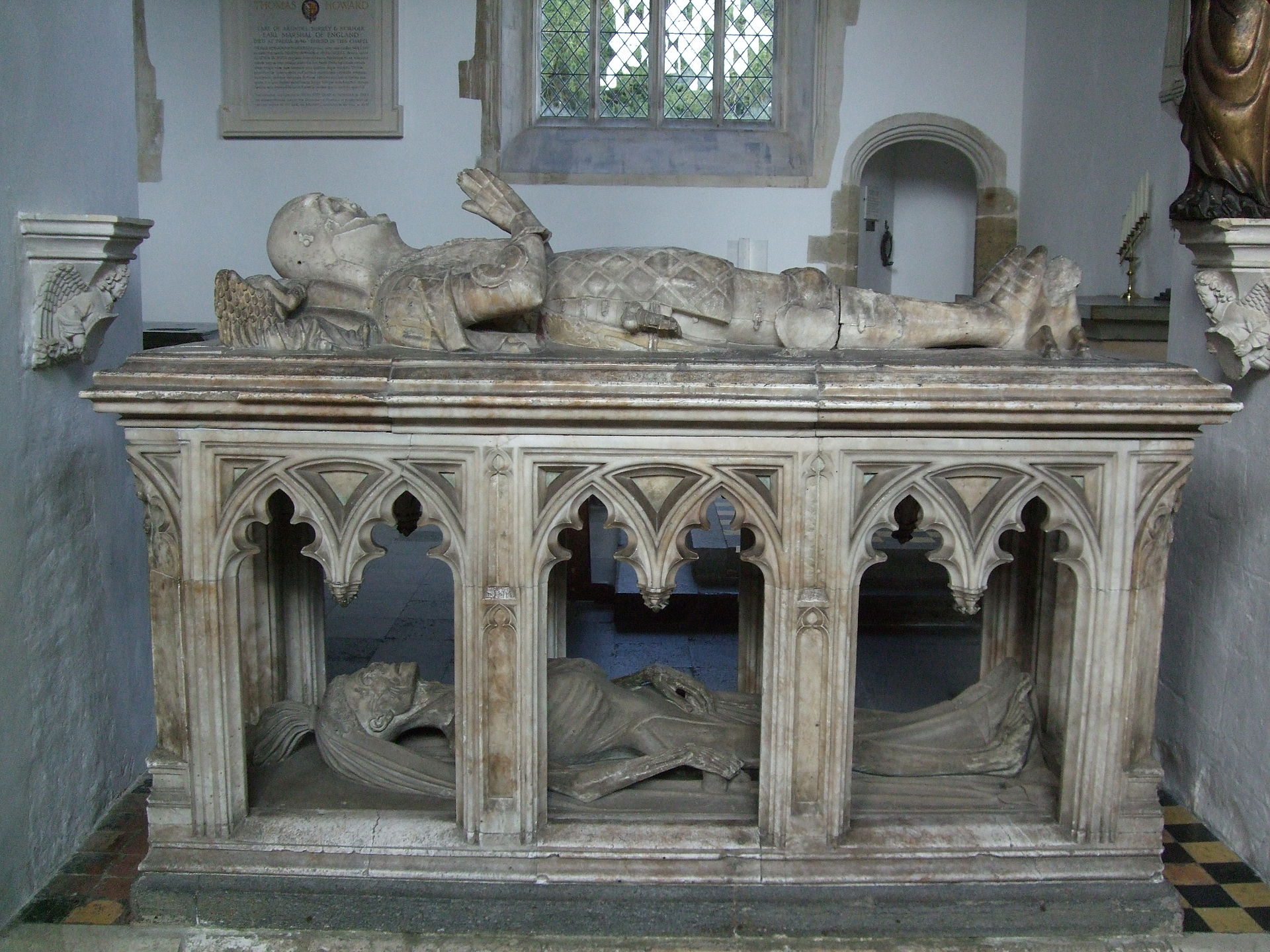
Such tombs were common in the 15th century, and were called “memento mori” tombs: designed to remind the living that, no matter one’s station in life, we all become food for worms. Yes, a little morbid, but for a King to communicate this message was a profound spiritual statement. We are all equal in death.
The photo below is of John FitzAlan, 14th Earl of Arundel – showing a slightly different arrangement – with an effigy of the living man on top, with the effigy of his corpse below. Credit: “Arundel4” by Lampman – Own work. Licensed under CC BY-SA 3.0 via Wikimedia Commons – http://commons.wikimedia.org/wiki/File:Arundel4.JPG…
The effigy of the deceased “in death” could get rather visceral, showing rats gnawing at the flesh or the sad, but nonetheless, inevitability of the corruption of the body, as depicted in this gruesomely accurate depiction from 16th century Belgium:
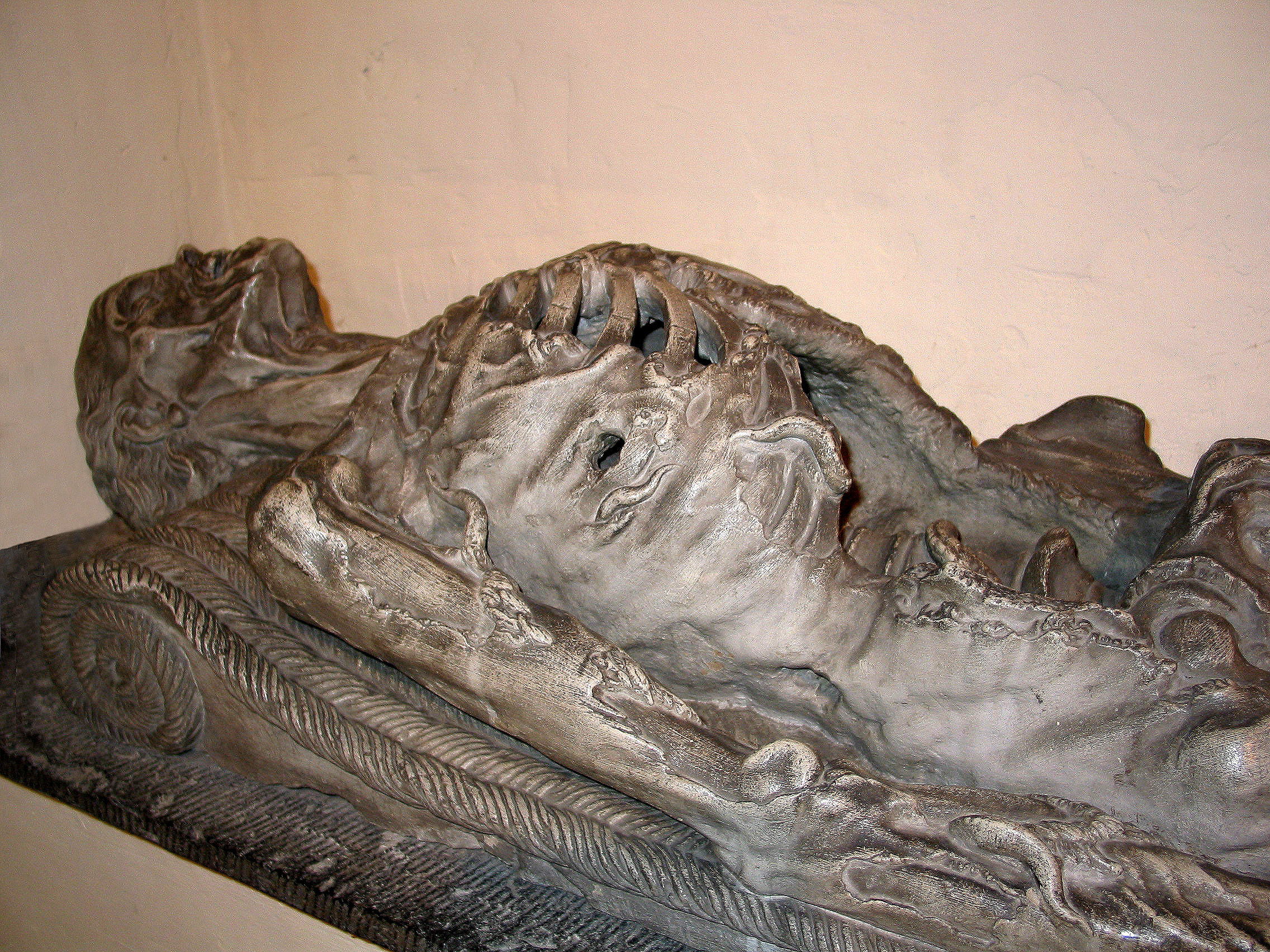
Credit: Jean-Pol GRANDMONT, photographer.
It does raise a question about why Richard III’s will has never been located, either as Duke of Gloucester or King. Would he have followed his brother’s example and have ordered a “momento mori” for his tomb?


 The New Murrey and Blue blog

Leave a reply to A very royal peculiar….? | murreyandblue Cancel reply