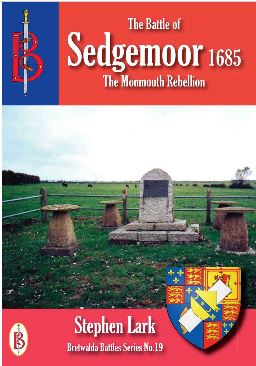
The Battle of Sedgemoor 1685
by Stephen Lark
(Bretwalda Battles Book 19) [Kindle Edition]
ASIN: B00TEAO11G
Driving the M5 today, across the Somerset Levels, it is hard to imagine what the landscape used to be like, before rhynes and ditches drained much of the water. The rhynes were there in the 17th century, but they were nowhere near as efficient as they are now, and there were still wooden ‘paths’ among the reeds on the marshes. Folk used boats and skiffs a great deal, especially where the deeply channelled marshes had not surrendered to man’s attempts to drain them.
Even now, only a year or so ago, the Levels were under water for a long period. Television reporting showed film after film of the terrible scenes of prolonged flooding, and what the local people had to suffer.
So imagine having to fight a pitched battle in such surroundings. Having to not only strike down your bitter enemies, but save yourself from drowning as well.
James, 1st Duke of Monmouth, was the illegitimate (some say legitimate) son of Charles II, at whose death, the king’s brother, James II ascended the throne. James II was a Catholic in a Protestant land, and there was great resentment in a number of quarters. Monmouth—young, handsome, popular— raised a rebellion against him. After skirmishes, the two armies finally confronted each other on Sedgemoor. The conflict started in earnest on 6th July 1685. It all went wrong for Monmouth, who fled but was finally caught. He was executed on 15th July on Tower Hill, requiring a number of blows from the infamous executioner Jack Ketch to sever his head. Ketch often botched his task, so poor Monmouth suffered at his hands.
The irony of it all is that three years later, on 30th June 1688, James II was deposed in the Glorious Revolution. Perhaps, if Monmouth had waited, his claim might have been accepted. We will never know, of course, because history unfolds and there is no folding it back again and putting it in another drawer.
This book by Stephen Lark is, as always with him, exceeding interesting and well told. If you want to know the story of Monmouth and the Battle of Sedgemoor, this is an excellent place to start. Recommended.

 The New Murrey and Blue blog
Leave a reply to A polling station founded by King Athelstan….! – murreyandblue Cancel reply