
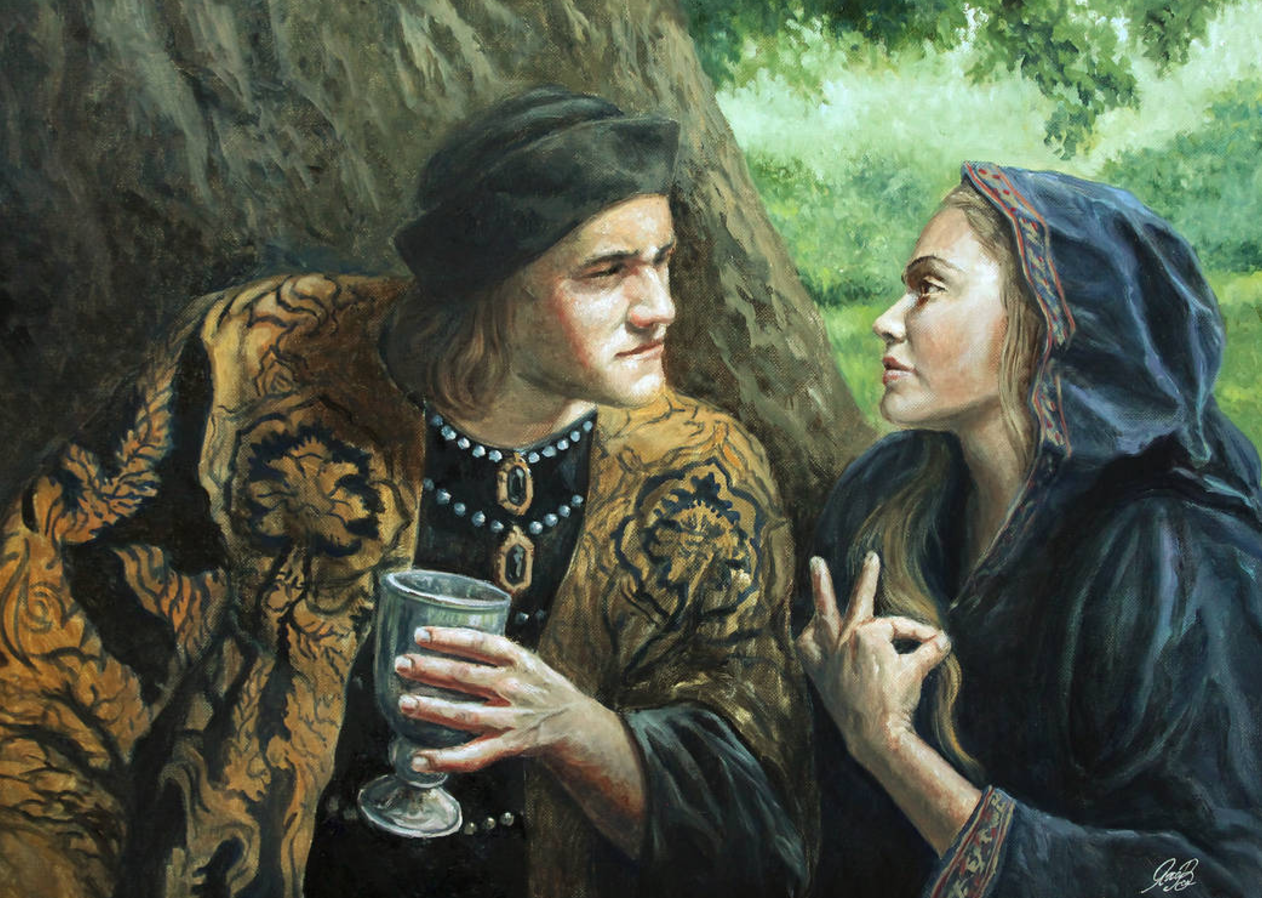
Please note that although there are plenty of facts in this post, I’ve been blatantly selective with them….purely in the pursuit of alternative history. And yes, I know there are whacking great holes in my substitute version of certain 15th-century events, but it is most certainly not written in the name of serious study! I promise to give due warning when my alternative version of events deviates from the known facts.
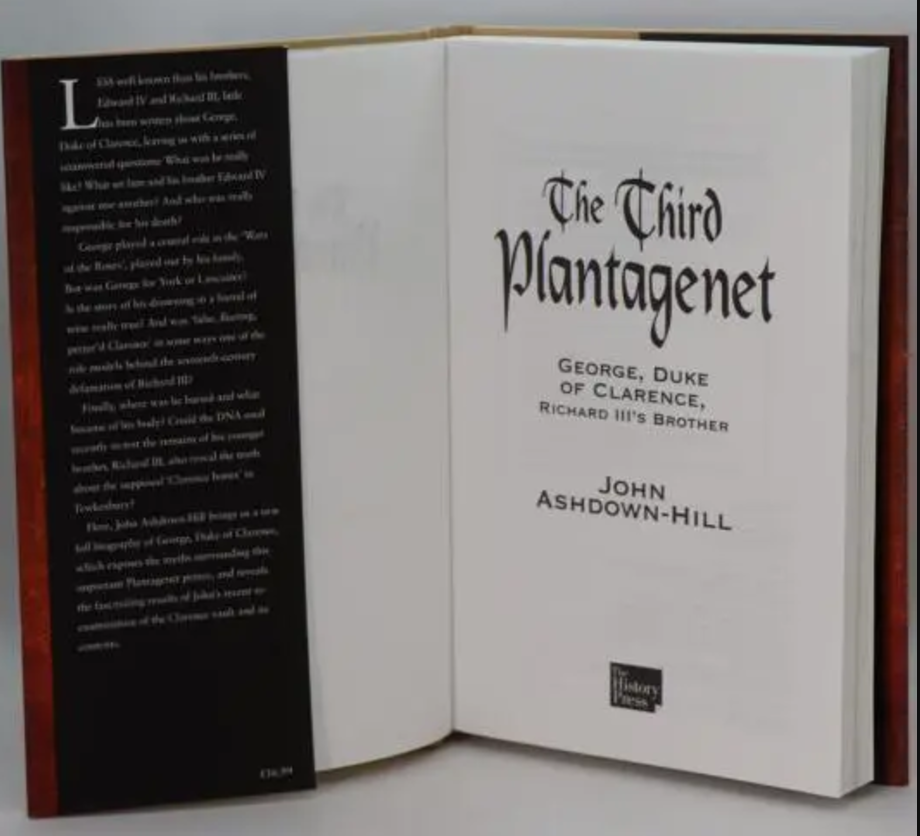
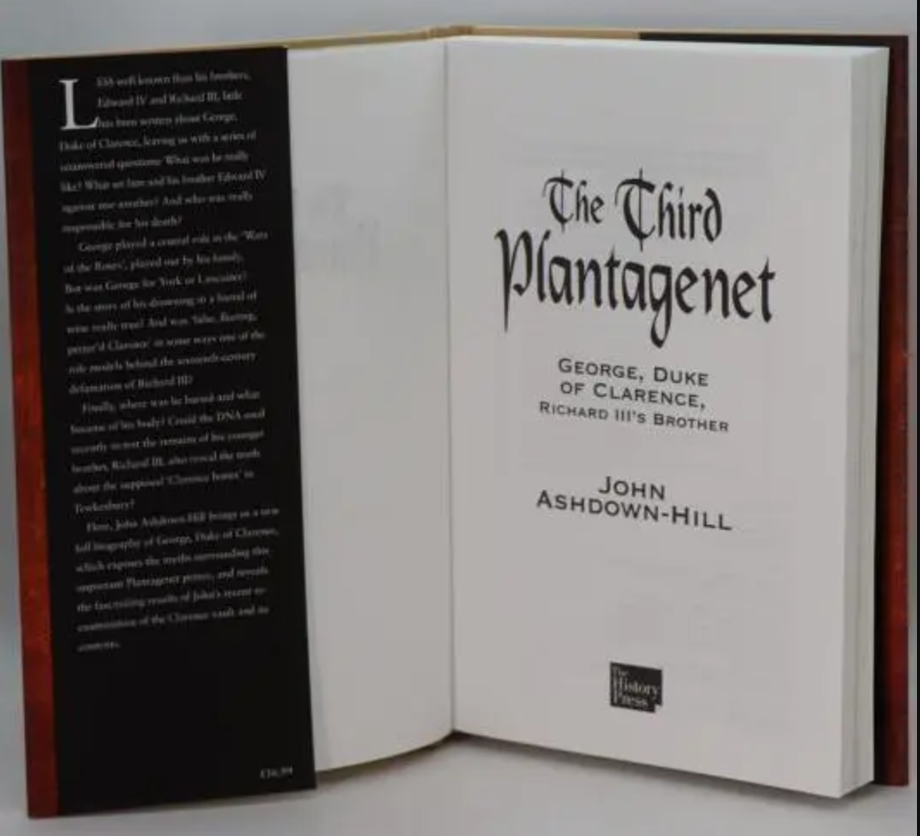
The path of my thoughts was decided by something I read in a book by the late John Ashdown-Hill (https://www.bbc.co.uk/news/uk-england-essex-44225404). I’m not about to have a go at him, far from it. I’ve merely picked up on his passing remark and am running with it. The book in question is The Third Plantagenet, JA-H’s biography of George, Duke of Clarence (https://richardiii.net/george-duke-of-clarence-his-brother/ and https://richardiii.net/wp-content/uploads/2021/08/05-72-The-Middle-Brother-False-Fleeting-Perjurd-Clarence.pdf), and the events in question took place in 1470/1.
The true background to my alternative history is that it’s the middle of the Wars of the Roses, when the mighty Richard Neville, 16th Earl of Warwick (https://www.historic-uk.com/HistoryUK/HistoryofEngland/Warwick-The-Kingmaker/), has fallen out completely with Yorkist Edward IV (https://richardiii.net/richard-iii-his-world/his-family/edward-iv/) and taken himself, his army—and his new son-in-law, George, brother of the Yorkist king—over the Channel to support the Lancastrian royal family in exile.
George has married Warwick’s elder daughter, Isabel (see under links to George, Duke of Clarence), and is under the impression that the earl plans to overthrow Edward IV and put the crown on his head instead. The earl is now determined to see his own descendants on the throne, and so he must acquire the most likely husbands for his daughters. As Edward IV’s next brother, George is therefore an obvious choice. There’s a “but” involved, of course. Isn’t there always?
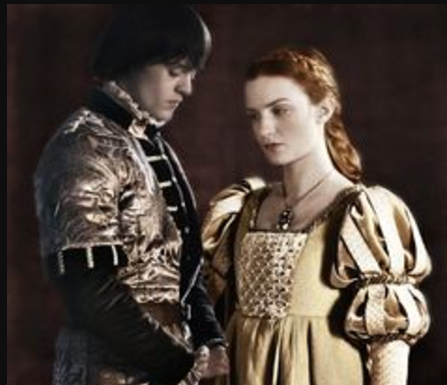
Well, putting George on the throne may have been Warwick’s original goal, but no longer. Perhaps he realised that England wasn’t about to rise against Edward IV simply to put his turncoat brother George in his place. Edward IV was preferable! So if the earl is to see his own blood wearing the crown, it has to be via another match. George doesn’t yet know that his father-in-law has now decided to return the House of Lancaster to the throne of England. To this end Warwick is going to marry off his 14-year-old younger daughter, Anne, to 17-year-old Edward of Lancaster, Prince of Wales (see https://en.wikipedia.org/wiki/Edward_of_Westminster%2C_Prince_of_Wales). She will be Princess of Wales, and if Warwick has anything to do with it, she will become Queen of England too. George and Isabel can, well, do one. As can Richard, who is so unlikely to ever ascend the throne that he can be forgotten.
Edward of Lancaster is the son of the feeble Lancastrian king Henry VI (https://www.historic-uk.com/HistoryUK/HistoryofEngland/King-Henry-VI/), who has been removed by Edward IV (with more than a little help from Warwick, who isn’t known as the “Kingmaker” for nothing). The prince’s mother is the ferociously ambitious and proudly French Margaret of Anjou (https://www.englishmonarchs.co.uk/plantagenet_26.html), who has no intention whatsoever of leaving a Yorkist of any description on her husband’s throne. She is the Lancastrian force to be reckoned with.
Margaret doesn’t trust Warwick, but if he is now supporting the Lancastrians, then he has to be encouraged. His forces, wealth and power will be a huge asset in any confrontation with Edward IV. So she agrees to the match with her son, but instructs the prince to on no account consummate the marriage. That way, if something better comes along, Anne can be jettisoned in favour of a new, more important bride than the younger daughter of a mere earl. Even if that earl is Warwick the Kingmaker.
On page 118 f his book, JA-H, writes: “….Now things had changed. Warwick was planning to dethrone Edward IV and restore Henry VI. The earl still hoped that eventually his own descendants would wear the English crown, but his new scheme to ensure that the outcome was reached via Margaret of Anjou’s son, Edward of Westminster, Prince of Wales. Accordingly, ‘a marriage contract was made between the prince and Lady Anne, the Earl of Warwick’s younger daughter’…..” (1)
“(1) Crowland. p121. They were married at Anger Cathedral on (?) 13 December 1470. Anne Neville may have already been betrothed previously to Richard, Duke of Gloucester (see https://en.wikipedia.org/wiki/Anne_Neville)….”
Please note that Crowland mentions a possible previous betrothal—a pre-contract—between Anne Neville and George’s other brother, the now 18-year-old Richard, Duke of Gloucester. As all Ricardians know, pre-contracts can be very tricky matters! But read on….
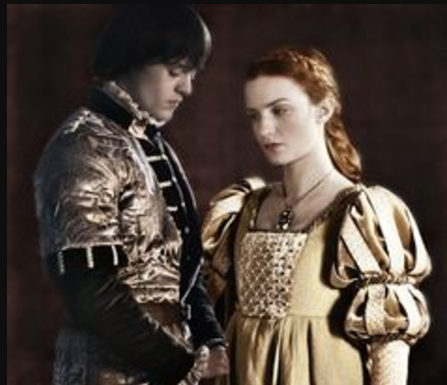
Going to the Wikipedia link that JA-H has given in the above footnote, I find: “….Much of Anne Neville’s childhood was spent at Middleham Castle, one of her father’s properties, where she and her elder sister, Isabel, met two younger sons of the Duke of York: Richard, Duke of Gloucester (the future Richard III https://richardiii.net/) and George, Duke of Clarence (https://richardiii.net/george-duke-of-clarence-his-brother/). Richard especially attended his knighthood training at Middleham since mid-1461 until at least the spring of 1465, or possibly since 1465 until late 1468. It is possible that even at this early stage, a match between the Earl’s daughters and the young dukes was being considered (2)….”
(2) Licence 2013, p. 63. Young aristocrats were often sent away to be raised in households of their intended future partners.…”
It’s a sort-of “was there?/wasn’t there?” from JA-H. Nothing specific. So I suspect he was only wondering and thought it worth a passing mention. He doesn’t elaborate, but it seems to me that if his hint was proven correct, and the circumstances were appropriate, it might raise the very same problem about this marriage that was to eventually prove disastrous for the line of Edward IV and the woman he called his queen, the beautiful widowed commoner Elizabeth Woodville. (https://murreyandblue.org/2015/06/25/even-by-tudor-and-stuart-standards-edward-ivs-marriage-to-elizabeth-woodville-was-invalid/)
I must elaborate here. At the time of the clandestine union between Edward and Elizabeth, Edward had already been secretly pre-contracted to Lady Eleanor Talbot, daughter of the 1st Earl of Shrewsbury. (https://sparkypus.com/2024/09/28/lady-eleanor-butler-boteler-nee-talbot-the-secret-wife-of-edward-iv-catalyst-for-the-fall-of-the-house-of-york/ and https://en.wikipedia.org/wiki/John_Talbot,_1st_Earl_of_Shrewsbury). The sticking point for this was that Edward consummated his pre-contract with Lady Eleanor, and thus, by medieval rules, had made their betrothal as good as a marriage. I other words he was stuck with her, whether he wanted to be or not.
Eleanor didn’t speak out about the injustice she’d been done. Had he threatened her or her family? Maybe he’d promised rewards for the Talbots? Whatever, she lived on for four years after his match with Elizabeth, taking what she knew to the grave. So there was no way he was legally wed to Elizabeth, who for those four years he’d been presenting to the realm as his queen! Nor, after Eleanor’s demise, did he ever attempt to truly marry Elizabeth. The Church probably wouldn’t have agreed to it anyway because they’d been “living in sin” so obviously. So Edward simply left everything as it was and crossed his fingers that the truth never emerged. Which it didn’t, until immediately after his death in 1483.
As is now clear, Edward IV’s vows to Elizabeth (the exact date isn’t known but May Day 1464 is the front-runner) had been bigamous, and therefore meaningless. It was probably a trick he used to lure women he fancied into his exceedingly busy bed. The widowed Elizabeth fell for it, as the also widowed Eleanor had done previously. Had there been others? Heaven knows. Edward was a handsome, tall, strapping, young man with a libido that left scorch marks. My impression is that his hearty appetites were satisfied by a conveyor belt of willing partners. Those who resisted were tricked between his well-worn sheets with promises of marriage.
Edward had probably never intended to announce Elizabeth as his queen, but as you will see in the next paragraph, this time his libido and youthful arrogance got him into deep water.
At around this time, and before he produced Elizabeth to the world as his wife, he was at odds with his most important magnate, the Earl of Warwick, whom he sent to the Continent to negotiate an grand international match for him. Then, while Warwick was away attending to this, Edward coolly announced his marriage to Elizabeth. I can only imagine that it was a childish and totally unnecessary swipe, just to make fool of the overweening earl.
But Edward been hoist with his own silly petard, because he knew all along that the union with Elizabeth was a sham. But as soon as he’d made a great show of announcing it in order to get at Warwick, he was stuck with it. It must have been a resounding case of marry now, repent at leisure. Maybe he loved Elizabeth, that’s always possible, but when he started promoting her numerous relatives and imposing them in marriage on the old nobility, the resultant resentment must have made him wonder a teensy if he’d been rash.
In the end he must have thought he’d got away with it all, and he settled to enjoy life and continue producing children with Elizabeth. Edward IV had few scruples. If any. All his offspring with Elizabeth were claimed as legitimate, including his elder son, who was set to become Edward V (https://r3.org/wp-content/uploads/2023/11/231116_Richard_III_Society_Prince_in_the_Tower_Press_Release-1.pdf and my own story https://murreyandblue.org/2023/11/02/the-boy-who-had-been-king-edward-v/) on his father’s death. Edward IV had few scruples. If any.
Warwick, of course, was both livid and insulted by the kick on the shin he’d received from Edward IV. I would have been too! His relations with Edward were never the same again, and ended up with the earl deserting the Yorkists to join the Lancastrians, which is where this post began.
As already mentioned, Edward IV’s two young brothers, George of Clarence and Richard of Gloucester, had been brought up and taught knightly accomplishments in Warwick’s household, mainly at Middleham Castle in Yorkshire, where they’d met the earl’s daughters, Isabel and Anne. The earl seems to have decided early on that his girls—his joint heiresses and therefore very desirable brides—were to marry the two young dukes. His elder daughter Isabel to the older George, and Anne to Richard.
Very much in private the earl had pushed toward this, somehow persuading the boys to secretly agree to these matches. This was, of course, before Warwick’s ambitions advanced to putting one of his girls on the throne and thus ensuring their his own descendants ruled England. For the moment he was satisfied with acquiring Edward IV’s brother as sons-in-law.
Perhaps the boys actually wanted their respective marriages. Warwick’s daughters were far from ugly, nor did they inherit their father’s arrogance and drive. They were also Warwick’s co-heiresses and therefore highly desirable brides. From a very young age the boys would have had it drummed into them that they’d need to marry rich landed wives in order to maintain their dukedoms. In this instance Warwick’s matches might well have suited all four young people involved.
However, they reckoned without Edward IV.
In Paul Murray Kendall’s (https://en.wikipedia.org/wiki/Paul_Murray_Kendall) Warwick the Kingmaker (pages 191/2 of my 1969 edition) it’s stated that Edward IV heard whispers about his brothers’ dealings with Warwick concerning marriages to the earl’s daughters. Although they had been involved in such dealings, the boys apparently denied it to Edward. Because Warwick had commanded them to? Or because they were terrified of their angry big brother Edward? Who knows. Whatever, they pretended that whatever Edward had heard was wrong.
But Edward soon realised he wasn’t being told everything, so he grilled them. “….Abruptly Edward inquired if either of them had entered into an undertaking of marriage with one of Warwick’s daughters. They protested they had not, but the King penetrated the truth, and he gave them a stiff lecture on the duty they owed to him to seek no marriage alliances without his permission….”
Both boys agreed to his demands. Edward therefore now believed he’d put a stop to any such matches. But did he even now know the truth, the whole truth and nothing but the truth? Not in my alternative world he didn’t! Maybe George agreed and meant to stick to his word (for once), but what of Richard? George was fond of Isabel, no more, but Richard loved Anne, and wasn’t about to give her up without a struggle.
Well, as you may imagine, by now my inventive little grey cells are trotting along quite smartly. If at the time of her marriage to Edward of Lancaster Anne had been pre-contracted to Richard of Gloucester (as seems possible in the real world, and is definite in my alternative world), would her marriage to Edward of Westminster, Prince of Wales, be any more valid than the union of Edward IV and Elizabeth? In other words—shocking thought!—had she and Richard consummated their pre-contract and made it a marriage?
Hold on now! Put away your longbows and poisoned arrows! I’m not about to suggest that Richard and Anne romped in the hay at her very young age. To be 14 in 1470 is bad enough by modern standards, but the further back we go, the younger she becomes. In 1468 she’d be 12, in 1467 only 11! Too young by far! But what if, in her early puberty, whenever it occurred (10 in my case) something completely innocent happened between Richard and her that convinced Warwick (or gave him the idea) she’d been compromised beyond redemption?
This is where I introduce the old fiction author’s ploy of having the hero and heroine out riding when they’re caught in a terrible thunderstorm and forced to spend the night together in an isolated barn? You know the sort of thing. They’re innocent of hanky-panky, only of huddling together to stay warm and dry, but due to a sneaky servant they are believed by her father to have done far more.
Now, imagine that George has already ducked out his agreement with Warwick because of Edward IV’s stern demands, but Richard hasn’t as yet. (Nor does he intend to, because he loves Anne.) Warwick was caught by surprise by George, and isn’t about to let his second ducal prey slip away too, so he makes sure the pre-contract is sealed irrevocably and Richard can’t escape. Once done, the earl still keeps it secret, well away from Edward IV, who therefore believes both his brothers have backed out of anything they’d agreed at Middleham. But in fact only one of them has. Both George and Edward IV wrongly believe Richard backed out too.
Nothing more is heard about the pre-contracts, and then Edward IV and Warwick fall out big time and the earl stomps off to join the Lancastrians across the Channel, taking turncoat George with him. George and Isabel now marry in spite of Edward IV’s orders, because they’re rather fonder of each other than they’d realised…and because her father has promised to put George on the throne in Edward’s place.
But at this point it suddenly suits Warwick to conveniently “forget” the contract he’d chained around Richard and Anne, so that she can instead be the wife of the Lancastrian Prince of Wales. And then, if Warwick’s momentous plans come to fruition, eventually the Queen of England. Naturally enough, this puts George’s nose severely out of joint. Humiliated, he is soon to switch allegiance again and return to Edward’s fold. But Edward is by then increasingly fed up with George’s behaviour, and will eventually have him executed for treason. But that’s in the future.
Richard’s nose is out of joint too! He’s hugely distressed by this development, so much so that he at last breaks his silence to Edward IV and confesses everything about his pre-contract. He hopes against hope that even at this late stage he can rescue Anne from a marriage he knows she doesn’t want.
Of course, no one yet knows that Edward IV’s own marriage has a very guilty secret, one that gives him an idea now. He knows that the situation with Richard and Anne presents him with a very effective one-in-the-eye for Warwick and the Lancastrians! What fools he can make of the latter. To Hades with his youngest brother’s personal distress. He fobs trusting Richard off by telling him to leave the whole business in his hands. He’ll deal with it and all will be well. He promises Richard that he and Anne will be together. His sentiments sound honest and heartfelt, but Edward is thinking only of his own good fortune….of revenge on Warwick and Margaret of Anjou, and how clever he’s been to hide his own marital tracks!
I can imagine Edward’s thoughts. The doddery, seldom compos mentis Henry VI probably wouldn’t have known whether it was night or day, but what a splendid custard pie in Warwick’s phiz. And Margaret of Anjou’s, come to that. A real show-stopper! Mind you, whether or not it would even have crossed Edward’s mind that he’s planning to destroy the good name of the girl his youngest brother loves and seeks to marry is another matter. After all, Edward doesn’t seem to have ever considered the effect his actions had on his brothers. George had always been little slippery and disloyal, whereas—except for hiding the matter of his pre-contract with Anne—Richard never ceased to be true and supportive. But it makes no difference to callous Edward IV!
In my opinion the first Yorkist king of England was a selfish, arrogant so-and-so who needed a few good kicks up the posterior. Warwick thought the same and tried it, but came off worse in the scrap.
Back to reality. Yes, the following actually happened. Warwick and the Lancastrians invaded England, and on Easter Sunday 1471, at the Battle of Barnet (https://www.britishbattles.com/wars-of-the-roses/battle-of-barnet/), Warwick was killed and the Lancastrians were defeated. But Anne’s husband escaped. Within weeks, on 4 May 1471, there was another battle at Tewkesbury (https://www.britishbattles.com/wars-of-the-roses/battle-of-tewkesbury/). This time the outcome was final. Anne was widowed and the House of York was finally unchallenged on the throne of England.
In 1472 Anne and Richard of Gloucester were married. Pre-contract or not, she was the widowed Princess of Wales who married Richard, Duke of Gloucester, the king’s brother. (Forget all that “they didn’t have dispensation at the time” stuff, they were still lawfully man and wife.)
BUT….alternative world again….what if Tewkesbury had gone the other way? The defeated Edward IV has to flee the country again, as has happened previously to him and Henry VI. Oh, the disputed crown of England passed between York and Lancaster more than once! Into exile with Edward are George and Richard. At least, he takes George unless the latter has jumped ship again. And Richard is still unwed because Anne remains very much very much the Princess of Wales! In the highest ranks of Lancastrian circles.
With Warwick dead at Barnet, George and the Lancastrian prince now share the earl’s huge fortune. For a few moments at Tewkesbury did George think the prince had been killed, and therefore he, George, could have the entire the Warwick inheritance if he could force Anne into a convent before she can be married to Richard!
But it’s all pie in the sky anyway, because the prince survives and wins the battle for the House of Lancaster. Henry VI resumes the throne and Anne’s husband is assured of succeeding his father. He’s also hopeful of begetting a string of male heirs to take the House of Lancaster into the foreseeable future and beyond. Might he too have designs on Warwick’s whole estate….and therefore an eye on disposing of George, Duke of Clarence and any offspring? It was dog eat dog!
Then, strange to relate, the story of Anne’s pre-contract begins to circulate in England. Courtesy of the exiled Edward IV, of course. It spreads like wildfire through every corner of every county. Its theme is that Anne willingly ignored her virtual marriage to Richard of Gloucester. The fact that she loves Richard and was bullied into her Lancastrian marriage by her late father doesn’t get mention. She and her Lancastrian prince find themselves in the middle of a huge scandal involving bigamy! And the forceful, ambitious, passionate Margaret of Anjou, erupts spectacularly à la Vesuvius.
I wouldn’t want to be Warwick if Margaret ever caught up with him above the clouds! He’d be the first warrior angel to sing top-note soprano, because he’d omitted to mention his younger daughter’s pre-contract to Richard of Gloucester. He’d then promoted Anne’s marriage to Margaret’s precious son and heir. Oh, dear, I wouldn’t give much for his chances in the hereafter once Margaret laid vengeful hands on him! He may have been brave on the battlefield, but in single face-to-face combat with a furious, murderous Margaret of Anjou….? Forget it.
Anyway, move forward to the actual events of 1483. Edward dies and his sham marriage emerges to shock every noble house in the realm. Richard is now married to Anne and they have a son, another Edward. Then Richard finds himself offered the crown because of his eldest brother’s “sealed” contract with Lady Eleanor Talbot.
My alternative version? While the previous paragraph is in progress, Richard, now King Richard III, has a queen who, while still 14, had married someone else while being similarly and completely pre-contracted (albeit through her father’s porkies) to Richard himself! I think you’ll agree this would be a rather uncomfortable tangle for poor Richard.
JA-H doesn’t give any real credence to the Middleham pre-contracts, except as possibilities. But if my alternative scenario were true, oh, what a kerfuffle it might have been!
Footnote: Ladies and gentlemen, with Christmas almost upon us I can’t resist blotting my copybook beyond all hope of recovery by interpreting the above marital goings-on in terms of a pantomime. Cinderella, perhaps, with Anne in the title role and Richard of Gloucester as Prince Charming.
Margaret of Anjou would be splendid as the Wicked Stepmother and Henry VI as a rather doddery, absent-minded Baron Hardup who sleeps throughout the performance. Edward IV and George of Clarence are ideal for the Ugly Sisters, and Edward of Westminster as a rather devious Dandini or Buttons who pretends he’s really the prince. And instead of a Fairy Godmother, we’d have Warwick the Kingmaker as a scheming Fairy Godfather-cum-Rat King!
No glass slipper, of course. Instead it would be a glass crown that’s in constant danger of being dropped! 🫨
 The New Murrey and Blue blog
Leave a comment