Wilton Diptych
-
Epiphany – medieval and now….
Anne of Bohemia, birthdays, Canterbury Cathedral, Chapel of Our Lady of the Pew, Christmas, Christmas decorations, Epiphany, Epiphany Rising, feast days, Gregorian Calendar, Henry IV, Julian Calendar, Magi, Peasants’ Revolt, Pontefract Castle, rebellion, Richard II, Shakespeare, Sir William Walworth, Smithfield, St. Edmund, St. Edward the Confessor, St. George, St. John the Baptist, Thomas Becket, Twelfth Night, wassailing, Wat Tyler, Westminster Abbey, Wilton Diptych, yule logsAccording to the Oxford Dictionary, the following two definitions refer to the use of the word epiphany:- The manifestation of Christ to the Gentiles as represented by the Magi (Matthew 2:1–12). Definition (1) A moment of sudden and great revelation/realisation. Definition (2) Epiphany has been a recognised feast of the Western Church since the 5th…
-
On 8th June 1376, Edward, the Black Prince, died. From then until 29th September his body lay in state in Westminster Hall, and then was taken to Canterbury Cathedral to be buried on 5th October at Canterbury Cathedral. His passing was greatly mourned through the land, and lamented because the elderly monarch, Edward III, was…
-
Tucked away off the north ambulatory of Westminster Abbey, so small it doesn’t seem possible it’s anything more than an entrance to the adjacent Chapel of St John the Baptist (which is also known as the Chapel of St Erasmus) is the Chapel of Our Lady of the Pew. The original entrance to the St John…
-
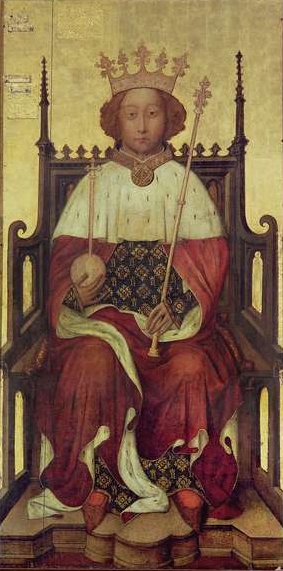
This portrait of Richard II in Westminster Abbey is familiar. What is less well-known is that it is heavily ‘restored’ over the years, most recently in 1866. In Richard II, Manhood, Youth and Politics, 1377-99, Christopher Fletcher reveals that when examined under infra-red reflectography the king’s beard was much more developed, covering much of his…
-
Originally posted on Giaconda's Blog: Combining my two great loves, history and art, I want to look at some of the imagery used to depict Plantagenet kings during the period and taking a few examples examine what the visual language may be telling us about how kingship was viewed and how the kings themselves wanted…
 The New Murrey and Blue blog