Whitehall
-
The palace of Whitehall is usually associated with Henry VIII, but a house called White Hall occupied the “plot” well before then:- “….144 (f.52v, no.x’xvi). St. Martin in the Fields. 22 Oct. 1397. Charter of William Savage of London, William Skotte of Walpole, chaplain, and Thomas de Burgh, chaplain, granting with warranty to John de…
-
I have been prompted to write this article after happening upon Visions on the horizon of desire: a painting of Henry VII & his family in the presence of St. George, by Margaret Milne Wood, 2001. See here. The subject of the work is the enigmatic painted panel of Henry VII and his family (see…
-
The royal palace of Kennington is all but forgotten now, but for those interested in the mediaeval period it is perhaps most noteworthy for its association with Edward III, the Black Prince and Richard II. The buildings they knew vanished in 1531, at the hands of that arch-demolisher, Henry VIII, and illustrations of the…
-
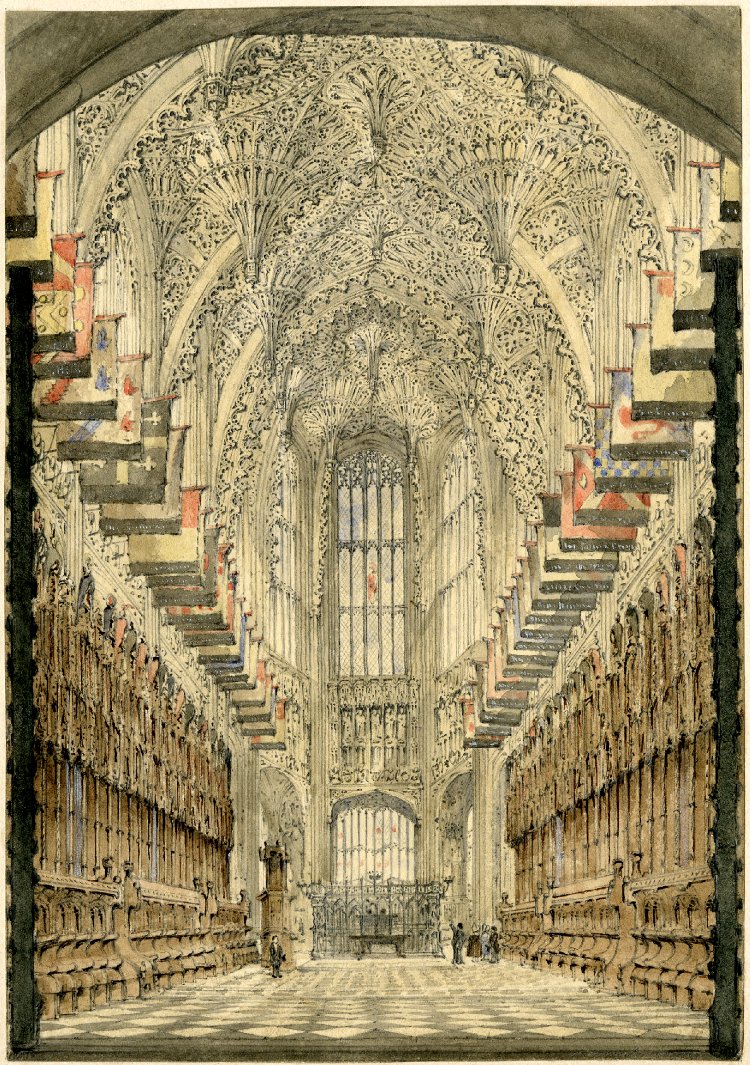
UPDATED POST @ sparkypus.com A Medieval Potpourri https://sparkypus.com/2020/05/14/the-bones-in-the-urn-again-a-17th-century-hoax/ 19th century painting of the Henry VII Chapel by an unknown artist. The entrance to the area where the urn stands is to the left of the tomb of Henry VII Helen Maurer, in her wonderful article, Whodunnit: The Suspects in the Case mentioned in the notes ‘As for why…
-
TREASON 3 – The Long Parliament 1649
Algernon Sidney, anarchy, Bishops, Carisbroke castle, Catholicism, Charles I, Charles II, Church of England, Commonwealth, constitutional monarchy, Cornet George Joyce, dethronement, Edward II, Elizabeth I, executions, Henry VI, Holmby House, House of Commons, House of Lords, Interregnum, James VI/I, James VII/II, John, John Bradshaw, John Cooke, Juxton, Laud, lex talionis, Lockyer, London, Long Parliament, Lords Appellant, Magna Carta, Mary II, Mass, Merciless Parliament, Naseby, Netherlands, New Model Army, Newcastle, Oliver Cromwell, Oxford, Parliament of Devils, Preston, Pride’s Purge, Puritans, Restoration, Richard Duke of York, Richard II, Robertson, Royal Assent, Rupert, Samuel Gardiner, Scotland, Short Parliament, siege of Colchester, Sir Charles Lucas, Sir George Lisle, Sir Orlando Bridgeman, Sir thomas Fairfax, Southwell, Spain, Strafford, treason, Treaty of Newport, Triennial Act, tyranny, Veronica Wedgwood, Whitehall, William III, WindsorIntroduction “ The scaffold was hung round with black, and the floor covered with black, and the axe and block (were) laid in the middle of the scaffold. There were divers companies of Foot and Horse on every side of the scaffold, and the multitude of people that came to be spectators were very great.”[1]…
 The New Murrey and Blue blog