“Tudor” justice
-
HENRY “TUDOR” IN THE 21ST CENTURY?
“Tudor” justice, “wives”, Abraham Lincoln, Agrippina, Alexander the Great, Anastasia, Anne Boleyn, Augustus, Caligula, Catherine of Aragon, Catherine Parr, Christina of Denmark, Edmund “Tudor”, Elisabeth of Austria, Elizabeth I, executions, facial reconstruction, Grace Kelly, Henry VII, Henry VIII, Isabel of Castile, Jane Austen, Julius Caesar, Louis XIV, Louis XV, Madame de Pompadour, Marie Antoinette, Mary Stuart, Nefertiti, parsimonyWith advanced computer technology, more artists and other interested people are doing their own ‘facial reconstructions’ of famous historical figures, often giving them modern hair styles and clothes to let people see how they might have looked if they lived in the present day. The following article has 30 such images, and is interesting because…
-
The Court of Requests and Thomas Seckford
“Tudor” justice, “Tudors”, anniversaries, Brandons, Christophe Saxton, court of Requests, de la Pole family, Edmund Crouchback, Edward I, Elizabeth I, English Civil War, executions, Henry Earl of Huntingdon, Henry Grey Duke of Suffolk, Henry VII, Henry VIII, Ipswich, Jane, Joan of Acre, law, Lords Audley, Margaret Wingfield, Orford, Parliament, Richard III, Richard’s justice, Ripon, Seckford Hall, Thomas Seckford, Woodbridge
In 1484, King Richard III created a minor equity court to deal with minor disputes in equity; these are disputes where the harshness of common law would be acknowledged by those appointed by the Crown. Equity courts were mostly seen as the Lord Chancellor’s remit, and the split of the Chancery Courts from the Curia…
-
This link takes you to an interesting article about the fates of two great opposites, Sir Thomas More and William Tyndale. And, once again, Henry VIII’s lust for Anne Boleyn was at the heart of it.
-
This is about to undergo a little refurbishment. The first picture shows the eastern approach to the Cornhill, where heresy executions took place during the sixteenth century, whilst the others are from the monument in Christchurch Park. See also: https://murreyandblue.wordpress.com/2016/07/23/a-colchester-mystery/ or https://murreyandblue.wordpress.com/2014/02/04/an-afternoon-in-hadleigh-2006/
-
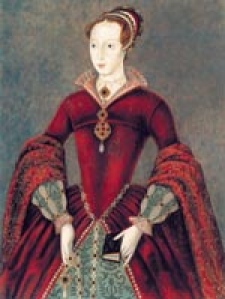
It is reputed to be Jane, who was executed in February 1554 at the age of about seventeen. She looks a little older than that to us, but teenagers’ dress sense has changed in the space of 460 years and most of her portraits date from at least forty years after her lifetime. This, by…
-
Janet Wertman writes here about Emma Stanhope’s marriage to Edward Seymour, the Lord Protector to Edward VI. Seymour was ousted and executed in January 1552 alongside Emma’s brother, Sir Michael Stanhope. As shown in the last series of “Who do you think you are?”, Sir Michael was the ancestor of the BBC Security Correspondent Frank…
-
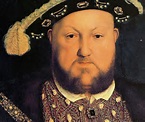
Arthur Waite, Viscount Lisle was released from the Tower of London in March 1542, having been held on suspicion of high treason for two years. This illegitimate son of Edward IV, as were they all, died of a heart attack the same week. Sir Geoffrey Pole was arrested with some cousins, his brother and his…
-
An argument has arisen for and against using vellum for recording our laws, as stored on the amazingly full shelves of the Act Room. Paper is indeed more perishable. Just imagine having the Magna Carta on paper! How insignificant it would appear. Not insignificant in content, of course, but all the same… I have seen…
-
… are about the history of the Royal Mail and it’s predecessors: http://shop.royalmail.com/issue-by-issue/royal-mail-500/icat/royalmail500 As you can see, they feature Sir Brian Tuke, who Henry VIII made Master of the King’s Posts in 1512. He occupied other positions, including clerk of the council of Calais, Treasurer of the Household and secretary to Cardinal Wolsey: https://en.wikipedia.org/wiki/Brian_Tuke http://www.oxforddnb.com/index/27/101027803/…
 The New Murrey and Blue blog