Tower of London
-
A truncated reign and a truncated monarch
“Perkin”, “Tudor” genealogy, Acts of Succession, Archbishop Cranmer, BBC, coups d’etat, Dukedom of Clarence, Earl of Leicester, Edward IV, Edward of Warwick, Edward VI, Elizabeth I, Framlingham Castle, France, Greys, Helen Castor, Henry Earl of Huntingdon, Henry Lord Darnley, Henry VII, Henry VIII, Jane, John Dudley Duke of Northumberland, John of Gloucester, Kenninghall, Kirk o’Fields, Lady Catherine Grey, Lady Frances Brandon, Lady Margaret Clifford, Lady Margaret Douglas, Lady Mary Grey, Legitimacy, Leicestershire, letters patent, Lord Guildford Dudley, Mary I, Mary Stuart, Paul Delaroche, Phillip II, portraits, Scotland, Sion, Spain, Stewarts, Streatham portrait, Tower Green, Tower of London, Wyatt Rebellion, WydevillesRight at the start of this series, Helen Castor (left) takes a black marker pen and illustrates the cause of the 1553 crisis on a large sheet of paper. Beginning with Henry VII, very few of his legitimate male descendants were alive at the start of that year – eliminating the obvious illegitimate cases, we…
-
Illustrated by SHW
Anne Neville, battles, Bosworth, cartoons, Cecily Duchess of York, executions, Exeter Cathedral, exile, George Duke of Clarence, George Washington, Hazel Pierce, Henry Courtenay Marquis of Exeter, Henry Lord Montagu, Henry Pole the Younger, Henry VIII, humour, Isobel Neville, Jane Neville, Margaret of Salisbury, marriages, Mary I, ODNB, Reginald Cardinal Pole, Richard Duke of York, Richard III, Richard Neville, SHW, Sir Edward Neville, Sir Geoffrey Pole, Thomas Courtenay Earl of Devon, Tower of London, WakefieldToday in 1538-9, Henry Pole Lord Montagu, was beheaded for treason, after the “plot” involving his brother, Reginald, later a Cardinal. It was previously thought that Reginald was a sub-deacon for many years, was only properly ordained in late 1536 and thus could have married at any time before this. However, it is now clear…
-
This excellent post from Nerdalicious, whose tabs appropriately include “History of Folk and Fairy Tales”, shows just how desperately ridiculous the Cairo case really is, particularly when they treat More’s first half as a Fifth Gospel and ignore his second. After all, we have already shown that the small coffins buried with Edward IV are…
-
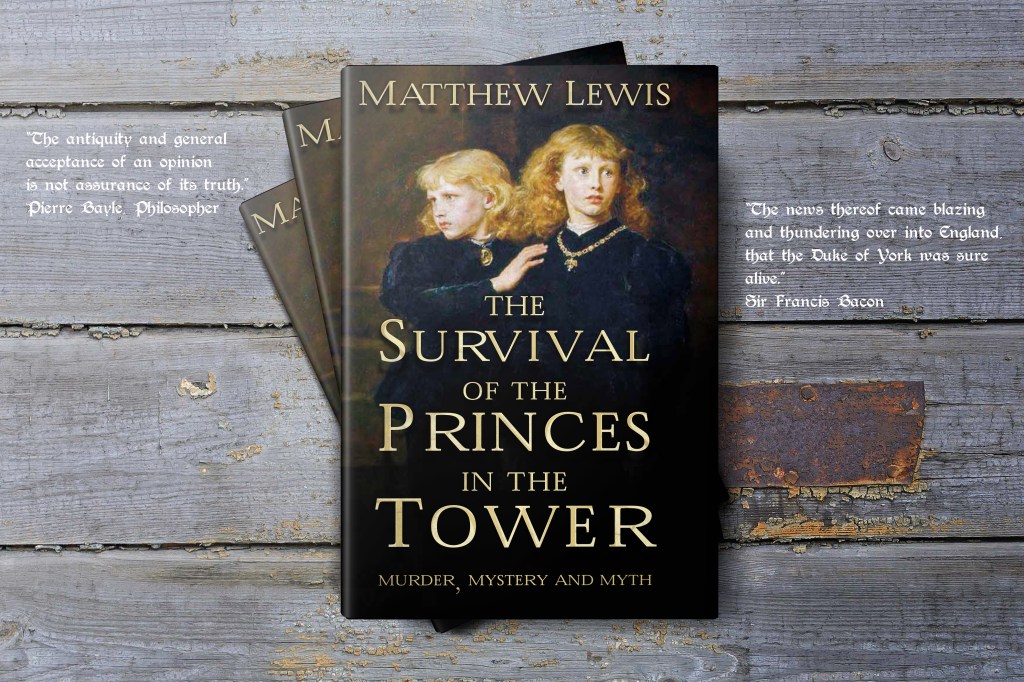
The Survival of the Princes in the Tower has finally been released. There was a delay in some copies reaching readers in September, so by way of apology I blogged a little extract which can be found below. I also wrote a piece for On the Tudor Trail which was quite well received and can…
-
William the B … er, Conqueror
Anglo-Saxons, Battle, Battle Abbey, Battle of Hastings, Bayeux Tapestry, Canterbury, castles, Chepstow, chivalry, churches, Colchester Castle, Coronation, death, Domesday Book, executions, famine, Harold II, height, Henry I, Marc Morris, Matilda of Flanders, mediaeval buildings, Normans, Scotland, slavery, St. David’s, Tayside, Tower of London, usurpation, Wales, Waltheof, William I, William IIThis piece, by Marc Morris in History Extra, describes the events that followed the previous usurpation from France. A lot more violent, indeed, than the early reign of the first “Tudor”, although his son and grandchildren changed that …
-
Bearing in mind that I am NOT a historian, here is a little teaser to pass the time. We all know the texts from the Bible about bastard slips not taking root, and the sins of the fathers being visited on subsequent generations. Right, so what happens if we apply that literally to the throne…
-
More Tyrrells, this time in Oxfordshire. One family or two?
“Princes”, Capel St. Mary, David Starkey, Edmund Earl of Suffolk, Elizabeth of York, executions, genealogy, Gipping Chapel, Gipping Hall, Great Wenham, Guisnes, Henry Stuart, Henry VII, James VI/I, John Locke, London Guildhall, Master of Horse, Master of the Buckhounds, Richard III, Robert Catesby, Shotover House, Shotover Park, Sir James Tyrrell, Stowmarket, television, Tower of London, Tyrrell “confession”, Tyrrell family, William CatesbyThis (below) is Shotover Park in Oxfordshire, formerly part of the Wychwood royal hunting forest. It became the property of one Timothy Tyrrell in 1613, the year after the death of Henry Stuart, Prince of Wales, whom Tyrrell had served as Master of the Royal Buckhounds. Tyrrell was further honoured with a knighthood in 1624…
 The New Murrey and Blue blog