Spain
-
A new interpretation of 1580s events
Armada, Battle of Bosworth, Battle of Sedgemoor, Buckingham rebellion, Duke of Medina Sidonia, Duke of Parma, Elizabeth I, executions, Fotheringhay, France, French Wars of Religion, Glorious Revolution, Henry of Buckingham, Henry VII, James of Monmouth, James VII/II, John Ashdown-Hill, John Hawkins, Lisbon, Lord Howard of Effingham, Marie de Guise, Mary II, Mary Stuart, Monmouth Rebellion, naval battles, Netherlands, Phillip II, Plymouth, Portland, Richard III, Scotland, Sir Francis Drake, Spain, Tilbury speech, William IIIWe all know that Mary Stuart was beheaded at Fotheringhay on 8 February 1587 and that the Spanish Armada sailed to facilitate a Catholic invasion of England in the following year, leaving Lisbon on 28 May and fighting naval battles in late July, at Plymouth and Portland. The traditional view is that Mary Stuart’s execution…
-
These are taken from Pierce’s biography of his paternal grandmother Margaret, Countess of Salisbury, we have some sinister clues to his fate. Our witness is Charles de Marillac, French ambassador from 1538-43, whose correspondence with Francois I is copiously quoted in the Letters and Papers of Henry VIII. de Marillac wrote on 1 July 1540…
-
To continue my series of posts about Richard’s notable genealogical connections, my latest discovery is that he was directly descended from Rodrigo Diaz de Vivar – El Cid! This time the connection is through his mother’s line and you can see the tree below (in two parts) with red dots showing the direct line of…
-
… by a thing called the internet. The internet may only have been invented by (Sir) Tim Berners-Lee (left) during the eighties but it has a much older patron saint – the seventh century Archbishop of Seville, Isidore. St. Isidore (right), who died in 636, was chosen because he wrote the Etymologiae, an early encyclopedia…
-
A truncated reign and a truncated monarch
“Perkin”, “Tudor” genealogy, Acts of Succession, Archbishop Cranmer, BBC, coups d’etat, Dukedom of Clarence, Earl of Leicester, Edward IV, Edward of Warwick, Edward VI, Elizabeth I, Framlingham Castle, France, Greys, Helen Castor, Henry Earl of Huntingdon, Henry Lord Darnley, Henry VII, Henry VIII, Jane, John Dudley Duke of Northumberland, John of Gloucester, Kenninghall, Kirk o’Fields, Lady Catherine Grey, Lady Frances Brandon, Lady Margaret Clifford, Lady Margaret Douglas, Lady Mary Grey, Legitimacy, Leicestershire, letters patent, Lord Guildford Dudley, Mary I, Mary Stuart, Paul Delaroche, Phillip II, portraits, Scotland, Sion, Spain, Stewarts, Streatham portrait, Tower Green, Tower of London, Wyatt Rebellion, WydevillesRight at the start of this series, Helen Castor (left) takes a black marker pen and illustrates the cause of the 1553 crisis on a large sheet of paper. Beginning with Henry VII, very few of his legitimate male descendants were alive at the start of that year – eliminating the obvious illegitimate cases, we…
-
So, a Spanish judge has ordered that Salvador Dali’s remains be exhumed in order to settle a paternity case. But here in the UK, a marble pot with a lid cannot be opened to examine the bones inside. Many of which are reputedly animal bones, not human. Oh, well, I suppose there’s some logic in…
-
TREASON 3 – The Long Parliament 1649
Algernon Sidney, anarchy, Bishops, Carisbroke castle, Catholicism, Charles I, Charles II, Church of England, Commonwealth, constitutional monarchy, Cornet George Joyce, dethronement, Edward II, Elizabeth I, executions, Henry VI, Holmby House, House of Commons, House of Lords, Interregnum, James VI/I, James VII/II, John, John Bradshaw, John Cooke, Juxton, Laud, lex talionis, Lockyer, London, Long Parliament, Lords Appellant, Magna Carta, Mary II, Mass, Merciless Parliament, Naseby, Netherlands, New Model Army, Newcastle, Oliver Cromwell, Oxford, Parliament of Devils, Preston, Pride’s Purge, Puritans, Restoration, Richard Duke of York, Richard II, Robertson, Royal Assent, Rupert, Samuel Gardiner, Scotland, Short Parliament, siege of Colchester, Sir Charles Lucas, Sir George Lisle, Sir Orlando Bridgeman, Sir thomas Fairfax, Southwell, Spain, Strafford, treason, Treaty of Newport, Triennial Act, tyranny, Veronica Wedgwood, Whitehall, William III, WindsorIntroduction “ The scaffold was hung round with black, and the floor covered with black, and the axe and block (were) laid in the middle of the scaffold. There were divers companies of Foot and Horse on every side of the scaffold, and the multitude of people that came to be spectators were very great.”[1]…
-
In this excellent blog post Kathryn Warner refreshes our understanding of Constanza, Duchess of Lancaster, with her usual eye for false myth. However, one particularly interesting fact arising from the post (in that it relates to the House of York) is that Pedro I, King of Castile, (Constanza’s father) was six feet tall with light blond…
-
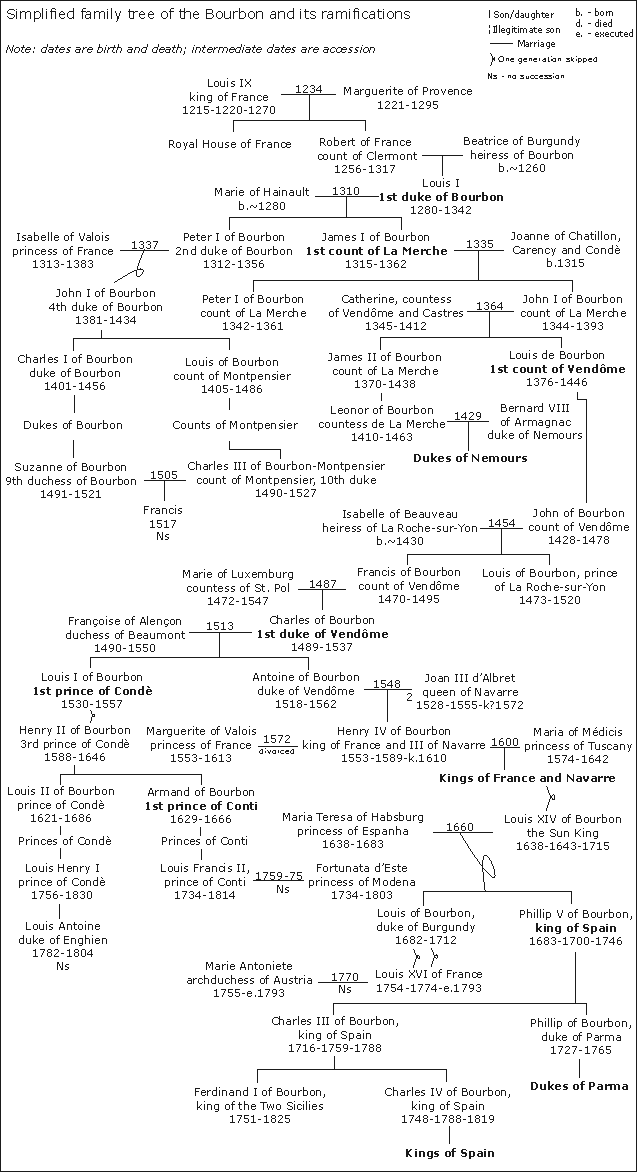
It can be said that every country that has ever had a monarch still has a hypothetical monarch, to whom the same selection rules apply, unless the whole family in question has been extirpated. The latter is almost impossible to achieve, as the cases of Russia and Ethiopia prove. There are probably collateral descendants of…
 The New Murrey and Blue blog