Lincoln
-
Digging for Britain (series 11)
Alice Roberts, bags, bath houses, Cardiff, Carlisle, Chedworth, defences, digging for Britain, docks, dodecahedrons, Domesday Book, Dorset, Dover, Enfield, evacuation, Exeter Cathedral, flint tools, forty hall, Gloucester, Grampians, gun emplacement, Henry V, Hereford, Imber, Kent, Leicester cathedral, Lincoln, Lowther Castle, Marshes, mosaic tiles, mudlarking, Norfolk, Northampton, norton disney, nunneries, Owain Glyn Dwr, Platonic solids, postern gates, pubs, Roman Britain, roundhouses, Scotland, Septimus Severus, shoes, Smallhythe, Snodhill Castle, Strathclyde, Syston, timber, Tintern Abbey, trade, Trellau Park, Wales, Waterloo, William II, WW2 defences, WyeAs another year dawns, it must be time for another series of Britain’s archeological highlights, divided into five regions. This time, it started in the north with Carlisle Cricket Club hosting a dig associated with the bathhouse of the emperor Septimius Severus, a particularly steep part of the Grampians and Lowther Castle, a site that…
-
Even more “Britain’s Most Historic Towns”
America, Armada, banking, Battle of Lincoln, body snatching, Charles II, Corn Laws, Drake, Edinburgh, Engels, executions, Glasgow, Horatio Nelson, industry, Lincoln, London, Manchester, Marx, medicine, Nicola de la Haie, Osborne House, overdrafts, Plymouth, Portsmouth, rapid expansion, Royal Society, Sir Francis Drake, Sir John Hawkins, Sir Walter Raleigh, theatre, William Burke, William HareAlice Roberts has been back on our screens with a third series of the above. This time, she visited (Mediaeval) Lincoln, (Restoration) London, (Naval) Portsmouth, (Elizabethan) Plymouth, (Steam Age) Glasgow, (Georgian) Edinburgh and (Industrial Revolution) Manchester, albeit not in chronological order like the two previous series. There was a focus on Nicola de la Haye…
-
… Walking Britain’s Roman Roads, in fact. It is quite a good series, in which Jones explores some of the most important of these, together with some aspects of Romano-British Society. The first episode takes him the length of Watling Street, the first part of which is now he M2, during which he visits the…
-
Stony Stratford is a small place today but in the medieval era it was along one of the main routes towards London and frequently visited by passing notables. Historically, it is primarily remembered for being the spot where Richard of Gloucester and the Duke of Buckingham finally met up with Edward V…beginning the dramatic chain…
-
Here is a passage from https://englishhistory.net/tudor/monarchs/the-road-to-bosworth-battle-of-bosworth-field/ I quote: “…Buckingham [wrote] a letter to Henry on 24 September 1483 which stated he would support the rebellion against Richard, even though he and Henry’s interests may not be perfectly compatible. What is certain is that Buckingham suspected his own life was forfeit with Richard III; he and…
-
The King’s bishop? What did John Russell know in 1483?
“Beauforts”, “Princes”, “Tudor” propaganda, AJ Pollard, Alison Hanham, Armstrong, Battle of Bosworth, Bishops, British Library, Chancery Court, Charles Ross, conspiracies, Crowland Chronicle, Dr. John Argentine, Earl of Northumberland, Edward IV, Francis Lovell, George Cely, Great Seal, Harleian Manuscript 433, Henry of Buckingham, Henry VII, Hicks, illegitimacy, Jane Shore, John Howard Duke of Norfolk, John Morton, John Russell, John Shirwood, John Smith, John Stow, judiciary, Lady Eleanor Talbot, Lady Margaret Beaufort, letters, Lincoln, Louise Gill, Ludgate, Mancini, Minster Lovell, More, oyer and terminer, Pamela Tudor-Craig, Paul Murray Kendall, Peter Hammond, regicide?, Richard III, Robert Russe, Robert Stillington, Rosemary Horrox, Royal Household, Sherlock Holmes, Simon Stallworth, Sir Anthony Wydeville, Sir William Stonor, Stephen Ireland, theories, Thomas Langton, Thomas Lynom, Titulus Regius, Tower of London, treason, Vatican City, Viscount Welles, Westminster Abbey, William Davey, Wydevilles“ ‘Is there any other point to which you would wish to draw my attention?’ ‘To the curious incident of the dog in the night time’ ‘The dog did nothing in the night time’ ‘That is the curious incident ‘ remarked Sherlock Holmes.”[1] By applying his reasoning to this simple observation, the world’s…
-
The Greatest Knight and Richard III
Barons’ War, Battle of Newbury, Bruces, Cartmel Priory, Crusades, Eleanor of Aquitaine, Henry II, Henry III, Isabel de Clare, John, jousting, Lincoln, Louis VII, Maud de Braose, Papal Legate, Pembroke Castle, Plantagenets, regent, Richard I, Richard III, sieges, Stephen, Stewarts, Templars, Temple Church, William Marshall, Worcester Cathedral, Young King Henry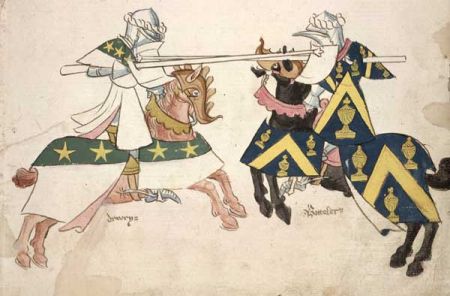
I have previously posted about my family history connections with Richard III here and I have since found out more interesting links. One such is William Marshall. Called by some the greatest ever knight, he is one of my direct ancestors and also the direct ancestor of Richard III. William had an eventful life. He…
-
I love Lincoln Cathedral and Turner, and here they are together. Absolutely beautiful, and a view that cannot have changed much since the 15th century. http://www.britishmuseum.org/research/collection_online/collection_object_details.aspx?objectId=743734&partId=1 Of course, Richard did visit Lincoln, and would have seen very much the same scene the Turner recreates so wonderfully. The following small extracts are from ‘The World of…
 The New Murrey and Blue blog