King’s Council
-
Elisabeth Brooke, Marchioness of Northampton.
Anne Bourchier, Anne Bray, annulment, attainder, bigamy, cancer, Catherine Parr, Constance of York, Despensers, divorce proceedings, Edward Seymour Duke of Somerset, Edward VI, Elizabeth Brooke, Elizabeth I, executions, George Brooke Lord Cobham, Henry VIII, Isabelle Despencer, Jane, John Dudley Duke of Northumberland, Katherine Howard, King’s Council, Lord Protector of the Realm, Marquessate of Norfolk, Mary I, Netherlands, Richard Beauchamp, Richard Beauchamp Earl of Warwick, Robert Dudley Earl of Leicester, royal attendants, secret marriage, separation, Sir William Parr, Thomas DespenserElisabeth Brooke had a very eventful life! My attention was drawn to her as she was a descendant of Constance of York and Thomas Despenser through their daughter Isabelle’s first marriage to Richard Beauchamp – the Richard Beauchamp who became Earl of Worcester as opposed to her second husband, also Richard Beauchamp, the Earl of…
-
The Secret Diary of Edward VI (and other monarchs)
accession, Archbishops of Canterbury, British Library, death, diaries, Edward Seymour Duke of Somerset, Edward VI, Enfield, executions, George V, Henry VIII, King’s Council, Lord Conyngham, marriage, Master of Horse, memorials, Nicholas II, Prince Albert, Prince Alfred, Prince Phillip of Greece, privacy, proclamation, Richard III, Russia, Sir Anthony Browne, Sir Michael Stanhope, Tower Hill, Tower of London, Victoria, Victoria Duchess of Kent, William IV, willsYes, Edward VI and other monarchs wrote diaries. Here are some extracts : Edward VI, early 1547: “After the death of King Henry th’eight his son Edward prince of Wales was come to at Hartford by th’erle of Hartford and S[ir] Anthony Brown Master of t’horse for whom befor was made great preparation that he…
-
Edward V and Coldridge: the evidence so far
“halo”, “Lambert Simnel”, “Missing Princes Project”, “Perkin”, “Princes”, “Tudor” rebellions, Bermondsey Abbey, blond hair, Brooks, Cecily Bonville, Chris Brooks, Coldridge, Dan Jones, David Starkey, Deer, denialists, Edward IV, Edward V, Edward VI, Elizabeth Roberts, Elizabeth Wydeville, ermine, Evans chantry, groupthink, height, Henry VII, Henry VIII, heralds, John Ashdown-Hill, John Dike, Journal of Stained Glass, King’s Council, Latin inscriptions, Lord of the Manor, Martin Cherry, mtDNA evidence, Philippa Langley, Richard of Shrewsbury, Robert Markenfield, sanctuary, Sheen, Sir Henry Bodrugan, Sir James Tyrrell, Sir John Evans, Sir John Speke, Stoke Field, sunne in splendour, The Dublin King, The Mythology of the “Princes in the Tower”, Thomas Grey Marquess of Dorset, Tower of London, Westminster Abbey, white roses, William ShakespeareThanks to this Daily Telegraph article last December, the world is now far more aware of the distinct possibility that the former Edward V lived on as “John Evans” at Coldridge in Devon into the reign of Henry VIII, his nephew, as a parker minding deer for his half-brother Thomas Grey, Marquess of Dorset. In…
-
Joanna Fitzalan, Lady of Abergavenny
Abergavenny Castle, Adam of Usk, Azincourt, Constance of York, Edward Duke of York, executions, House of Lords, Isabel le Despenser, Joanna Fitzalan, King’s Council, life jointure, Owain Glyn Dwr, Richard Earl of Arundel, Richard Earl of Worcester, Richard II, Thomas Earl of Gloucester, William Beauchamp Lord BergavennyJoanna was the daughter of that Richard Fitzalan, Earl of Arundel, who was executed by Richard II in 1397. In 1392, when she was about 17, she was married to William Beauchamp, Lord Bergavenny, younger brother of the Earl of Warwick, who was 55. They had a son, Richard, who eventually became Earl of Worcester,…
-
WILLIAM CATESBY, GOOD GUY, BAD GUY, TRAITOR? THE CLUES IN HIS WILL
Ashby de la Zouch, Battle of Bosworth, bigamy, Crowland Chronicle, Daniel Williams, Elizabeth Lady Latimer, Elizabeth St. John, Francis Viscount Lovell, George Lord Strange, Henry of Buckingham, Henry VII, illegitimacy, JA Roskell, King’s Council, Lady Eleanor Talbot, Logge Register, Lord Scrope of Bolton, Margaret Zouche, Peter Hancock, pre-contract, Richard Beauchamp Earl of Warwick, Richard III, Robert Catesby, Sir Richard Ratcliffe, Thomas Cardinal Bourchier, Thomas Lord Stanley, Thomas More, Tower of London, treason, William Catesby, William Colyngbourne, William Lord Hastings, wills, WydevillesREBLOGGED FROM A MEDIEVAL POTPOURRI sparkypus.com Brass of William Catesby, Ashby St Ledgers Church. Commissioned by William’s son in 1507. Date of death 20th August is incorrect, predating Bosworth, perhaps in an attempt to cover up his inglorious end. Note the damage across the neck. Photo Aidan McRae Thomas Flkir As no doubt can be seen…
-
Today marks the anniversary of the death in 1402 of Edmund of Langley, 1st Duke of York, an undervalued and almost forgotten prince. Edmund deserves his place in history. Without him the House of York itself would never have existed, and its later members, who everyone finds so interesting, would never have been born.…
-
Edmund Mortimer 5th Earl of March
Anne Stafford, Battle of Shrewsbury, Constance of York, Earl of Northumberland, Earldom of March, Edmund Mortimer, Edmund of Langley, Harfleur, Harlech Castle, Henry IV, Henry V, Humphrey of Gloucester, Ian Mortimer, Iolo Goch, Ireland, John Holland, King’s Council, Mortimers, Normandy, Owain Glyn Dwr, Pevensey Castle, plot, Richard Earl of Cambridge, Richard II, Roger Mortimer, Sir Hugh Waterton, Sir John Mortimer, Sir Thomas Grey, Southampton, Thomas Earl of Surrey, Thomas of woodstock, Tripartite Alliance, Wales, Windsor CastleEdmund Mortimer, later 5th Earl of March, was born on 6 November 1391. His parents were Roger Mortimer, Earl of March (1374-1398) and his wife, the well-connected Alianore Holland, daughter of Thomas Earl of Kent. In the view of many people, including the Westminster Chronicler, and the Welsh poet Iolo Goch (c1320-1398) Earl Roger was…
-
In his unpublished semi-satirical volume, More has the Lord Protector and Defender of the Realm, Richard Duke of Gloucester who was also Lord High Constable of England for life, call for some strawberries before the Constable’s Court could pronounce sentence on William Lord Hastings. Many historians have struggled to understand the significance of the strawberries…
-
Why it had to be the Tower
“Tudor” “sources”, “withered arm”, Annette Carson, Crowland, Edward V, Henry VII, John Morton, John Russell, Julius Caesar, King’s Council, Lady Margaret Beaufort, Lord Protector of the Realm, Mancini, plots, red herrings, Richard III, strawberries, Thomas Rotherham, Three Estates, Tower of London, Woodvilles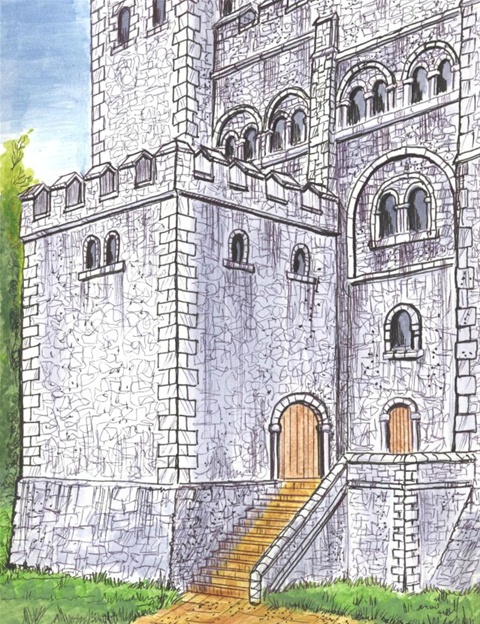
Many Ricardians, although convinced of Richard’s innocence in certain matters, have been perplexed by his apparent uncharacteristic actions concerning the precipitous execution of William, Lord Hastings at the Tower. Annette Carson has investigated the contemporary evidence and come up with a very plausible theory – she admits it is just that, a theory, but…
 The New Murrey and Blue blog