Jane
-
Richard III’s body is brought back to Leicester. Artwork by Victor Ambrus We all know the grim, but glorious way poor Richard met his death, his body maltreated at the callous behest of Henry Tudor – who was destined to die in his own bed. He isn’t listed in the link below, but his was…
-
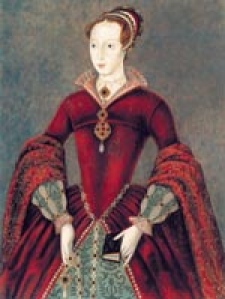
It is reputed to be Jane, who was executed in February 1554 at the age of about seventeen. She looks a little older than that to us, but teenagers’ dress sense has changed in the space of 460 years and most of her portraits date from at least forty years after her lifetime. This, by…
-
A little more about Lord Henry Hastings, son of Katherine Pole and later Earl of Huntingdon. 1595 was the year he died, after serving as Lord President of the Council of the North …
-
Those of you who attended part of Richard III’s reburial week, or visited St. Martin’s Cathedral and the Visitors’ Centre subsequently, may have wandered off into the east of the city centre along Cank Street, Silver Street by the old arcades, or even the High Street, past. At the end of High Street, into which…
-
In the heart of the City of London stands the medieval Guildhall. Built between 1411 and 1440 on the site of a much older structure, for the most part it survived the Great Fire of London, and still dominates the square in which it stands, a true relic of the London of Richard’s day. Legend…
-
1) He created two peeresses in their own right – Margaret Pole as Countess of Salisbury and Anne Boleyn as Marquess of Pembroke (see point 2). 2) He gave noblewomen, such as the above, Lady Margaret (Stafford) Bulmer, Catherine Howard and Viscountess Rochford, an equal opportunity to be executed. 3) He gave women, such as…
-
Why lineage still matters in battle
“Beauforts”, “Tudors”, Battle of Bosworth, Blanche of Lancaster, Cnut, Earl of Oxford, Edmund Mortimer, Edward I, Edward IV, Edward VI, Emma of Normandy, Ethelred II, Hastings, Henry I, Henry IV, Henry V, Henry VI, Henry VII, House of York, James VII/II, Jane, Joan of Acre, Mary I, Matilda, Richard II, Richard III, Stephen, William I, William IIIThe crown of England, among others, has often been claimed in battle or by other forceful means. However, to exercise such a claim, it is necessary to persuade a challenger’s military followers that he has a dynastic claim of sorts, even when this is greatly exaggerated or totally spurious. Thus William I, the Conqueror or…
 The New Murrey and Blue blog