Ipswich
-
Basil Brown’s work at Sutton Hoo, on secondment from Ipswich Museum, began in summer 1938 and reached “Mound One” today in 1939. In time, he explored the many mounds on that site, one of which probably includes the remains of Raedwald, King of East Anglia to about 624 and Bretwalda of England from 616. Raedwald,…
-
Is it time to exhume Cardinal Wolsey?
Abbey Park, burial sites, Catherine of Aragon, Grand Union Canal, Henry VIII, high treason, Ipswich, King’s Great Matter, Leicester Abbey, Leicester cathedral, Leicester Greyfriars, Richard III, Richard Pescall, Soar, St. Margaret’s Church Leicester, St. Nicholas’ Street Ipswich, Thomas Wolsey, Wolsey’s Gate, YorkThomas Wolsey was born in Ipswich, apparently in March 1473, to Joan Daundy and Robert Wolsey, who seems to have been a butcher and may possibly have been killed at Bosworth. Opposite his birthplace, in St. Nicholas’ Street, is this seated statue (below). His local achievements include Wolsey’s Gate and, after about 475 years, the…
-
So where exactly is “Orwell”?
Christopher Jones, Christopher Newport, Edmund Earl of Kent, Emma Lady Hamilton, Essex, Felixstowe, Harwich, Harwich Society, Horatio Nelson, Ipswich, Isabella de Valois, Jamestown, John Cromwell, Kathryn Warner, landing, maps, Orwell, pubs, River Orwell, River Stour, Roger Mortimer, Samuel Pepys, Shotley Peninsula, Suffolk, Three CupsHarwich Town station is the end of the line, a twenty-five minute ride from Manningtree and the north-eastern extremity of Essex. As you cross the main road from the station car park, turning left takes you past a series of old buildings with Harwich Society plaques amid a modern setting. Some of these commemorate people such…
-
The Court of Requests and Thomas Seckford
“Tudor” justice, “Tudors”, anniversaries, Brandons, Christophe Saxton, court of Requests, de la Pole family, Edmund Crouchback, Edward I, Elizabeth I, English Civil War, executions, Henry Earl of Huntingdon, Henry Grey Duke of Suffolk, Henry VII, Henry VIII, Ipswich, Jane, Joan of Acre, law, Lords Audley, Margaret Wingfield, Orford, Parliament, Richard III, Richard’s justice, Ripon, Seckford Hall, Thomas Seckford, Woodbridge
In 1484, King Richard III created a minor equity court to deal with minor disputes in equity; these are disputes where the harshness of common law would be acknowledged by those appointed by the Crown. Equity courts were mostly seen as the Lord Chancellor’s remit, and the split of the Chancery Courts from the Curia…
-
Peter Cole was a tanner from Ipswich, although his year of birth is generally unknown. He found himself tried in Norwich for heresy and executed there, presumably in the Castle moat (below), which must have been something of a shock as it was 1587 and the heresy laws had been repealed again almost thirty years…
-
Today in 1558, Alice Driver and Alexander Gooch were burned on the Cornhill in Ipswich. Her trial record, particularly her testimony, shows that Alice Driver freely admitted not sharing certain Roman Catholic beliefs and this was sufficient to convict her. Both are commemorated on this monument in Christchurch Park (left) and Driver by a road…
-
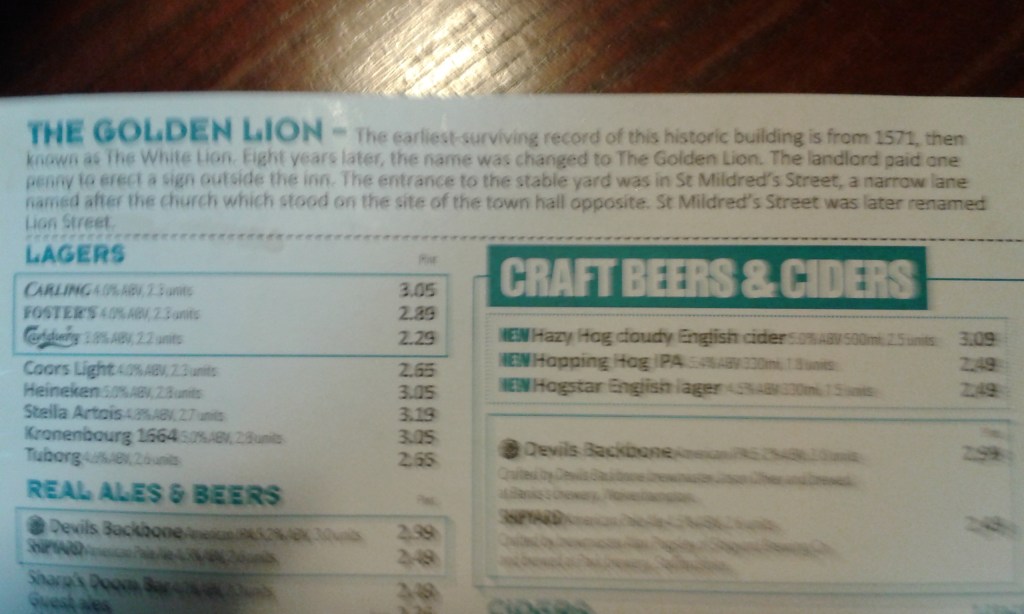
Originally posted on Mid Anglia Group, Richard III Society: We all know by now that the Red Lion in Colchester was originally the White Lion because this was the emblem of the Howards but was renamed because the family was out of favour at James I’s accession. History definitely wasn’t on my mind today but…
-
Originally posted on Mid Anglia Group, Richard III Society: Terry Hunt of the EADT writes here about some famous people with Ipswich links: Chaucer (as an ancestor of Richard’s brother-in-law) and Wolsey (Richard’s contemporary) are obvious cases, as is Dickens. He doesn’t mention Thomas Cromwell (after whom the Square is named) but he does mention…
 The New Murrey and Blue blog