Henry VII
-
… his name was Rouse. He had the key to every house. He was suspected and then arrested …” (https://www.google.co.uk/url?sa=t&rct=j&q=&esrc=s&source=web&cd=1&cad=rja&uact=8&ved=0ahUKEwjU_ZWEjZvKAhUJ1h4KHfbYBp0QFgggMAA&url=http%3A%2F%2Fopus.lingfil.uu.se%2FOpenSubtitles2012%2Fxml%2Fen%2F2005%2F20551%2F3099498_1of1.xml.gz&usg=AFQjCNF57cSMby7R2qZUHshq9kvRA28kXA&sig2=RZ7d8jSa-bulSdyeXFoUYg) Alfred Arthur Rouse (https://en.wikipedia.org/wiki/Alfred_Rouse) was an ostensibly happily married commercial traveller, to Lily May Watkins, when in London. In other regions, he was a bachelor or occasionally “married” to a different woman. To end his…
-
Why it had to be the Tower
“Tudor” “sources”, “withered arm”, Annette Carson, Crowland, Edward V, Henry VII, John Morton, John Russell, Julius Caesar, King’s Council, Lady Margaret Beaufort, Lord Protector of the Realm, Mancini, plots, red herrings, Richard III, strawberries, Thomas Rotherham, Three Estates, Tower of London, Woodvilles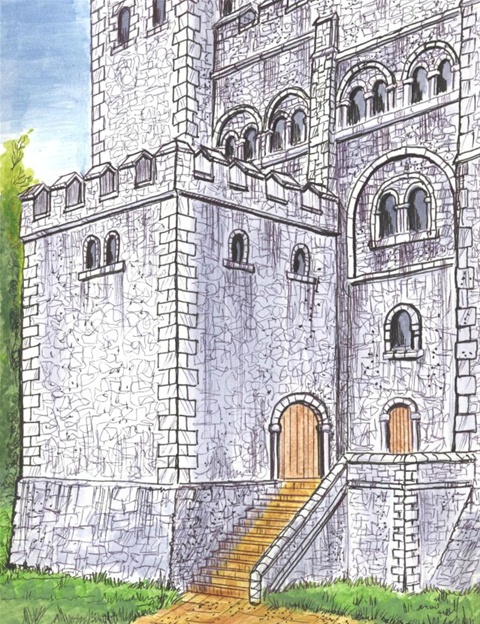
Many Ricardians, although convinced of Richard’s innocence in certain matters, have been perplexed by his apparent uncharacteristic actions concerning the precipitous execution of William, Lord Hastings at the Tower. Annette Carson has investigated the contemporary evidence and come up with a very plausible theory – she admits it is just that, a theory, but…
-
KING’S GAMES: A MEMOIR OF RICHARD III
Anne Neville, Battle of Bosworth, book review, Cecily Duchess of York, character, Earl of Northumberland, Edmund of Rutland, Edward IV, Francis Lovell, George Duke of Clarence, Henry of Buckingham, Henry VII, historical fiction, Isobel Neville, Josephine Tey, King’s Games, Minster Lovell, Nance Crawford, Paul Murray Kendall, Richard III, Shakespeare, Sir William Stanley, Stoke Field, Thomas Lord StanleyA Verse Play in Two Acts with Commentaries By Nance Crawford “The play’s the thing wherein I’ll catch the conscience of the king” (Hamlet) To be honest, I am not much taken with modern Ricardian fiction. I think that in the last five centuries too much fiction and too little fact has been written about…
-
Your own Henry VII dartboard – manufactured in Wales but probably not designed there. The factory is now working on a wall of pikes to hide the Squinting Usurper (c) behind. h/t Ian Churchward
-
Originally posted on Giaconda's Blog: Jungian archetypes I’ve been interested in ‘archetypes’ for a long time as I am very drawn to myth and to aspects of Jungian psycho-analysis particularly with regard to how we analyse the personalities and character of historical figures. Often ‘myth’ is classified as something unreal or untrue yet myths also…
-
Originally posted on Giaconda's Blog: Combining my two great loves, history and art, I want to look at some of the imagery used to depict Plantagenet kings during the period and taking a few examples examine what the visual language may be telling us about how kingship was viewed and how the kings themselves wanted…
-
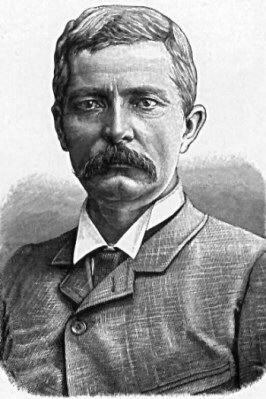
I recently found out that the famous explorer, Stanley (he of “Dr Livingstone, I presume” fame) had chosen his name as a tribute to the man who unofficially adopted him, which is fair enough. It was just a shame that his adopted father’s surname was STANLEY. But it gets worse, his choices for his christian…
-
In spite of the name ‘Wars of the Roses’ given in retrospect, it is exceedingly unlikely that any long-term ‘war’ at all was recorded contemporarily. During those years, the vast majority of the time the country was at peace, and unconcerned with its king being either Yorkist or Lancastrian. The bitter hatred between those two…
-
“Without a bad guy, who could ever be good?” ~The Agent, “Sweet Redemption Music Company” “Though it puzzles me to learn that though a man may be in doubt of what he knows, very quickly will he fight to prove that what he does not know is so.” ~”The King and I” Thou elvish-marked, abortive,…
-
Originally posted on RICARDIAN LOONS: “And in another isle toward the south dwell folk of foul stature and of cursed kind that have no heads. And their eyes be in their shoulders.” – Sir John Mandeville (14th c.) It’s funny how myths and legends become a part of history. This column – Debunking the Myths…
 The New Murrey and Blue blog