Fair Rosamund Clifford
-
According to Caroline Halstead in Richard III As Duke Of Gloucester And King of England, the White Rose derives from Clifford Castle (near Hay-on-Wye). It therefore came to the York family as part of their inheritance from the Mortimers, who had themselves inherited Clifford Castle. But why is Clifford Castle associated with a white rose?…
-
There are many, many false ideas and funny beliefs about the Middle Ages and some of the notable figures who lived in those times. Alfred and the cakes, Edward II and the hot poker, Eleanor of Aquitaine flinging poisoned toads on Fair Rosamund… And of course, almost everything you can think of about Richard III. …
-
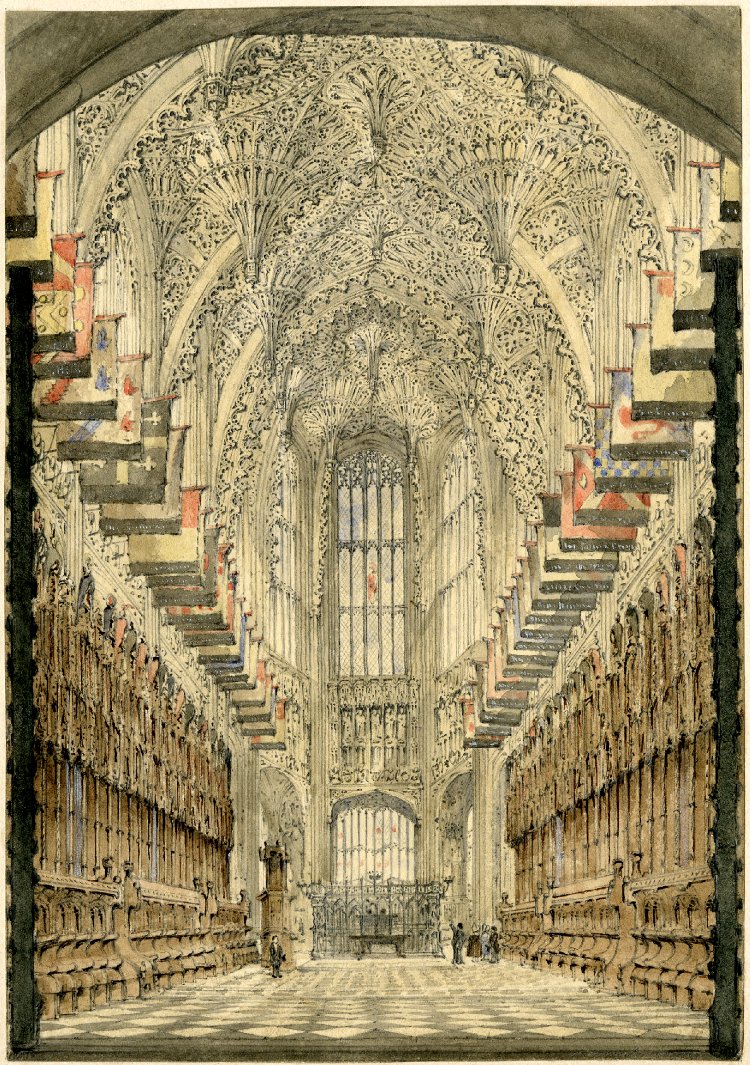
UPDATED POST @ sparkypus.com A Medieval Potpourri https://sparkypus.com/2020/05/14/the-bones-in-the-urn-again-a-17th-century-hoax/ 19th century painting of the Henry VII Chapel by an unknown artist. The entrance to the area where the urn stands is to the left of the tomb of Henry VII Helen Maurer, in her wonderful article, Whodunnit: The Suspects in the Case mentioned in the notes ‘As for why…
-
MISTRESS OF THE MAZE—Rosamund Clifford, Lover of King Henry II
Annabel de Balliol, Bishop Hugh of Lincoln, books, Civil War, Edward IV, Everswell, Fair Rosamund Clifford, Geoffrey Plantagenet, Godstow, Henry II, Ida de Tosney, Jane Shore, John, Louis VIII, mazes, Mistress of the Maze, Old Sarum Well, Raymond of Poitiers, Rosamund’s Well, William Longspee, WoodstockJane Shore is one of the most famous royal mistresses and certainly the prime one of the 15th century. Arguably, however, the most famous royal mistress in medieval English history is the enigmatic Rosamund de Clifford, known as ‘Fair Rosamund’ or ‘Rose of the World.’ Like Jane, Rosamund seemed to have received a generally benign…
-
What do Matilda and Margaret, Eleanor and Elizabeth, plus two Henrys, add up to…?
“Beauforts”, Antioch, Catherine de Roet, Crusades, Eleanor of Aquitaine, Elizabeth of York, Fair Rosamund Clifford, Gerald of Wales, Henry I, Henry II, Henry VII, John of Gaunt, Lady Margaret Beaufort, Lancastrians, Matilda, Raymond of Poitiers, Richard III, Robert of Gloucester, Shakespeare, Stephen, The Lion in Winter, Viscount Welles, YorkistsTo my mind, it adds up to two very similar situations that are two centuries apart. Let us begin in the 12th century. On his deathbed, Henry I of England named as his successor his only surviving child, his daughter, the Empress Matilda. He obliged the nobility to agree. They reneged, of course. A woman…
 The New Murrey and Blue blog