Edmund Duke of Somerset
-
The Traitor’s Arms?
“Defiance”, “Loveday”, Act of Accord, Agnes Sorel, allegory, Angevin bloodline, Arma Reversata, Ashperton, Ashperton monument, attainder, Blore Heath, Book of Hours, Calais, carvings, Catherine de Roet, Catherine de Valois, Charles VII, chivalry, Chrimes, Christmas, College of Heralds, Cornish rebellion, coronations, Courtauld Institute of Art, Coventry, crowns, Dunstable Chronicle, Earls of Salisbury, Edmund Crouchback, Edmund Duke of Somerset, Edward Hall, Edward IV, Edward of Lancaster, Edward the Black Prince, Elizabeth I, executions, First Battle of St. Albans, fleuur-de-lys, Fox-Davies, France, French College of Arms, Garter stalls, Gascony, Geoffrey Fisher, Great Seal, Hanseatic fleet, Helen Maurer, helmets, Henry Holland Duke of Exeter, Henry IV, Henry VI, Hereford Cathedral, Herefordshire, Hicks, high treason, Historia Anglorum, Hollands, Hon y soit qui mal y pense, House of York, Hugh Despencer, Hugh Despencer the Younger, Humphrey of Gloucester, Ian Mortimer, insanity, inverted arms, Ireland, Jack Cade, Jacques de Saint-George, James II, James VI/I, Jeanne d’Arc, Joan “Beaufort”, John of Bedford, John of Gaunt, Lancastrians, lions, livery collars, Lord of Misrule, Lord Protector of the Realm, Mary de Bohun, Matthew Parris, mortimer claim, Mortimer’s Cross, Nigel Saul, Nikolaus Pevsner, Normans, Northampton, Old St. Paul’s, Order of the Crescent, Order of the Garter, Owain Tudor, Parliament of Devils, Plantagenets, plaster mouldings, propaganda, Ralph Earl of Westmorland, Ralph Griffiths, renaissance, Rene d’Anjou, Restoration, reversed arms, Richard Beauchamp Earl of Warwick, Richard Duke of York, Richard of Salisbury, Rose Troup, Sandwich, Seine, Shakespeare, shields. royal arms, Sir Andrew Trollope, Sir Ralph Grey, squirrel, Staffords, stonemasons, swan badge, Switzerland, symbolism, the Beauforts., tombstones, tournaments, Treaty of Troyes, Tres Rich Heures, Warwick the Kingmaker, Westminster Abbey, Wigmore, William Duke of Suffolk, William Grandison, William Neville Lord Fauconberg, Windsor Castle, Woolhope ClubIn 1840 workmen carrying out repairs to St Bartholomew’s Church, Ashperton, Herefordshire were collecting stones from the ruins of a nearby manor house when they discovered a heavy stone plaque, carved with an elaborate coat of arms, among the rubble. The stone was taken to the church for safekeeping and has hung on the wall…
-
Today in 1495 marked the death of Henry VII’s uncle, Jasper Tudor, and so seems an appropriate day for me to post the following extract, which is from The Country Gentry in the Fourteenth Century by N. Denholm-Young, published in 1969. “…It is a crying fault among English historians that they pay only lip-service to…
-
When reading the Yorkshire post I came upon the following sentence: “It’s thought that the white rose was adopted as a symbol in the 14th century, when it was introduced by Edmund of Langley, the first Duke of York and founder of the House of York, a dynasty related to the Plantagenet kings.” Related to…
-
A little-covered event took place at Worksop on 16th December 1460. It is covered in great detail in this excellent article. The whole of the Our Nottinghamshire site is worth exploring. However, it the Battle of Worksop that is dealt with here, and it seems there is very little known about exactly where the battle…
-
Plantagenet Ireland and Poynings’ Law
“Lambert Simnel”, anecdotes, Anglesey, Art MacMurrough, Beaumaris, Charles I, coronations, Crown in Ireland Act, Drogheda Castle, Dublin Cathedral, Earls of Desmond, Earls of Ormond, Earls of Ulster, Edmund Duke of Somerset, Edmund of Rutland, Edward Bruce, Edward II, Edward of Warwick, English Privy Seal Letters, executions, finance, France, George I, Henry IV, Henry V, Henry VI, Henry VII, Ireland, Irish Parliament, James VI/I, John Ashdown-Hill, John Earl of Shrewsbury, justiciar of Ireland, Leinster, Lieutenant of Ireland, London, Ludford Bridge, Nigel Saul, numismatics, O’Neills, Parliament, Poynings’ Law, Ralph Griffiths, repeal, Richard Duke of York, Richard II, Robert Devereux Earl of Essex, Roger Mortimer 4th Earl of March, Scotland, Sir Edmund Mortimer, Sir Edward Poynings, Sir William de la Pole, Spain, St. James’ Park, Stoke Field, Thomas Despenser, Thomas Holland, Thomas Mowbray Earl of Norfolk, turnips, Ulster, Ulster plantation, Wales, War of the Three KingdomsIt is fair to say that most medieval English kings had little interest in Ireland except as a source of revenue. (The same was probably true about England and Wales but it seems too cynical to say it, and at least they did live there.) Prior to the Bruce invasion, Ireland yielded between £5000 and…
-
Henry VI: saint or sinner?
“Nicholas of the Tower”, Adam Moleyns, Archbishop Kemp, aristocratic lawlessness, Azincourt, Bertram Wolffe, biographies, Calais, Cardinal Beaufort, Charles VI, Charles VII, Christine Carpenter, debt, deposition, Duke of Orleans, Edmund Duke of Somerset, Eton, feudalism, First Battle of St. Albans, France, Great Council, Harfleur, Henry V, Henry VI, Henry VII, Humphrey of Gloucester, Hundred Years War, impeachment, insanity, Ireland, Jack Cade, John Blacman, John Duke of Bedford, John Duke of Suffolk, John Harvey, John Watts, Kent, King’s College Cambridge, Lord Protector of the Realm, majority, Margaret d’Anjou, Normandy, Parliamentary Roll, Polydore Vergil, Ralph Griffiths, Ralph Lord Cromwell, Readeption, Richard Duke of York, treason, Valois, Wakefield, William Duke of Suffolk, William TailboysA gentle and devotional life About seventy years ago, the historian John Harvey wrote this in an essay about King Henry VI: “The life and death, and the thwarting of his noble designs are one (sic) of the sorriest tragedies of English history. He was a victim of forces outside his control, for whose existence…
-
Richard III And The Tudor Genealogy — RICARDIAN LOONS
“Tudor” genealogy, Bertram Fields, Catherine de Valois, Colin Richmond, Dan Jones, Edmund “Tudor”, Edmund Duke of Somerset, Eleanor Beauchamp, executions, France, G.L.Harriss, Henry V, Henry VI, Henry VII, Henry VIII, Hereford Greyfriars, Humphrey of Gloucester, Jasper “Tudor”, John Ashdown-Hill, John Duke of Bedford, law change, Michael K Jones, Mortimer’s Croft, Owain Tudor, Parliament, proclamations, remarriage of royal stepmothers, Richard III, royal armsIt is generally acknowledged by historians that Henry Tudor, who defeated Richard III, the last Yorkist king, at Bosworth and went on to be crowned Henry VII, wasn’t the Lancastrian heir to the throne of England he claimed to be. His mother, Margaret Beaufort, was descended from John of Gaunt, the third surviving son of […]…
-
The 10 greatest medieval royal romances? Some, maybe….
Anne Boleyn, Anne Neville, Anne of Bohemia, Blanche of Lancaster, Catherine de Roet, Catherine de Valois, Cecily Duchess of York, Charles Brandon, Edmund Duke of Somerset, Edward I, Edward II, Edward III, Eleanor of Castile, George Duke of Clarence, Henry VIII, Hugh le Despenser, Isobel Neville, John of Gaunt, Mary “Tudor”, Owain Tudor, Phillippa of Hainault, Piers Gaveston, Richard Duke of York, Richard II, Richard IIIWell, my opinion only, of course, but where are John of Gaunt and Katherine Swynford/de Roët? I don’t believe his first wife, Blanche, was his greatest love. That honour went to Katherine, for love of whom he went to extraordinary lengths, enduring scandal and opprobrium, but eventually making her his third duchess. And managing to…
-
Richard III and Robert Cecil (Part II)
anti-Stratfordianism, Battle of Bosworth, Earls of Oxford, Edmund Duke of Somerset, executions, First Battle of St. Albans, historical fiction, Janet Reedman, Joanne Larner, John Tiptoft Earl of Worcester, Josephine Tey, kyphosis, Lord High Constable, Richard III, Robert Cecil, Rosemary Hawley Jarman, scoliosis, Shakespeare, Sharon Kay Penman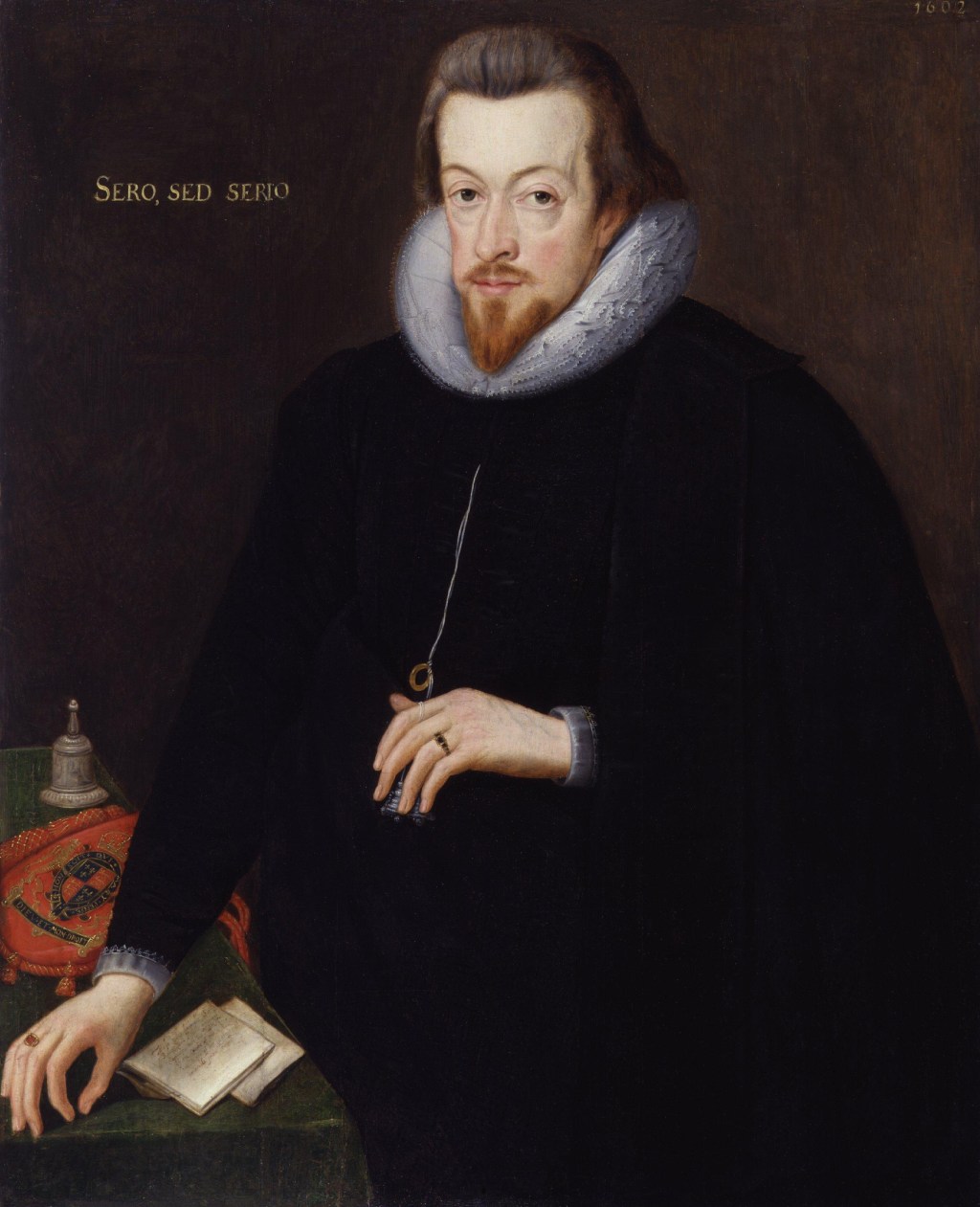
In a previous post, we explored the theory that Shakespeare’s Richard III was actually based on the Elizabethan politician, Robert Cecil. Here is another discussion of the subject, Richard III and Robert Cecil, with references to the hypothesis that Shakespeare was actually the 17th Earl of Oxford, a descendant of the previous Earls of Oxford…
 The New Murrey and Blue blog