Battle of Bosworth
-
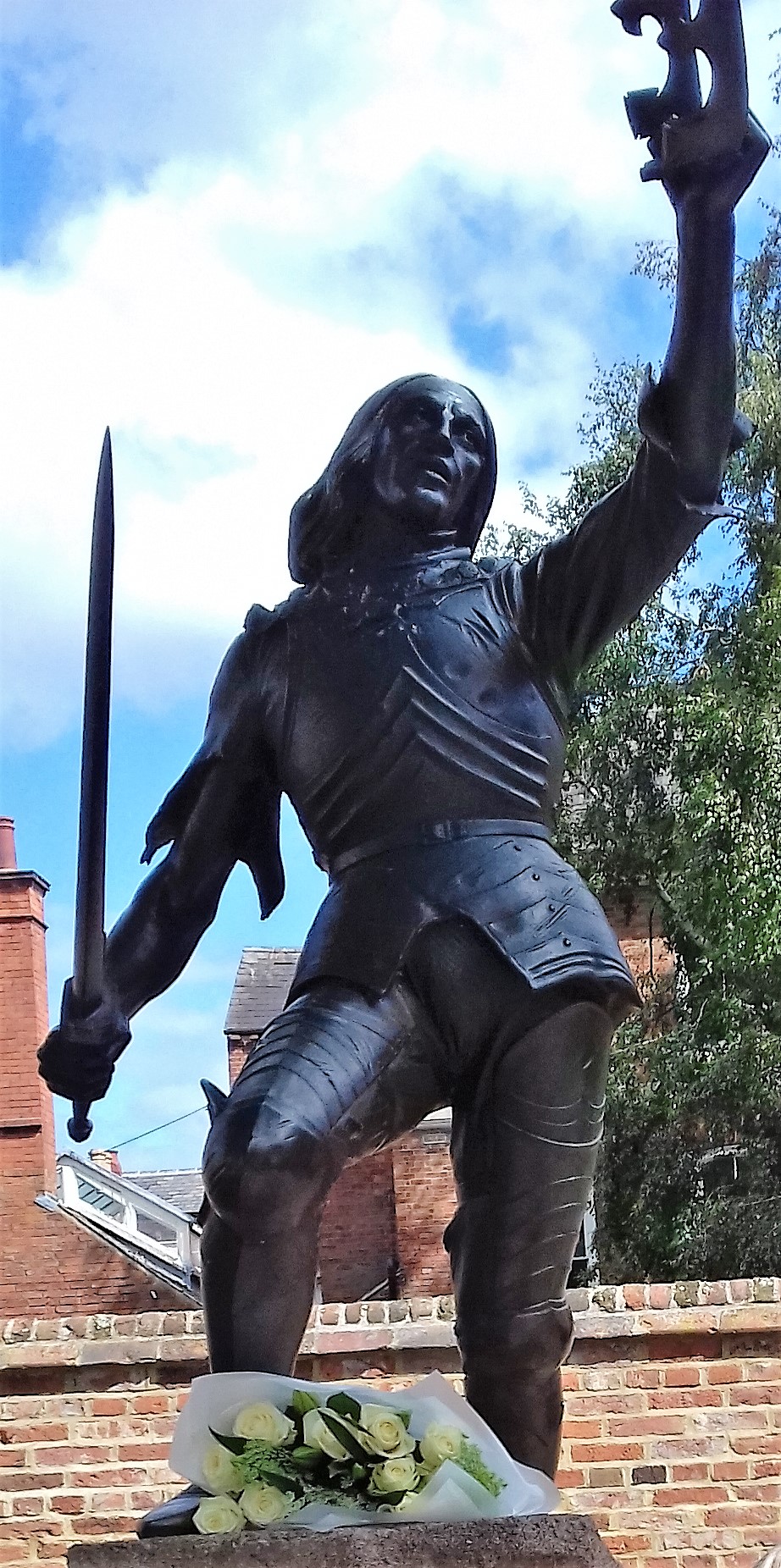
This is how the Richard III Society Facebook page described the forthcoming Bosworth Mediaeval Festival/re-enactment weekend (18-19th August 2018): “BOSWORTH MEDIEVAL FESTIVAL TO STAGE ALTERNATIVE ‘WHAT IF RICHARD WON?’ BATTLE. This year’s Bosworth Medieval Festival is set to present a twist on the history changing Battle of Bosworth – by exploring what would have happened…
-
Thomas Stanley, or, the man with the evil beard….
“Perkin”, “Tudors”, Battle of Bosworth, Blore Heath, Cheshire, executions, First Battle of St. Albans, Henry of Buckingham, Henry VII, Lathom House, Lord High Constable, Lord Welles, Ludlow, Richard III, Second Battle of St. Albans, Sir William Stanley, Stoke Field, Tatton Park, Tewkesbury, Thomas Lord Stanley, Towton, treachery, Wakefield, Wars of the RosesFor anyone interested in knowing what made slippery Lord Stanley tick, here is an excellent evaluation, save that Sir William was executed for refusing to oppose “Perkin”, not for supporting him. The man was a born opportunist and survivor. Full stop. Oh, and he had an evil beard!
-
Well, the walk itself is probably excellent…just don’t read the intro! Not only for the errors, but the general tone. Clearly influenced by all that “fake news” from the Tudors…
-
The King’s bishop? What did John Russell know in 1483?
“Beauforts”, “Princes”, “Tudor” propaganda, AJ Pollard, Alison Hanham, Armstrong, Battle of Bosworth, Bishops, British Library, Chancery Court, Charles Ross, conspiracies, Crowland Chronicle, Dr. John Argentine, Earl of Northumberland, Edward IV, Francis Lovell, George Cely, Great Seal, Harleian Manuscript 433, Henry of Buckingham, Henry VII, Hicks, illegitimacy, Jane Shore, John Howard Duke of Norfolk, John Morton, John Russell, John Shirwood, John Smith, John Stow, judiciary, Lady Eleanor Talbot, Lady Margaret Beaufort, letters, Lincoln, Louise Gill, Ludgate, Mancini, Minster Lovell, More, oyer and terminer, Pamela Tudor-Craig, Paul Murray Kendall, Peter Hammond, regicide?, Richard III, Robert Russe, Robert Stillington, Rosemary Horrox, Royal Household, Sherlock Holmes, Simon Stallworth, Sir Anthony Wydeville, Sir William Stonor, Stephen Ireland, theories, Thomas Langton, Thomas Lynom, Titulus Regius, Tower of London, treason, Vatican City, Viscount Welles, Westminster Abbey, William Davey, Wydevilles“ ‘Is there any other point to which you would wish to draw my attention?’ ‘To the curious incident of the dog in the night time’ ‘The dog did nothing in the night time’ ‘That is the curious incident ‘ remarked Sherlock Holmes.”[1] By applying his reasoning to this simple observation, the world’s…
-
…, who became Lord Chamberlain today in 1483 and carried the third sword of state at Richard’s coronation three weeks later has been featured in his own blog since February 2017, thanks to Michelle (and apologies for the missing accent). She also makes a great effort to determine his fate.
-
Not at all eerie in daylight! Feel like being spooked? Somewhere with a connection to Richard? On 8th June, Haunted Heritage Paranormal Events are visiting Donington Le Heath Manor House, near Coalville in Leicestershire, one of the oldest houses in England! “It is believed that Robert De Herle bought the land and had the house built…
-
Um, I don’t think Edward III and the Black Prince are Renaissance, but the book might be interesting. Perhaps it more concerns the build-up to Renaissance warfare?
-
Britain’s most historic towns
“Tudors”, Alice Roberts, Battle of Bosworth, Belfast, canary, Channel Four, Cheltenham, Chester, ducking stool, Earl of Oxford, Edward VI, Elizabeth I, executions, fools, Foxe’s Book of Martyrs, Francis Kett, Henry VII, Henry VIII, heresy, Jasper “Tudor”, justice, Kett Rebellion, Lollards’ Pit, Lord Chamberlain’s Men, Low Countries, Mary I, medieval clothes, Morris dancing, Mousehold Heath, Norwich, Norwich Guildhall, pubs, punishments, Reformation, refugees, Robert Kett, Shakespeare, sumptuary laws, weavers, Wensum, Will Kemp, Winchester, YorkThis excellent Channel Four series reached part four on 28th April as Dr. Alice Roberts came to Norwich, showing streets, civic buildings and even a pub that I have previously visited, describing it as Britain’s most “Tudor” town. She began by describing Henry VII as “violently seizing” the English throne (or at least watching whilst…
 The New Murrey and Blue blog