buildings
-
Leslau, Holbein, More and Clement
“Princes”, Dr. John Clement, Duchy of Lancaster, Edward VI, Elizabeth I, Erasmus, esses, Fleet prison, fleuur-de-lys, flowers, Germany, Hans Holbein, Henry Patterson, Henry VIII, infrared photography, Jack Leslau, John Dudley Duke of Northumberland, John Fisher, John Harris, jousting, Latin, Louvain, Matt Lewis, Mechelen, peonies, Pilgrimage of Grace, rebus, Richard III, Rowlandas Lockey, royal arms, Seneca, Sir Anthony Wingfield, Sir Edward Guildford, The Family of Thomas More, Thomas Cromwell, Thomas More, Thomas Wolsey, Tower of London, Utopia, William CecilBefore I begin, I have two words of warning. The first is that a huge spoiler for my novels Loyalty and the sequel Honour unavoidably follows. Just so that you know! Secondly, the following is my telling of the theory researched and expounded by Jack Leslau, an amateur art enthusiast who believed that he stumbled…
-
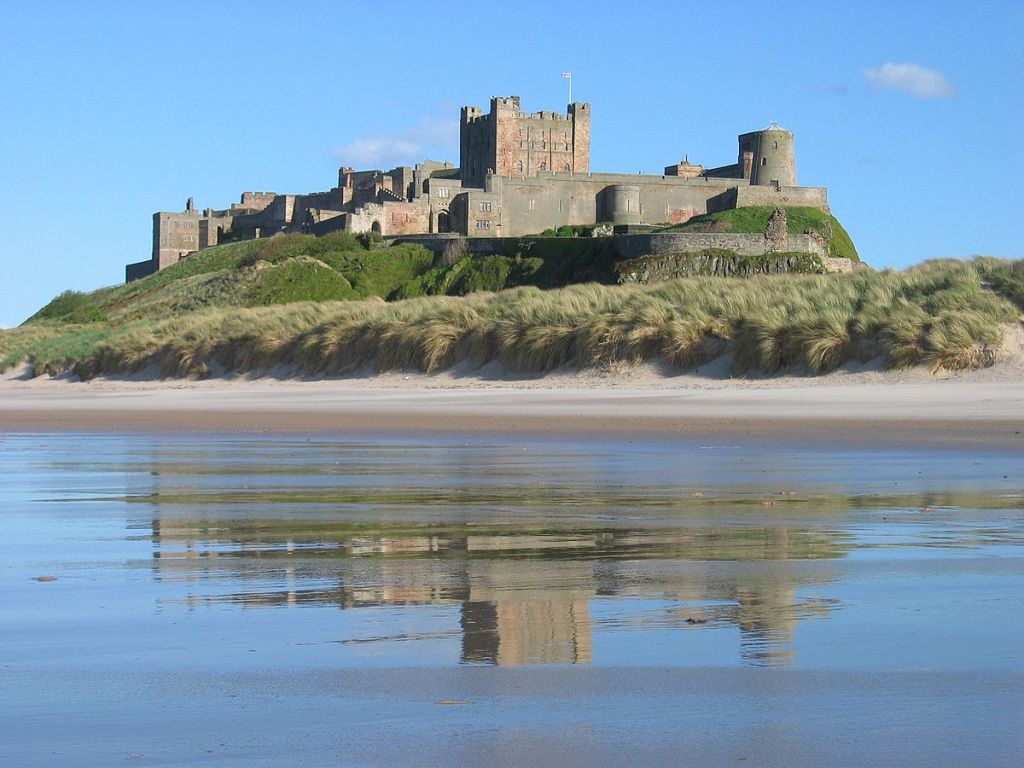
Bamburgh Castle is a site with a long, frequently dramatic history. A wooden Saxon fortress built by Ida the Flame-bearer, a place frequented by saints such as Oswald and Aidan, a seemingly impregnable fortress attacked by William Rufus with his siege castle ‘Evil Neighbour’, and the first English castle to fall to cannon-fire, when Warwick…
-
Did ANYONE do the dirty deed in the Tower….?
“Perkin”, “Tudor” propaganda, Battle of Bosworth, Cicely Plantagenet, Domenico Mancini, Edward IV, Edward of Middleham, Edward V, Elizabeth Wydeville, executed women, Henry of Buckingham, Henry VII, illegitimacy, Jack the Ripper, Jane Shore, John Howard Duke of Norfolk, John Morton, Lady Eleanor Talbot, Margaret Duchess of Burgundy, Patricia Cornwell, pre-contract, Richard III, Richard of Shrewsbury, Robert Stillington, royal apartments, Sir James Tyrrell, Stanleys, Talbots, Tower of London, Tyrrell “confession”, Viscount Welles, William Lord Hastings, WydevillesIf you go to this link this article you’ll find an interesting if challengeable article about “Perkin Warbeck” and whether he could or could not have been Richard of Shrewsbury. Well, there were enough people who thought he was, and to make Henry Tudor’s existence thoroughly miserable. Pleasant thought. The article also discussed who might…
-
The Earliest Roots of the Wars of the Roses: Edward II and Thomas of Lancaster?
Bannockburn. Boroughbridge, Blanche of Lancaster, Boniface IX, canonisation, Chris Given-Wilson, cults, Despencers, Dukes of Lancaster, earls, Edmund of Langley, Edward II, executions, Henry IV, Henry of Lancaster, Ireland, John of Gaunt, miracles, Piers Gaveston, Pontefract Castle, popes, Richard II, Shrewsbury Parliament, Thomas Despenser, Thomas Mowbray Earl of Norfolk, Thomas of Lancaster, Waltheof, Wars of the RosesIt may seem bizarre to go back to the reign of Edward II (reigned 1307-27) when talking about the Wars of the Roses, but bear with me. Edward and his cousin, Thomas Earl of Lancaster, got on together quite well in the early years of Edward’s reign. Gradually, though, a feud between them grew…
-
“….During the medieval period, this site north of the 14th-century Guildhall was the location of York’s Augustinian friary, known to have hosted Richard III when he was the Duke of Gloucester. The YAT team uncovered several structures linked with the friary, including a series of large ovens, which may have been part of the kitchens….”…
-
This is another Legendary Ten Seconds production, principally about the ancient building in Torquay, but it is one track on an album about the wider history of Torbay. Torre Abbey, which dated from about 1096, was dissolved without significant resistance in 1539 and is principally an art gallery as well as part of the Agatha…
-
Recently it has come to my attention that Salisbury Museum holds a carved wooden box which, according to local legend, was fashioned out of the original headman’s block on which Henry Stafford was executed on November 2, 1483. The carving of the box into its present shape took place in Victorian times. Why anyone would…
 The New Murrey and Blue blog