anniversaries
-
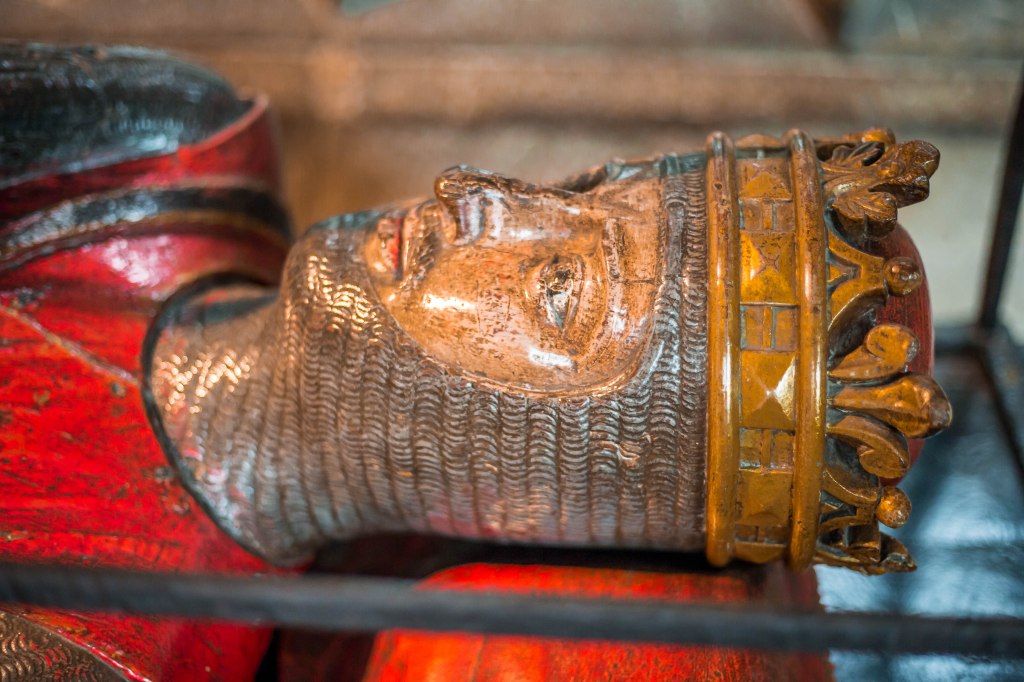
It is perhaps not a well-known fact that during World War II, many priceless historical treasures were crated up and shipped out of London for safe storage. At least, I wasn’t particularly aware of something that now makes perfect sense. I found out about this whilst visiting Gloucester Cathedral and touring the amazing crypt beneath…
-
We do know that Edmund Bonner , born in Worcestershire in about 1500, died in the Marshalsea Prison, today in 1569 and was buried secretly in St. George’s, Southwark. Rather like the head of Cardinal Morton, however, we cannot be certain that he remains there. As Bishop of London under Mary I, he (along with Cardinal…
-
More Tyrrells, this time in Oxfordshire. One family or two?
“Princes”, Capel St. Mary, David Starkey, Edmund Earl of Suffolk, Elizabeth of York, executions, genealogy, Gipping Chapel, Gipping Hall, Great Wenham, Guisnes, Henry Stuart, Henry VII, James VI/I, John Locke, London Guildhall, Master of Horse, Master of the Buckhounds, Richard III, Robert Catesby, Shotover House, Shotover Park, Sir James Tyrrell, Stowmarket, television, Tower of London, Tyrrell “confession”, Tyrrell family, William CatesbyThis (below) is Shotover Park in Oxfordshire, formerly part of the Wychwood royal hunting forest. It became the property of one Timothy Tyrrell in 1613, the year after the death of Henry Stuart, Prince of Wales, whom Tyrrell had served as Master of the Royal Buckhounds. Tyrrell was further honoured with a knighthood in 1624…
-
In the second century BC, in a Britain still filled with wild boar, beaver, lynx, bears and wolves, a group of people settled near to the River Soar. The descendants of Bronze Age peoples and Neolithic farmers, they built a series of huts on the east bank of the river, their settlement extending across some…
-
The identity of Richard’s chosen heir has always been a sort-of mystery. Not to me. I have always believed he chose his sister’s eldest son, John de la Pole, Earl of Lincoln. But then I’m stubborn, and once I have made up my mind, it takes a lot to shift me. Lincoln seemed the obvious…
-
Why do the Salem Witch Trials continue to fascinate after three hundred and twenty five years? Why do tourists and locals, wiccans, witches, warlocks and wizards continue to walk the crowded streets of this pretty little seaside city in Massachusetts in search of magic and mayhem? What propels them to stroll the narrow streets, licking…
-
If the witchcraft trials at North Berwick in the 1590s and later in England, of which Pendle in 1610 is an example, happened because James VI/I fervently believed in witchcraft, as shown by the three characters in Macbeth, it can be argued that the subsequent decline in such cases came because judges and Charles I…
-
Lancashire, in the early 17th Century, was one of the poorest and least populated counties of England, where even many gentry families had an income of less than £100 a year. The Forest of Pendle, which lies between Burnley, Colne, Clitheroe and Whalley in a remote corner of the county close to the Yorkshire border,…
-
Witchcraft (1): Witchcraft and Royalty: The Cases against Eleanor Cobham and Joanne of Navarre
astrologers, Azincourt, Beaumaris Castle, Cardinal Beaufort, Edward IV, Eleanor Cobham, Elizabeth Wydeville, Father John Randolf, feminism, George Duke of Clarence, Gilles de Rais, Henry IV, Henry V, Henry VI, Humphrey of Gloucester, Jacquetta of Luxembourg, Jeanne d’Arc, Joan of Navarre, John IV Duke of Brittany, Leeds Castle, Margery Jourdemayne, Mortimer’s Cross, mud, parhelion, Pevensey Castle, propaganda, Richard III, Roger Bolingbroke, snow, Thomas Southwell, Towton, witchcraft
Originally posted on Giaconda's Blog: Fake news – smearing the opposition With the current interest in the media about the spread of ‘fake news’ and misinformation, it seems appropriate to reconsider the cases of two royal ladies who were both accused and found guilty of witchcraft during the early C15th. Were these simply cases of…
-
SIR MATTHEW CRADDOCK 1468 – 1531
“Perkin”, Anne Neville, Battle of Bosworth, Berkshire, Bridgend, Caerphilly Castle, Calendar of Patent Rolls, Candelston Castle, Candleston Castle, castles, Coity Castle, Dictionary of Welsh Biography, Elizabeth of York, Fitzalan, George Duke of Clarence, Glamorgan, Gower Peninsula, Henry Cardinal Beaufort, Henry VII, Henry VIII, Herberts, Inventory of Ancient Monuments of Glamorgan, Jane Mansell, Jane Stradling, Jasper “Tudor”, Katherine Plantagenet, Kenfig Castle, Lady Catherine Gordon, Llynfi Valley, Lordship of Glamorgan, Mansels, Mary I, Matthew Craddock, Newcastle Castle, Newtons, Norman conquest, Ogmore Castle, Ogmore Triangle, Oxwich Castle, Perkins family, Reynoldston, Rhys ap Thomas, Richard III, Richard of Warwick, Robert Stillington, Sir Richard Herbert, Sir Roger Berkerolles, Somerset, St. Donat’s Castle, Stradlings, Strattigan, Swansea, Switzerland, Talbots, Turbevilles, Wales, William de Londres, William Herbert Earl of HuntingdonMatthew Craddock was the son of Richard ap Gwilliam ap Evan ap Craddock Vreichfras and Jennet Horton of Candleston Castle in Glamorgan. His great grandfather, William Horton of Tregwynt in Pembrokeshire, married Joan de Canteloupe the heiress of Candleston. Jennet Horton was their granddaughter. I first came across Matthew Craddock while looking at anything that…

