Reblogged from A Medieval Potpourri @sparkypus.com
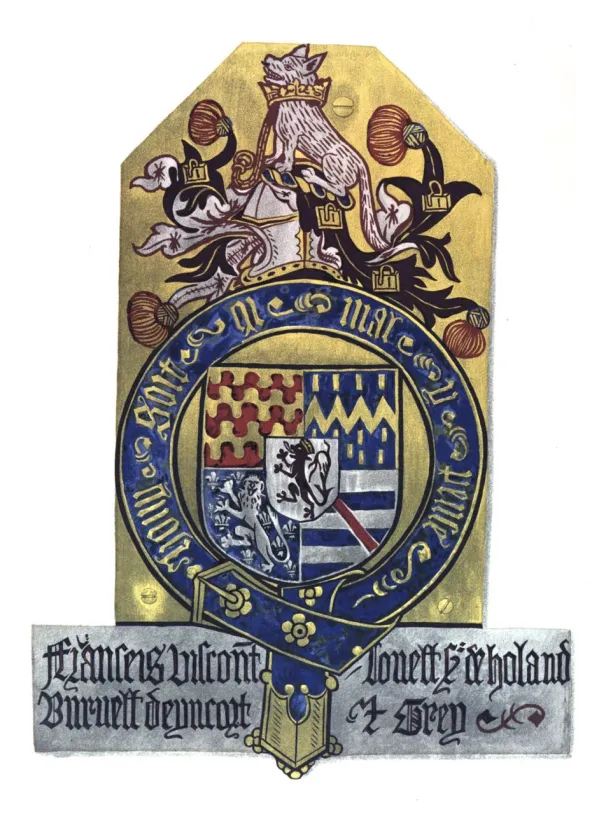
Francis Viscount Lovell’s Stall Plate, St Georges Chapel, Windsor. Image thanks to the Heraldry Society: ‘Francis Viscount Lovell & de holand Burnett deynccort & Grey.’ Note also the silver fox and the mantling strewn with another Lovell badge, padlocks.
Another of the enduring mysteries from the period now known as the Wars of the Roses – the predominant being, of course, the disappearance of the ‘Missing Princes’ – was the fate of Francis Viscount Lovell (b.c.1456 d.after 1488). He appears to have disappeared, literally, into the mists of time last seen – it said – escaping the aftermath of the Battle of Stoke (16 June 1487) swimming away on his horse across the river Trent? Maybe, maybe…. We will return to this later…
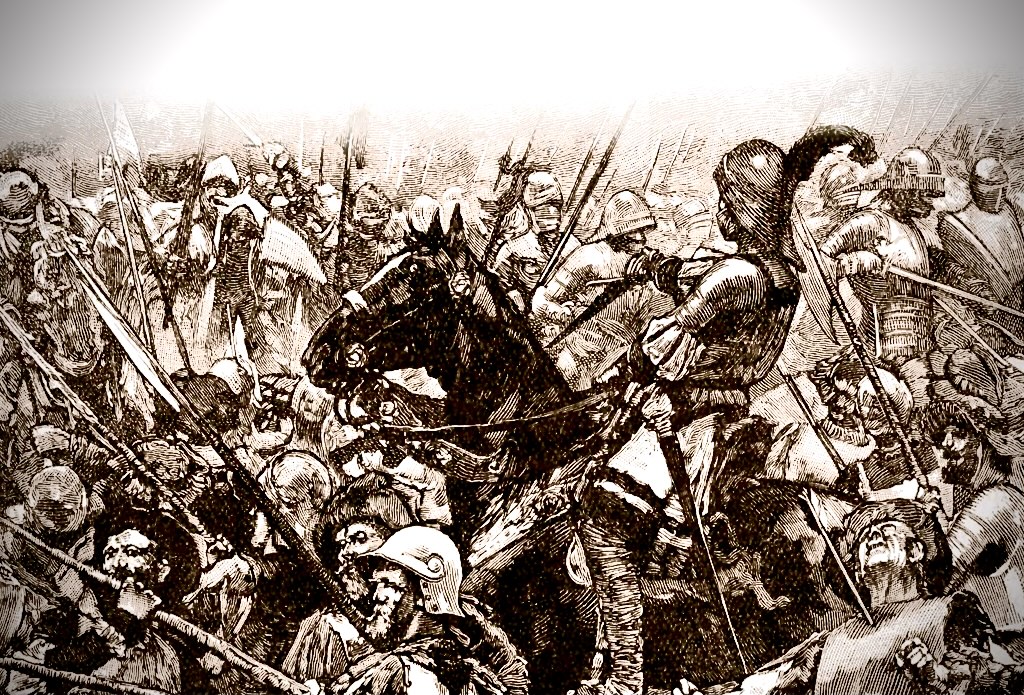
The Last Stand of Martin Schwartz and his German Mercenaries at the Battle of Stoke Field 16th June 1487. Artist Henry Marriot Paget. Cassell’s Century Edition History of England c.1901.
Francis Lovell is credited with being best and most loyal friend to Richard III, a friendship which begun when they were both still children at Middleham Castle, Yorkshire, under the care of Richard Neville, earl of Warwick. Francis, in terms of a 15th century nobleman, has come down to us as a ‘good egg’.
Lovell is beloved amongst Ricardians and a favourite character in Ricardian novels. Who can forget the evocative description left to us by the late Rosemary Hawley Jarman who in her outstanding novel We Speak No Treason painted an emotive picture of Lovell and other followers of Richard’s bidding last farewells to their dead king after Bosworth. Francis is described as wearing a hermit’s robe carelessly donned, with the strength of his mail winking beneath it. They say that the church filled up from porch to rood screen with men who entered like ghosts and wept like babes. There was running feet and a voice that burst through the whispering silence with ‘My lord, my Lord Lovell!’ – crying that they were hanging the prisoners and fugitives in Leicester market and Lovell must fly at once and for answer came only the deep dreadful sound of mens grief. The hasty feet clattered nearer and nearer, and stopped short, the voice said ‘Ah Dickon!’ as a child might wail in the night, then swore like a man in the face of murder and the church was filled with love and hate and vengeance and a heaviness that one could touch with the hand’. Ah! fabulous stuff but back to reality….!
However a contemporary of Francis, William Colynbourne/Collingbourne, was less than respectful, referring to him as ‘Lovell the dogge‘ perhaps with a nod to his loyalty to Richard or even a reference to the silver fox emblem of the Lovell family. The now infamous rhyme, which he audaciously pinned upon a doorway at old St Paul’s Cathedral on the 18 July 1484 read:
The Catte, the Ratte and Lovel our dogge
Ruleth all Englande under a Hogge
Colynbourne had his own personal axe to grind possibly having copped the needle following Richard writing to his mother, Cicely Neville, on the 3 June 1484, requesting that she replace her man Colynbourne, with his man, Lovell: ‘my lord Chamberlaine..be your officer in Wiltshire in such as Colynborne had…’ Colyngbourne, was later to get the chop, or hung drawn and quartered to be precise, under a charge of treason for another matter, although I should imagine the rhyme was well and truly burnt into everyones memories present at his trial. But I have galloped too far forward here….
FAMILY
Francis descended from a wealthy high status family traceable back to Robert d’Ivry, Lord of Breheval/Breherval/Bréval and Yvery/Ivry-la-Bataille, Normandy. One account records Robert as having accompanied William the Conqueror to England in 1066 and he is indeed listed on the Roll of Battle Abbey. Whether he arrived in 1066 or later he was rewarded by the Conqueror with the lordships of Kary/Cary and Herpetreu/Harptree in Somerset but returned to Normandy where overtaken by ill health he retired to the Abbey of Bec and became a monk (1).
To continue reading click here.
 The New Murrey and Blue blog
Leave a comment