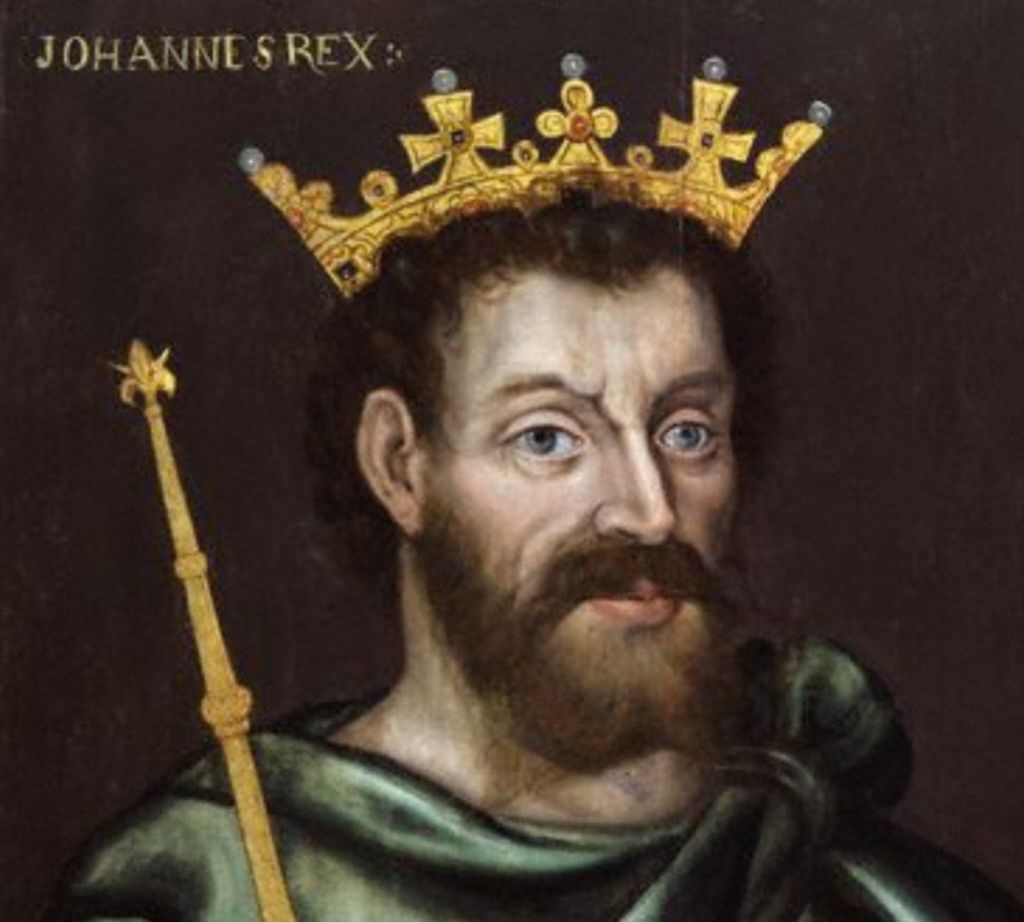
William was the most notable member of the de Braose dynasty. His gradual rise and sudden fall at the hands of King John is often taken as evidence of that king’s capricious behaviour towards his barons.
In 1175, William de Braose carried out the Abergavenny Massacre, luring three Welsh princes and other Welsh leaders to their deaths. His principal enemy was Seisyll ap Dyfnwal, whom he blamed for the death of his uncle Henry.
He invited the Welsh leaders to a Christmas feast at Abergavenny Castle under the pretence of peace and the start of a new era at the end of the year (a traditional time for settling outstanding differences amongst the Welsh), and had them murdered by his men. This resulted in great hostility towards him among the Welsh, who named him the ‘Ogre of Abergavenny’. It was also probably the inspiration for the infamous Red Wedding, from Game of Thrones, which was a shocking betrayal and slaughter of Robb Stark, his mother Catelyn, his wife Talisa, and his bannermen, orchestrated by Tywin Lannister to end the War of the Five Kings. It happened during Edmure Tully’s wedding feast, violating guest right, and involved Frey forces murdering the Starks after Robb broke a marriage pact
Gerald of Wales exonerates de Braose and emphasises his and his wife’s religious piety and de Braose’s generosity to the priories of Abergavenny and Brecon. William de Braose did however reputedly hunt down and kill Seisyll ap Dyfnwal’s surviving son, Cadwaladr, a boy of seven.
In 1192, William de Braose was made sheriff of Herefordshire, and in 1196 he was made Justice Itinerant for Staffordshire. In 1195 he went with King Richard I to Normandy and in 1199, he fought beside Richard at Châlus, where the king was mortally wounded. He then supported King John’s claim to the throne of England, and represented the new king.
In 1203, William de Braose in charge of Arthur of Brittany, whom he had personally captured the previous year at the Battle of Mirebeau. William was suspected of being involved in Arthur’s disappearance and death, although no concrete evidence ever came to light (sound familiar?). There is better evidence that he did know the truth of the matter. He was in attendance with John in Normandy at the time of Arthur of Brittany’s imprisonment and it was alleged that Arthur suffered the same fate as the Welsh princes at William’s hand, although this has never been proven. Arthur’s death remains a mystery.
De Braose was greatly favoured by King John early in his reign. John granted him all that he might conquer from the Welsh in Radnorshire, gave him lordship over Limerick in Ireland (save for the city itself), possession of Glamorgan castle, and the Lordship of Gower with its several castles. In 1206, after his service in France, King John gave William the three great neighbouring trilateral castles of Gwent (Skenfrith Castle, Grosmont Castle and White Castle). These have been interpreted as bribes encouraging silence on the demise of Arthur, who was seen by many as a rightful heir to the throne.
William de Braose fell out of favour with King John soon after this. The precise reasons remain obscure. King John cited overdue monies that de Braose owed the Crown from his estates, but the king’s actions went far beyond what would be necessary to recover the debt. He seized de Braose’s English estates in Sussex and Devon, and sent a force to seize the de Braose domains in Wales. Beyond that, he sought de Braose’s wife, Maud de St. Valery, who, the story goes, had made no secret of her belief that King John had murdered Arthur of Brittany.
De Braose fled to Ireland, then returned to Wales as King John had him hunted in Ireland. In Wales, William allied himself to the Welsh Prince Llywelyn the Great, and helped him in his rebellion against King John.
In 1210, William de Braose fled Wales disguised as a beggar, to France. His wife and eldest son were captured. William died the following year in August 1211 at Corbeil, France. He was buried in the Abbey of St. Victor in Paris. His hopes to return alive to Wales and for burial in Brecon were to be unfulfilled. William’s wife, Maud, and eldest son, William, once captured, were allegedly murdered by King John, possibly starved to death while incarcerated at Windsor Castle and Corfe Castle in 1210.
While William had aroused the jealousy of the other barons during his rise, the arbitrary and violent manner of his fall very probably discomfited them and played a role in the Baronial uprisings of the next decade. The historian Sidney Painter, in his biography of King John, called it “the greatest mistake John made during his reign, as the King revealed to his Barons once and for all his capacity for cruelty.”
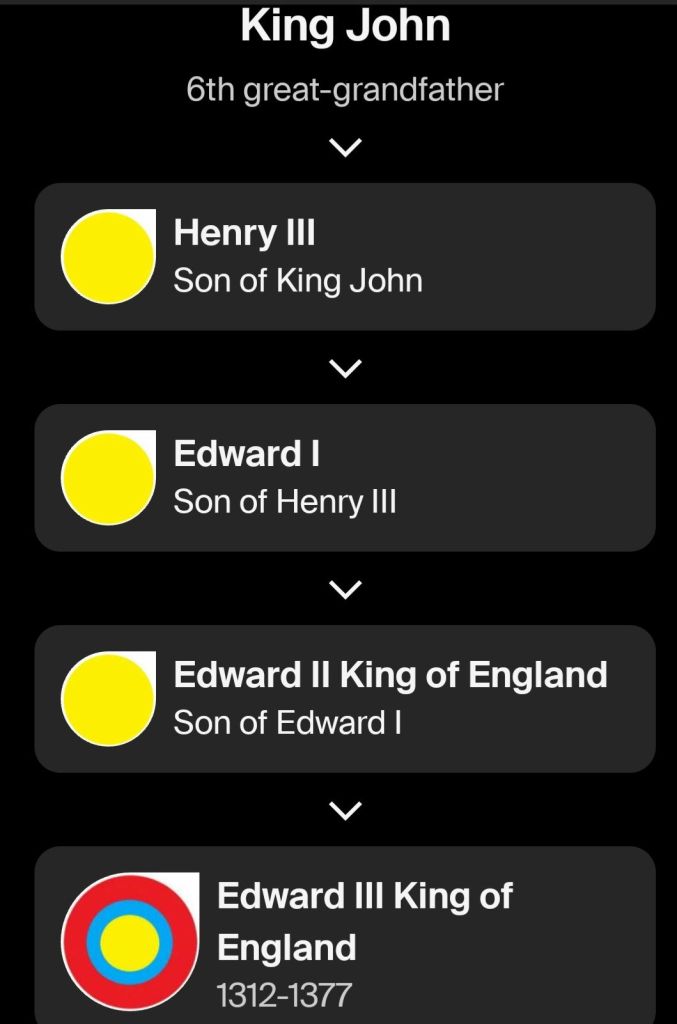
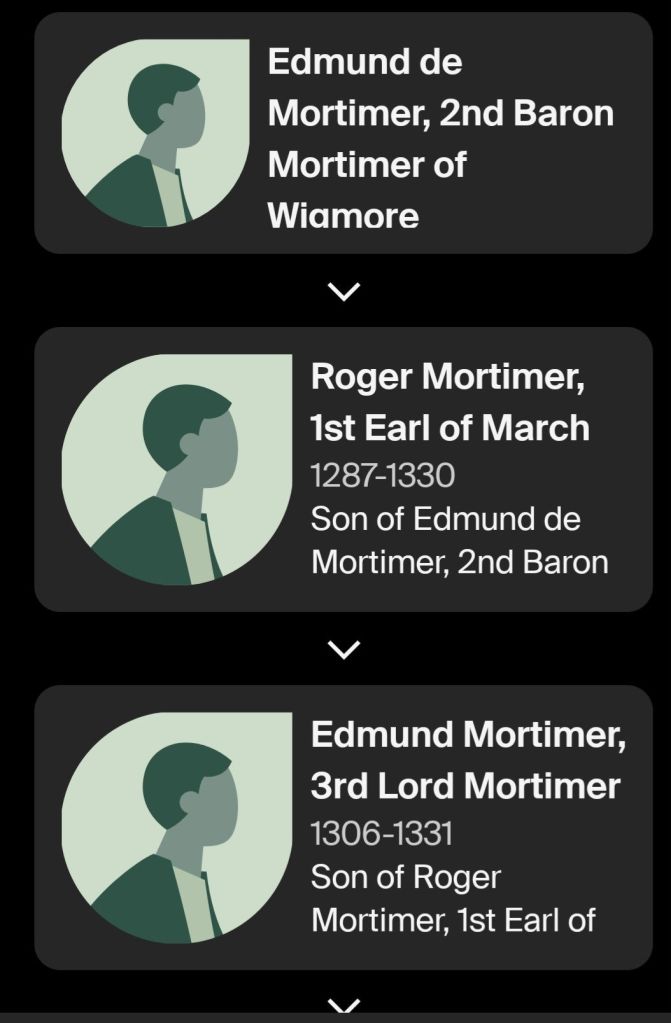
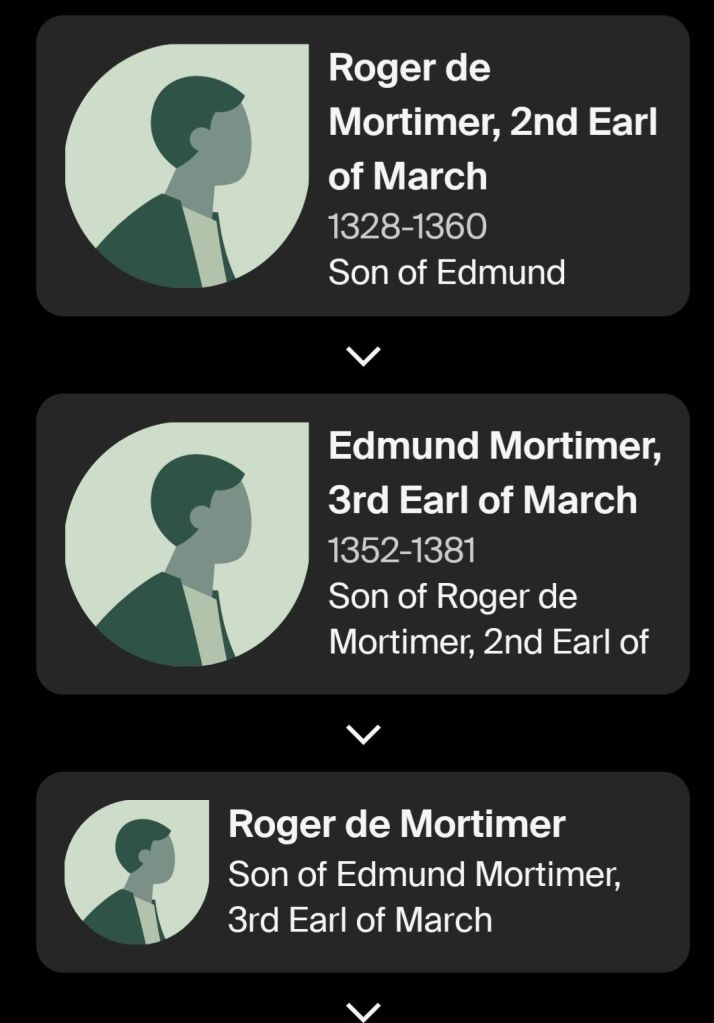
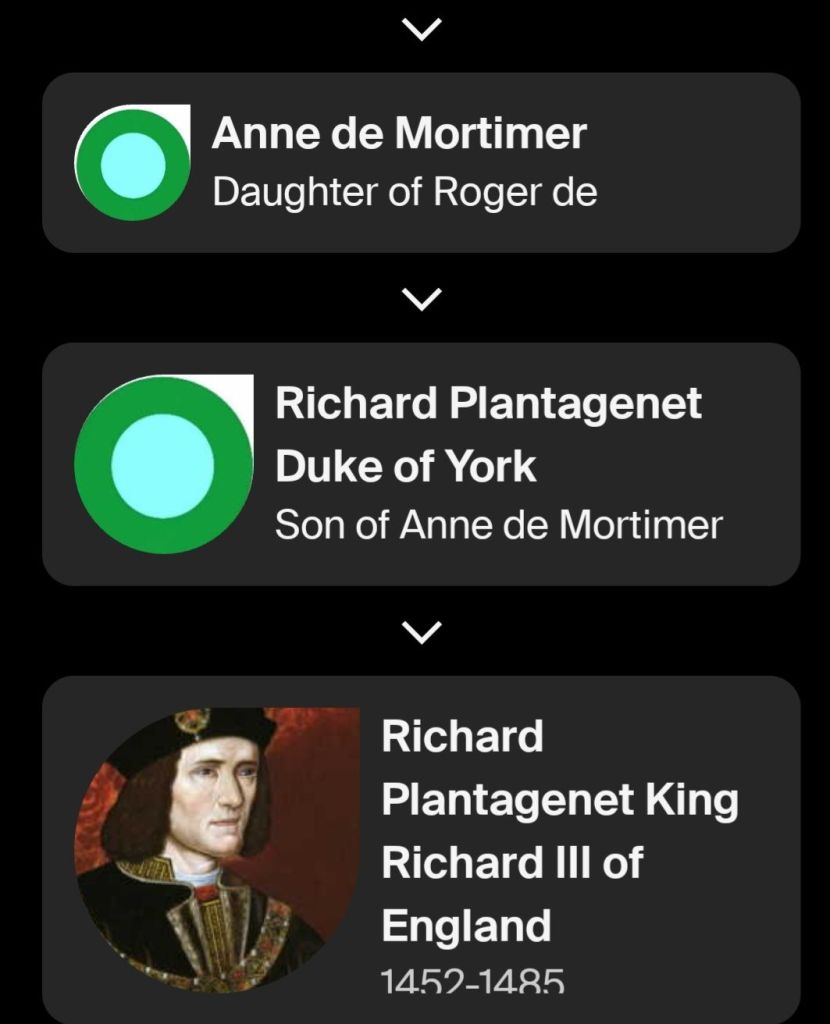
Here is how they are related to Richard. Firstly, King John:
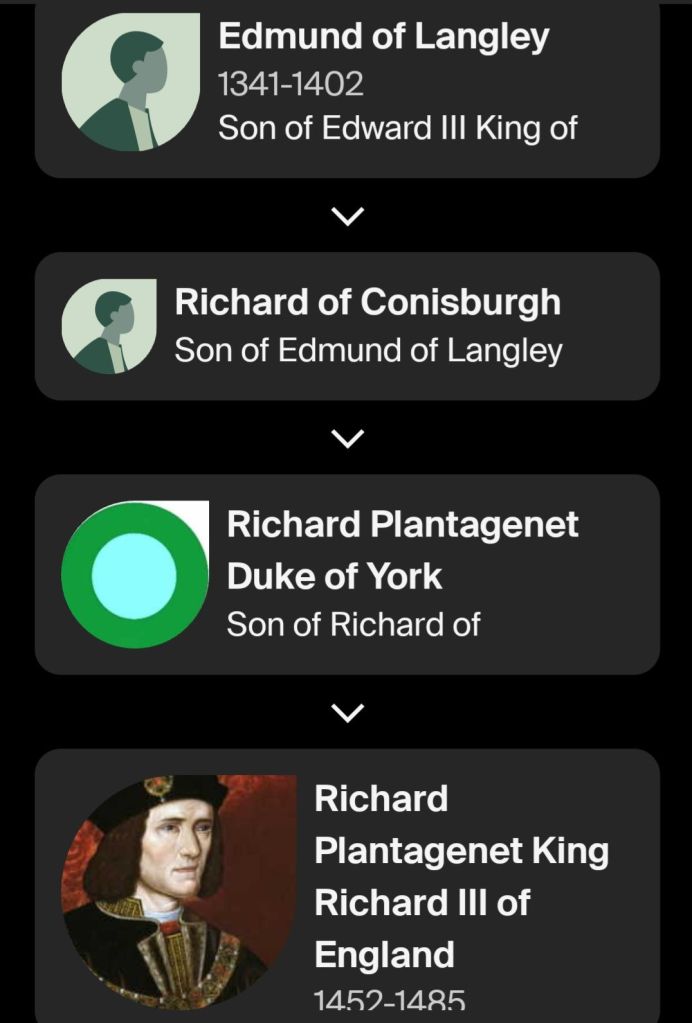
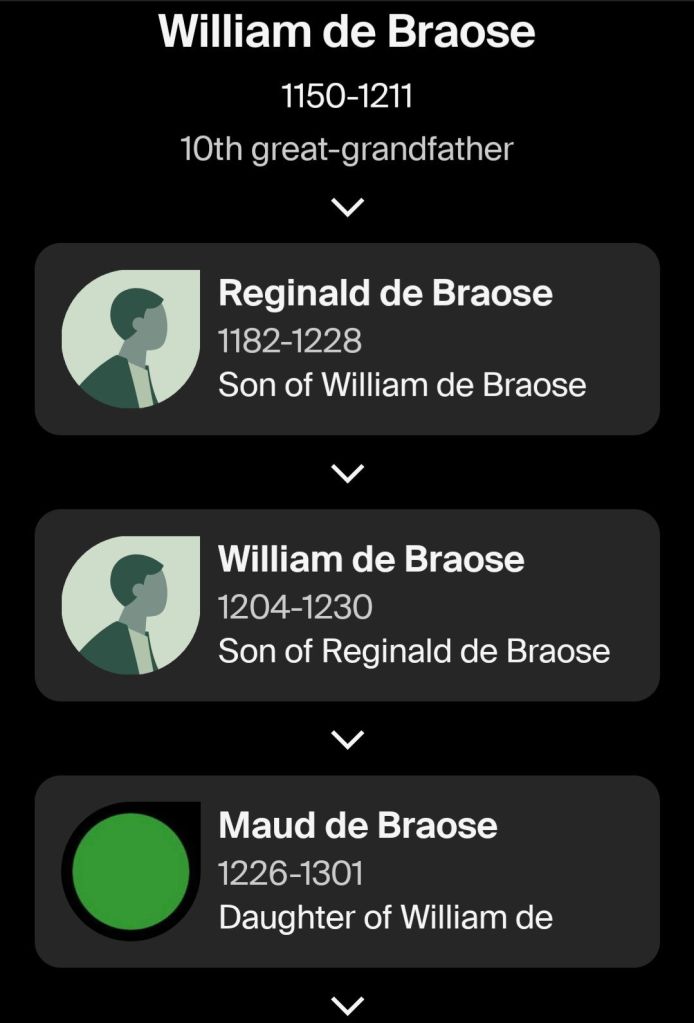
And William de Braose:
 The New Murrey and Blue blog
Leave a comment