In rural Berkshire stands the little stone church of Aldworth. What makes this church remarkable is the numerous medieval effigies contained within, memorials to an important family with the surname ‘de la Beche’. Over the years, these effigies got called the ‘Aldworth giants’ and became something of a local attraction.
Was there any truth to the rumour?
I decided to go and find out….
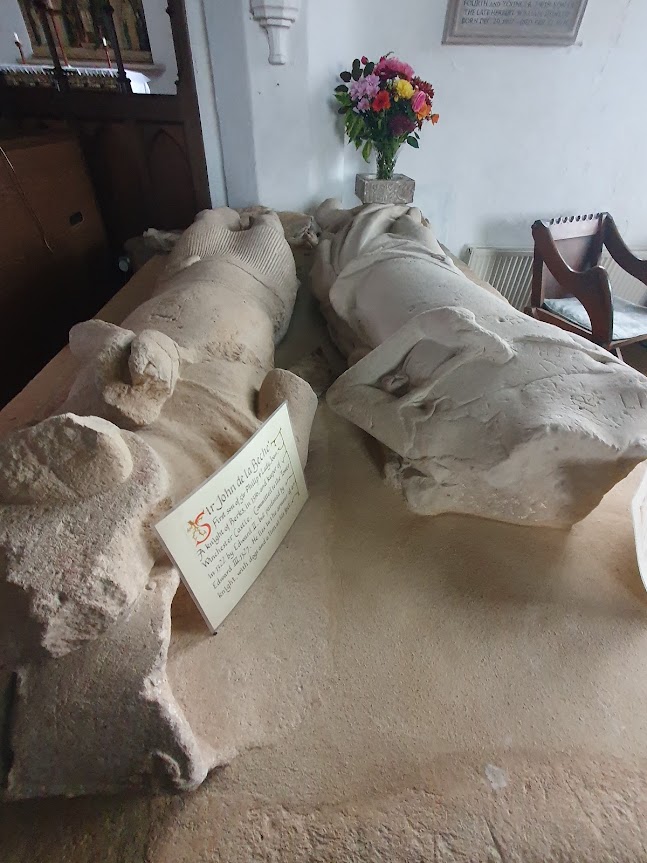
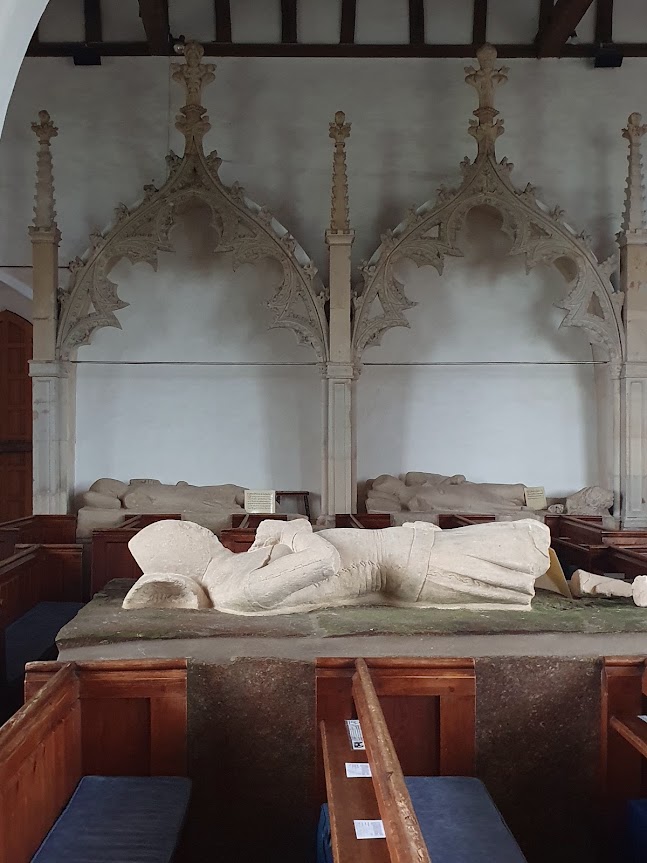
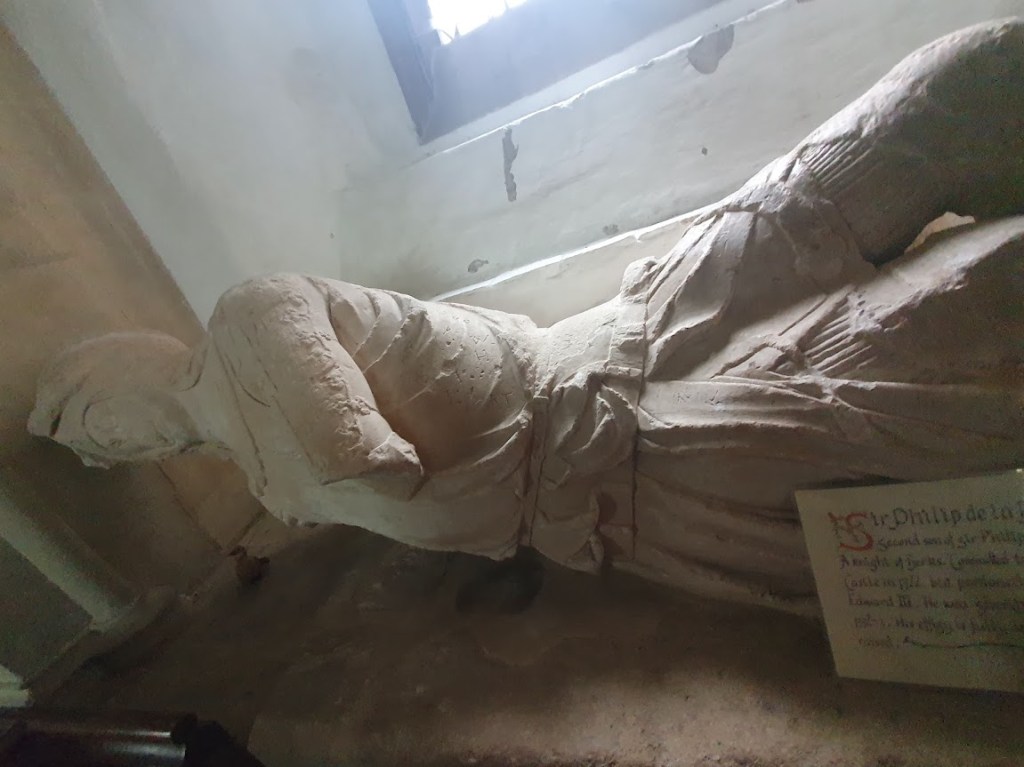
There are 9 effigies in total, two women and seven men. The oldest is Sir Robert, who was knighted by Edward I 1278. Next is Sir John, Robert’s son, then comes the very impressive Phillip, an effigy that is truly gigantic and unusual, for Phillip is on his side rather than his back. He appears to be carved as a living man, rather than a deceased one. Phillip had an interesting life, and was Sheriff of Berkshire and Oxfordshire. He was imprisoned in Scarborough castle for a while but pardoned by Edward III. He was also a valet of Edward II and said to be seven foot tall (so he is likely the main cause of the ‘giant’ story.) His wife Joan is on the other side of the church; her carved gown is fine work and may have been done by Alexander, a royal stonemason. The rest of the effigies are of Phillip and Joan’s sons (and one of their wives) with the exception of one. There is John, the eldest son, and his wife Isabella–John was keeper of Winchester castle and spent some time in the Tower at the same time his father was imprisoned. Son number 2, Phillip, also was incarcerated with his father at Scarborough, but he too was pardoned and eventually became Sheriff of Berkshire. The third son was Sir Nicholas, who perhaps had the most interesting history–he was constable of the Tower of London and ‘custodian’ of ‘The Black Prince’ in his youth. He had a manor in Aldworth for which he obtained a license to crenelate. The final effigy is of John, second son of Sir John and Lady Isabella. His monument is very fragmentary and heavily graffitied; he is also the only one not in armour.
So the title of ‘giants’ may have come from Sir Phillip being exceptionally tall. If he was truly that big, it was likely his family would have been tall too.
However, I came up with another possible origin for the name. The French name for medieval funerary effigies was ‘Gisants’ which looks awfully close to ‘giants’ to me. As French was still used at court at this period, although beginning to decline, the French word may have been in used but locals people, finding the term unfamiliar, perhaps mistook it for ‘giants’ instead.
Photos–headless John and Isabella; Nicholas in the centre of the church with brothers behind, and Phillip the 7 ft ‘giant.’
 The New Murrey and Blue blog
Leave a comment