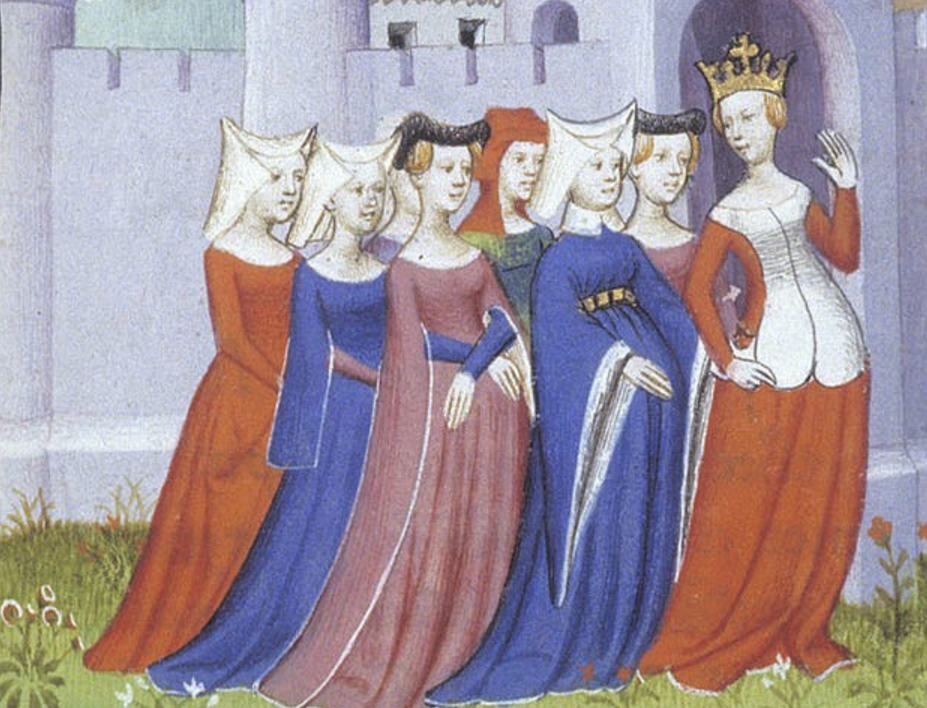
We’ve always known that George, Duke of Clarence (https://www.englishmonarchs.co.uk/plantagenet_21.htm), the disgruntled brother of Edward IV and Richard, Duke of Gloucester (https://richardiii.net/), went over the wall to join Richard Neville, 16th Earl of Warwick (https://richardiii.net/richard- iii-his-world/his-family/the-making-of-the-kingmaker/). George then married the earl’s elder daughter Isabel Neville (https://womenshistory.info/isabel-neville/), in the belief that his new father-in-law, the famous “Kingmaker” was going to dislodge Edward IV and put George in his place.
This would have been far from impossible, because Warwick had previously toppled the Lancastrian king Henry VI (https://www.englishmonarchs.co.uk/plantagenet_41.html ) and replaced him with Edward IV! Henry, his queen and son were now in exile, and Warwick (having fallen out big time with Edward IV) had gone over to join them, taking the still-Yorkist George with him. Warwick had certainly earned the sobriquet “Kingmaker”.
So the earl had switched sides, but what George didn’t realise was to quite what extent. In fact Warwick had deserted the House of York forever to support the House of Lancaster (Wars of the Roses https://www.worldhistory.org/article/1498/causes-of-the-wars-of-the-roses/), but had left George under the impression that he, George, was still to be made the next King of England.
The way the wind was blowing must have become only too clear to George when Warwick announced the marriage of his other daughter, Anne Neville (https://richardiii.net/richard-iii-his-world/his-family/anne-neville-wife/), to the Lancastrian heir to the throne, Edward of Westminster/Lancaster, son of Henry VI and Margaret of Anjou (https://www.englishmonarchs.co.uk/plantagenet_26.html and https://mro.massey.ac.nz/items/3ef92610-59bf-40ad-bc86-1c12c6f2682b).
So George was more or less ditched, but at what point did he find out what was going on? And how did he find out? I can’t imagine the earl came up to him one morning and said (in medieval English, of course) “Sorry, George, old bean, you’re surplus to requirements and scratched from my Christmas list. I’m going to make Anne the Queen of England, not Isabel. Byee.”
I wrong Warwick, of course, for he wasn’t quite that brutal. He offered to make George the Duke of York and to be next-in-line to the throne if Edward of Westminster died childless. But it was thin gruel after being promoted as the next king! Nor was Margaret of Anjou 100% trusting where Warwick was concerned. Apparently she instructed her son not to consummate the marriage, so that Anne could be dumped if a better union came along. Which it certainly would if her son were the King of England. One can only imagine the son obeyed. See https://murreyandblue.org/2024/12/17/first-john-of-gloucester-now-could-edward-of-westminster-lancaster-have-been-a-father-too/.
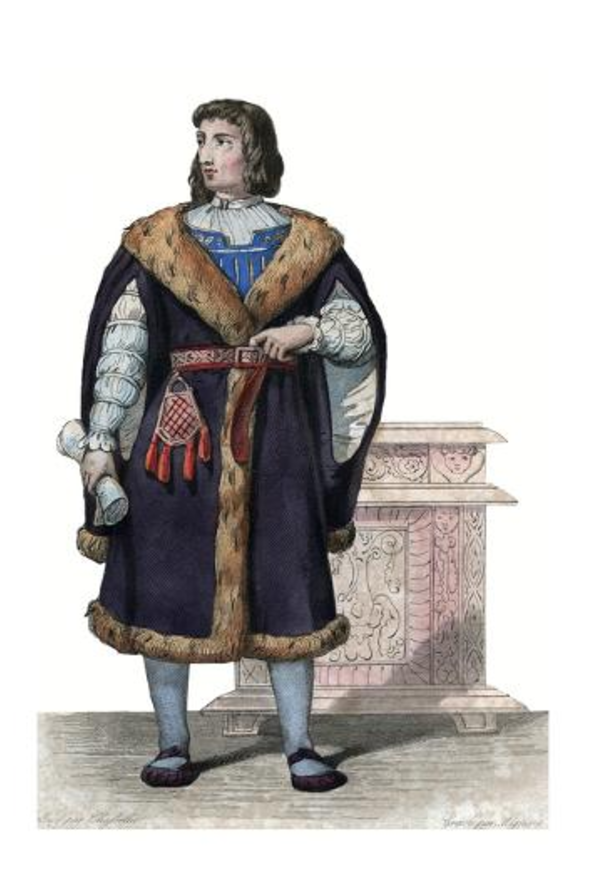
Well, according to Philippe de Commynes, a brilliant courtier, diplomat and chronicler who’d left the court of France to serve the Duke of Burgundy instead, (see https://www.britannica.com/biography/Philippe-de-Commynes), there’s an intriguing little story attached to George’s unwelcome situation. Intriguing being the operative word! See https://archive.org/details/memoirsofphilipd01comm/page/188/mode/2up?q=passed&view=theater.
I quote Commynes: “….that very day there was a lady passed by Calais into France, with letters to the Duchess of Clarence, and in them overtures of peace from King Edward….her business was….to the prejudice of the Earl of Warwick and all his party….[She] was to solicit the Duke of Clarence not to contribute to the subversion of his own family, by endeavouring to restore the house of Lancaster; that he would remember their old insolences, and the hereditary hatred that was between them, and not be so infatuated as to imagine that the Earl of Warwick, who had married his daughter to the Prince of Wales, and sworn allegiance to him already, would not endeavour to place him upon the throne. This lady managed the affair that was committed to her charge, with so much cunning and dexterity, that she prevailed with the Duke of Clarence to promise to come over to the king’s party as soon as he was in England….”
So who was this mysterious woman?
Commynes continues: “….This lady was no fool, nor loquacious; and being allowed the liberty of visiting her mistress the Duchess of Clarence, she for that reason was employed in this secret, rather than a man. Wenlock [Sir John Wenlock, friend of Warwick https://en.wikipedia.org/wiki/John_Wenlock,_1st_Baron_Wenlock] was a cunning man, and shrewd enough ; yet this lady was too hard for him, wheedled him, and carried on her intrigues till she had effected the ruin of the Earl of Warwick and all his faction….”
Right, so she was one of Isabel’s ladies. That narrows the field. But who were Isabel’s ladies? The one (only one!) that springs to my mind is Ankarette Twynyho, whose fate is notorious, see https://murreyandblue.org/2023/04/12/ankarette-twynho/ and https://murreyandblue.org/2024/12/21/the-true-story-of-ankarette-twynyho-yes-honestly/. But she was no spring chicken and unlikely to be sent on such a delicate and dangerous mission. So who else is there?
On pages 119/120 of his biography of George, Duke of Clarence, The Third Plantagenet, the late John Ashdown-Hill (https://tinyurl.com/3khz637y) mentions this unknown lady. He wonders if she might have been “….[Elizabeth] Lady St Amand, sister-in-law of the Bishop of Salisbury, cousin by marriage of Lord Powick and of the Duchess of Clarence, and the wife of Sir Roger Tocotes*….” See https://www.findagrave.com/memorial/274853868/elizabeth-beauchamp and https://richardiii.net/wp-content/uploads/2021/08/04-52-Sir-Roger-Tocotes.pdf.
JA-H doesn’t offer any more names.
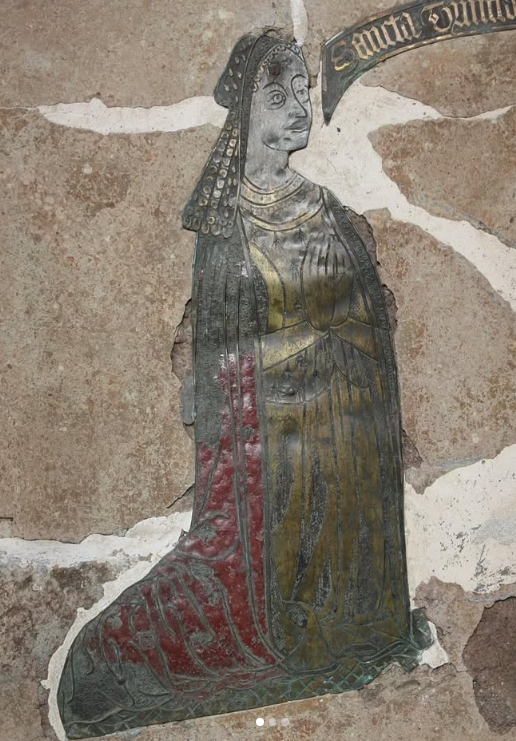
Whoever the silken-tongued spy was, she behaved like something out of the James Bond franchise! There she is, infiltrating the enemy camp for Edward IV, to whisper seductively and lure George, Duke of Clarence back on to the Yorkist straight and narrow. Well, maybe not whisper to him personally, but by inducing Isabel to whisper into George’s ear.
Oddly, when he died in 1492 Sir Roger Tocotes was in the service of Henry VII, see https://bayntunfamilyhistory.com/StNicholasChurch. He seems to have done some side-switching. Having become Elizabeth’s second husband in 1458, and fought for the Lancastrians at Towton in 1461 (https://www.towton.org.uk/the-battle-of-towton/), he then he changed sides and did well under the Yorkists But then he finally threw in his lot with the rebellious Warwick. At this point Edward IV confiscated his lands. Roger seems to have remained opposed to the Yorkists until his death in 1492.
Elizabeth, Lady St Amand, was born in 1409 and twenty years Roger’s senior, and she was to die only a year before him at the ripe age of 81. So in 1470/71 she was no more a spring chicken than Ankarette Twynho. So not quite a Bond girl. If she’s was Isabel’s lady-in-waiting, I imagine she was a Yorkist.
JA-H thought Elizabeth might have been the mysterious lady spy. So at point of the secret mission in 1470/71, were Elizabeth and Roger on opposing sides? If so, were they now estranged? They surely can’t have still been close (if they ever were) because her mission for Edward IV was aimed at destroying the by then Lancaster-supporting Warwick, and therefore her husband too.
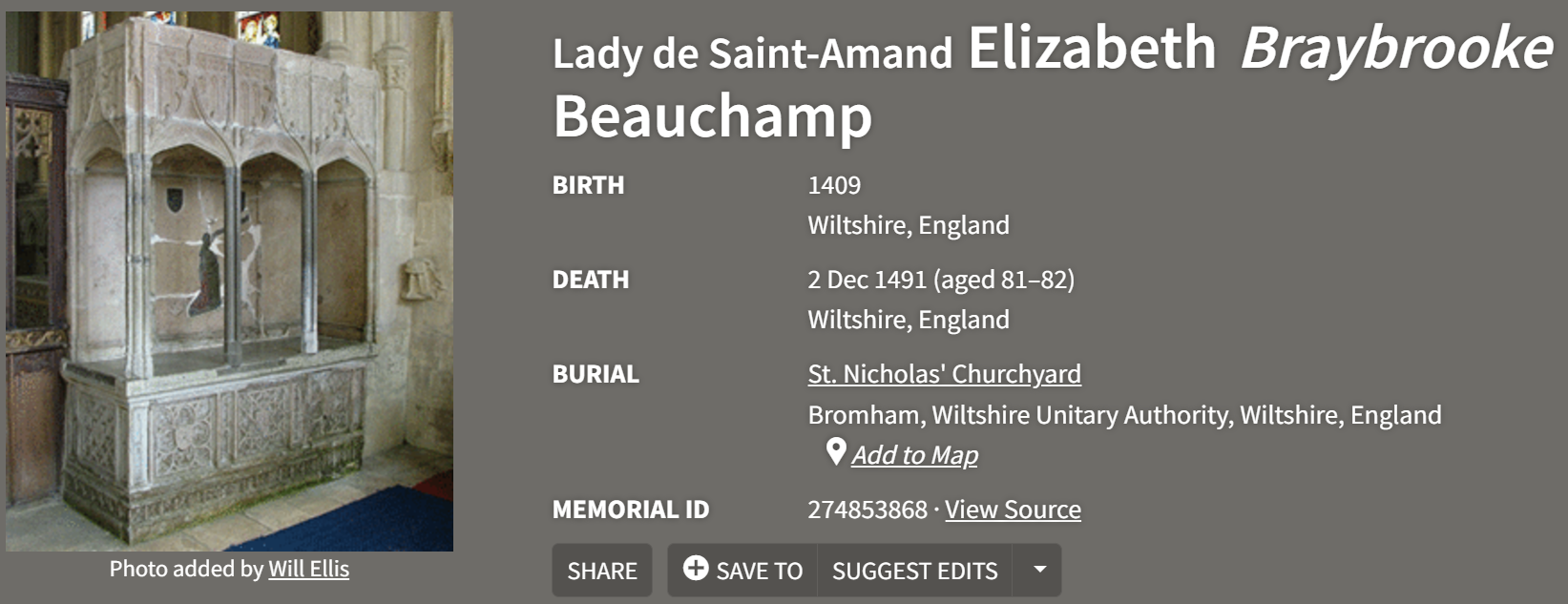
Her loyalty seems to have been to Edward IV and to Isabel, Duchess of Clarence? Did she truly believe that Edward IV was going to be triumphant in the coming strife, and that Isabel and George belonged back in the Yorkist fold? Was this why she acted in a way that seems to have been prejudicial to her husband? Whatever her reason, Elizabeth acted on Edward IV’s behalf.
It’s a fascinating glimpse into the murky world of 15th-century secret agents, risking their lives to carry out dangerous tasks. We always think of men carrying out such tasks….but women were just as brave.
Oh well, if it’s still a mystery after all these centuries, I’m not likely to get to the bottom of it all. But what a compelling story. If anyone has any further information about it, I’d be fascinated to know.
In the meantime….I must continue to wonder just who was the anonymous lady?

*Coincidentally, Sir Roger Tocotes was involved in the Ankarette Twynho affair, see https://richardiii.net/wp-content/uploads/2021/08/04-52-Sir-Roger-Tocotes.pdf.
 The New Murrey and Blue blog

Leave a comment