
A few years ago I wrote about the suspected whereabouts of Anne Boleyn’s heart (see here https://murreyandblue.org/2021/03/24/where-is-anne-boleyns-heart/ and see also https://www.history.com/news/anne-boleyn-beheaded-facts). There were two claimants to being the heart’s last resting place: the Church of St Mary in Erwarton, Suffolk, and the Church of St Peter and St Paul, Salle, Norfolk, (If you can log in to the BBC, listen about the latter claim here https://www.bbc.co.uk/sounds/play/p0j6m2f0 2 mins).
But now it seems there’s a third East Anglian church in the running. This is All Saints, East Horndon in Essex.
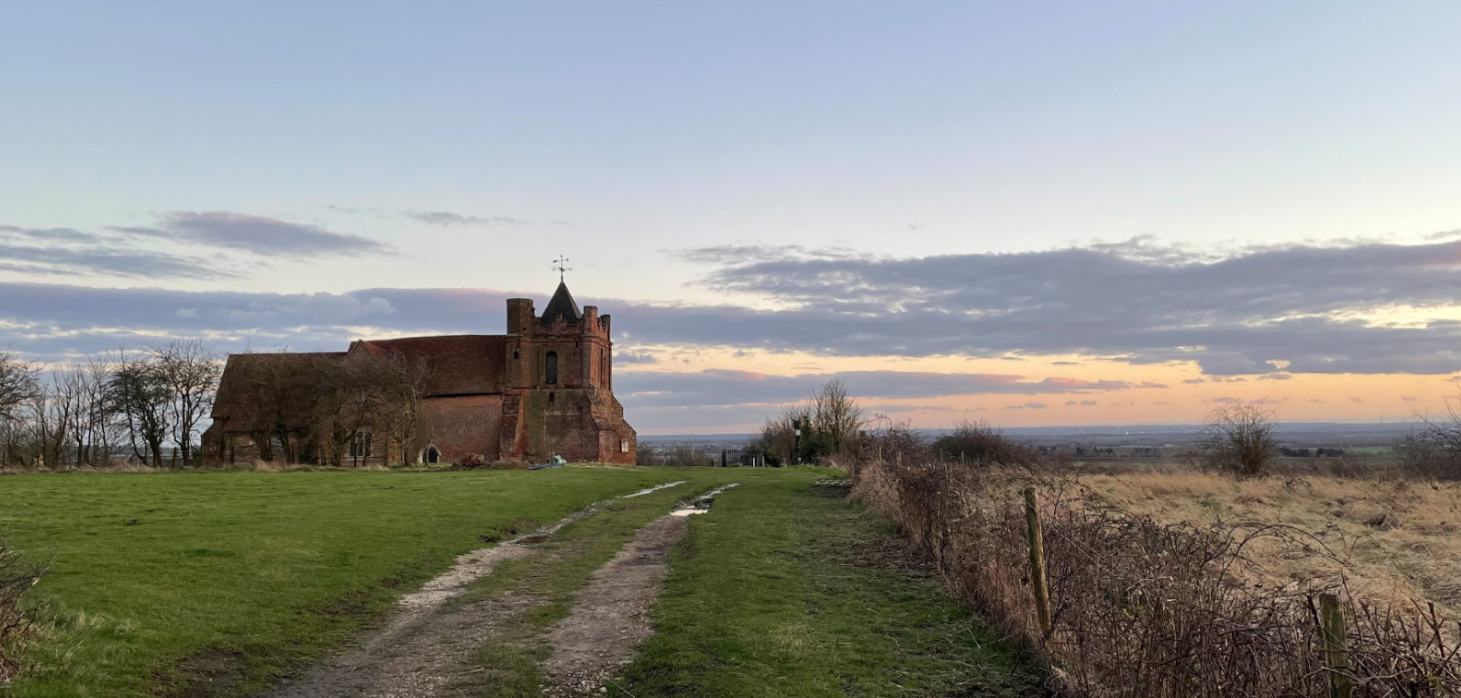
“….Anne Boleyn, Queen of England and Marquise of Pembrokeshire, was beheaded at the Tower of London on the 19th of May 1536, after having been found guilty of treason, adultery and incest. Accounts, also in Henry’s letters, describe Anne’s burial alongside her brother within the walls of the Tower, in the church of St. Peter ad Vincula. Shortly after her death, however, rumours about the whereabouts of her heart, and even her body, began to spread. One of the most prevalent was that Anne’s inner circle of family and attendants had secretly removed her body from St. Peter’s in order to convey it by night to the Boleyn family home of Blickling Hall in Norfolk. En route, they passed through the village of East Horndon where they rested, and decided to bury Anne’s heart in the church of All Saints, marking the spot with a small slab of black marble….” From https://timelineauctions.com/east-horndon-legends/
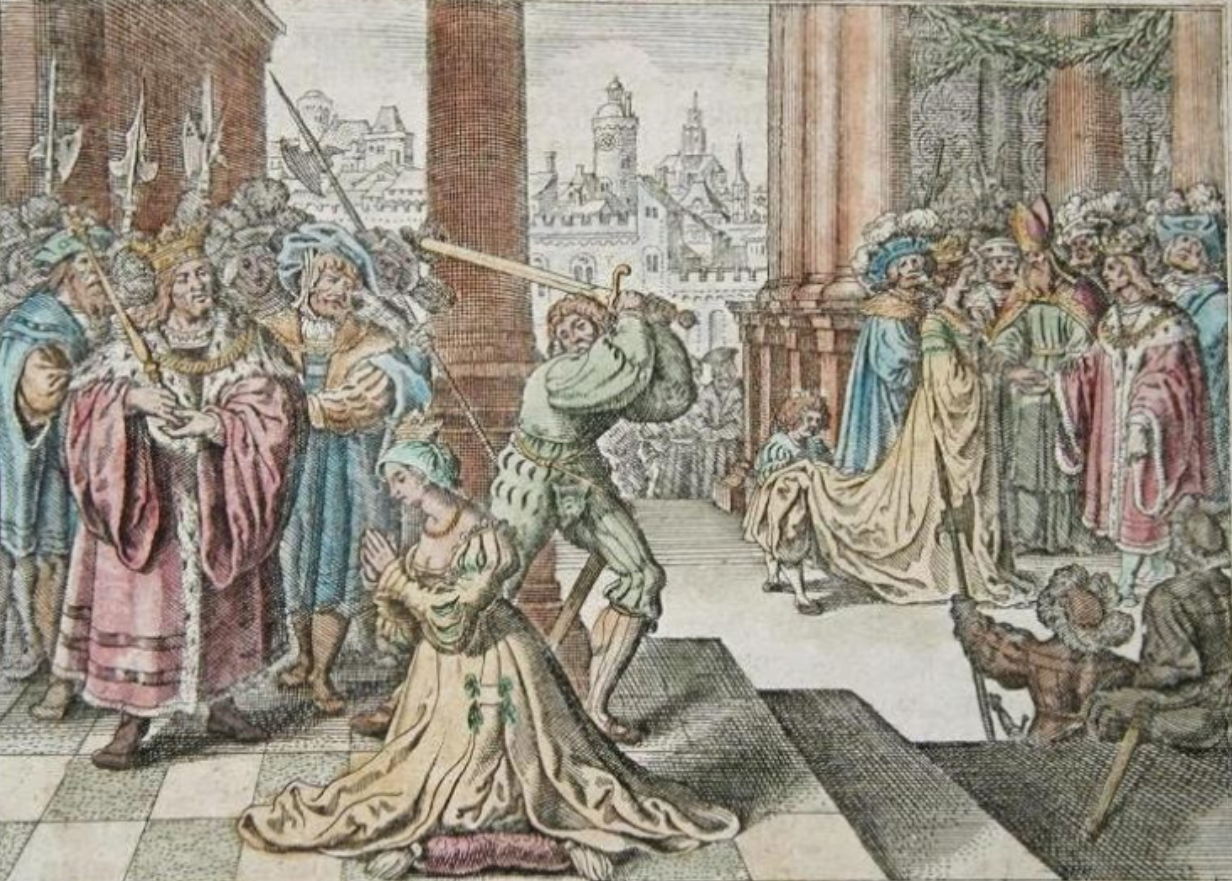
Is this third claim correct? I don’t know. But then I don’t know about the other two churches either. It may well be that the original belief remains the truth, and all of Anne was buried at the place of her execution, the Tower of London.

However, it wasn’t Anne who led me to East Horndon. I came upon her incidentally while looking for information about the Tyrell family, specifically Sir James Tyrell of Gipping Hall, who was close to Richard III (https://richardiii.net/). Sir James was condemned and executed in 1502, under very dubious circumstances (https://richardiii.net/richard-iii-his-world/the-war-of-the-roses/the-battles/the-battle-of-bosworth/). He had been accused of the murder of the two “Princes in the Tower”. Well, so-called murder, because no bodies/substantiating proof has ever been found. Henry VII announced that Sir James confessed to the awful crime, but there would have been torture to extract what his captors wanted. That is if he ever said anything at all, because his convenient “confession” was never produced. See https://richardiii.net/wp-content/uploads/2021/08/03-50-Sir-James-Tyrell-and-his-Chapel-at-Gipping.pdf, https://richardiii.net/faqs/richard-and-his-world/friends-and-supporters/sir-james-tyrell/) and https://www.richardiii.ca/sir-james-tyrell-hero-or-villain/)
On the other hand, there is a tradition in the Tyrell family of Gipping that Richard III put his nephews into Sir James’s care and they were sheltered safely at Gipping Hall between 1483 and 1484. Then, as Philippa Langley’s diligent research work (Missing Princess Project – https://revealingrichardiii.com/langley.html) has now revealed, they went to Richard’s sister Margaret, Duchess of Burgundy (https://richardiii.net/richard-iii-his-world/his-family/margaret-duchess-of-burgundy/). That sounds more likely to me, given the known facts about the character and actions of Richard III….much more so than Sir James suddenly “confessing” some seven years after 1485! That has Henry VII’s paw prints all over it.
Well, while wandering around online in search of the above Sir James (of Gipping), I happened upon another Sir James Tyrell, this time of Heron Hall in the manor of Herongate in Essex. The two were kinsmen, but I don’t know the exact degree. This second one shared with Anne Boleyn a connection with East Horndon church, from where Heron Hall is not far. However, the church is the only connection between this second Sir James and Henry VIII’s ill-fated queen, because now their stories diverge.
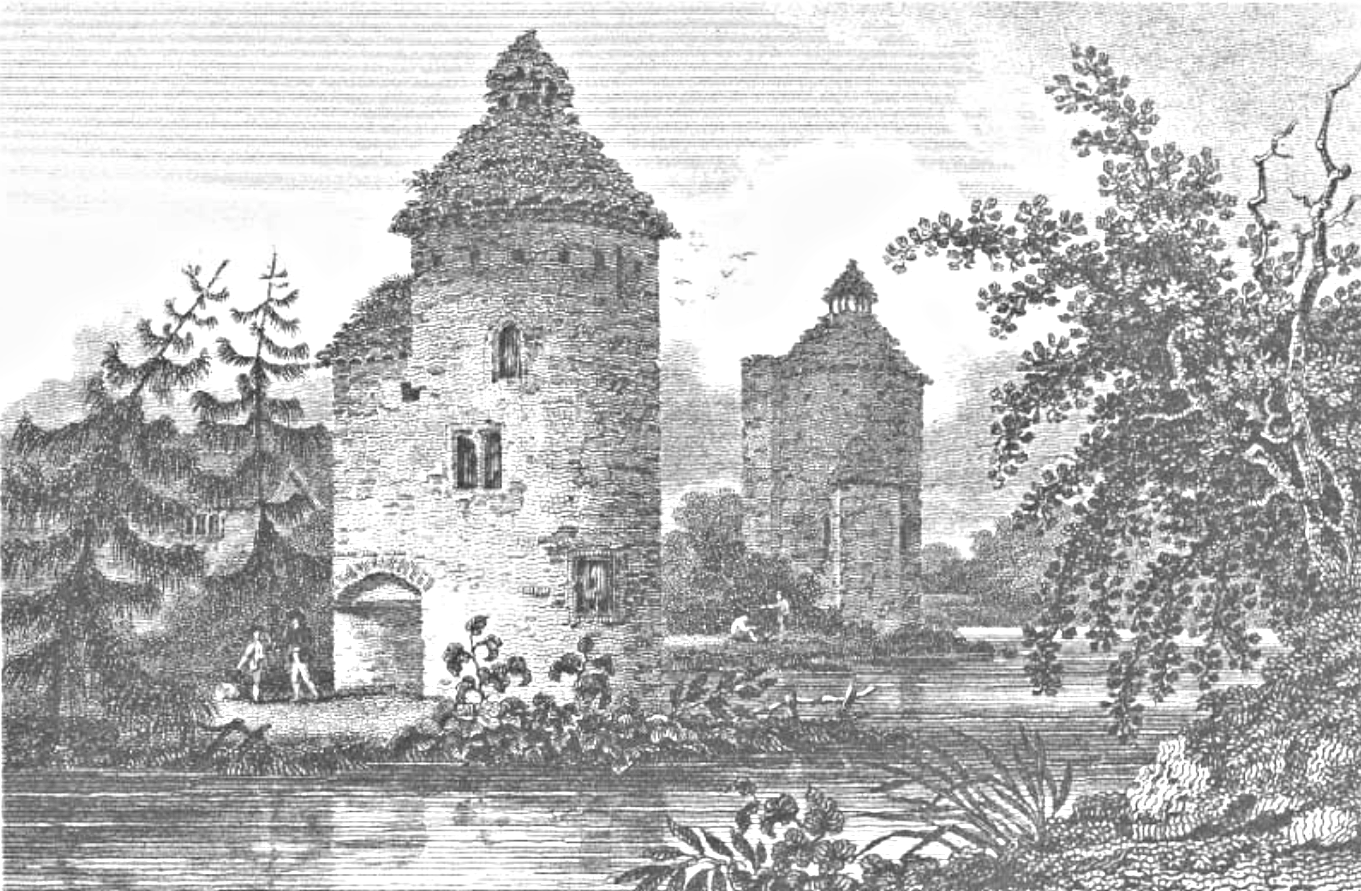
East Horndon has given its name to a terrible worm/dragon. Worm was a medieval word for dragon and whatever this creature was, it supposedly came ashore from the hold of a Barbary pirate ship on the Thames (the estuary was approximately six miles away to the south) and proceeded to wreak havoc in the woods around the manor of Herongate and the church in East Horndon. The terrified people begged Sir James Tyrell of Heron Hall to defend them.
In a fatal and valorous confrontation, Sir James managed to dazzle the monster with his highly polished armour and chopped off its head (shades of Medusa turning to stone on seeing her own reflection in Perseus’s polished shield https://en.wikipedia.org/wiki/Perseus).

Although Sir James was the victor, he’d exerted himself so much that he collapsed and died, presumably at the scene, because his son, Sir John Tyrell, went to search for him. The unfortunate Sir John trod on one of the creature’s bones and the resultant wound turned gangrenous, requiring his leg to be removed. “….there is a glass window at Heron depicting a one-legged man. The legend has recently been reworked in comic book form in London Falling….” (see https://wikishire.co.uk/wiki/East_Horndon and https://en.wikipedia.org/wiki/London_Falling)
I’ve now learned that the killing of the Horndon Worm is also attributed to yet another Sir James Tyrell, this time one who served King Edward III and features in a 14th-century English legend. (https://www.rockyfarmstudio.com/tyrrell-horndon-worm). So we now have three Sir James Tyrells!
“Enough already!” she cried, hastily typing The End! 🙃
Oh, but one last thing. The inclusion of Herrenhal, the House of Tyrell and a dragon in Game of Thrones makes me wonder if the author, G.R.R. Martin (https://en.wikipedia.org/wiki/George_R._R._Martin), knows of the Tyrells of Heron Hall and the legend of the Horndon Worm.


 The New Murrey and Blue blog
Leave a comment