
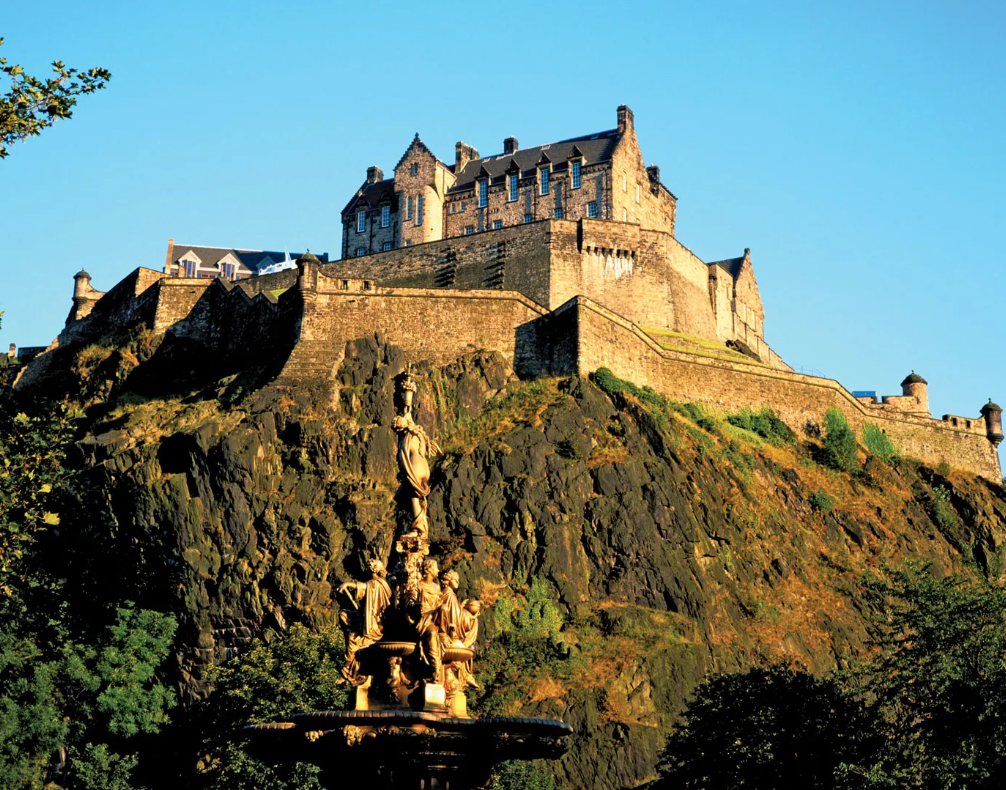
Scotland is crammed full of castles and great houses, some small, some large, and probably the first castle that comes to our minds is Edinburgh, perched so dramatically on its crag above the capital city.
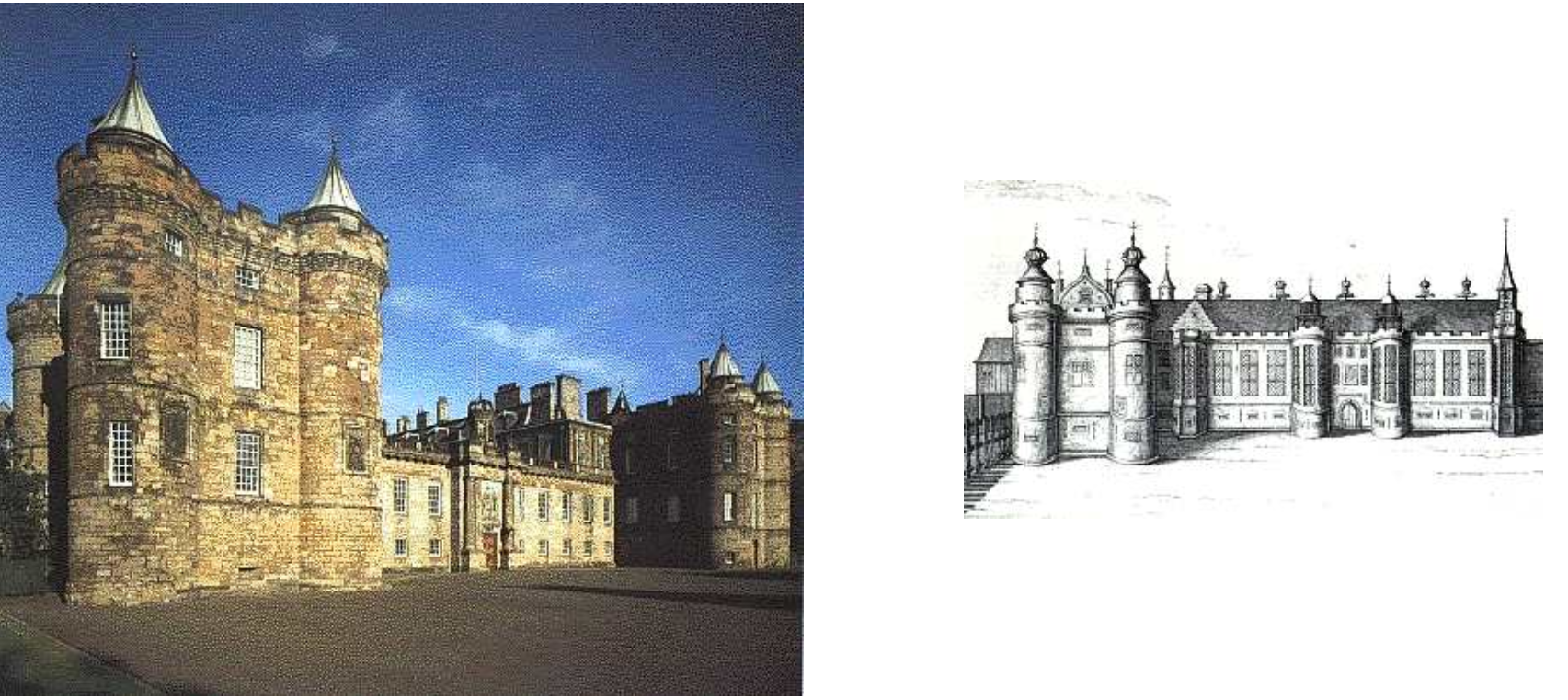
But Edinburgh is home to another very important place, Holyrood, or “….to give it its full title, The Palace of Holyroodhouse….” It is at present the official residence in Scotland of His Majesty King Charles III, but has served the same purpose to the monarchs of Scotland and England since James VI of Scotland also became James I of England when he succeeded Elizabeth I, the last Tudor monarch.
England and Scotland were two separate kingdoms, and often a loggerheads, until the Act of Union of 1707 (https://www.parliament.uk/about/living-heritage/evolutionofparliament/legislativescrutiny/act-of-union-1707/) merged them into one, to be called Great Britain. Not that the loggerheads have ceased entirely….attend any England/Scotland football match to discover that! Later, of course, Ireland was added too, although today, since the independence of the south, Éire (https://en.wikipedia.org/wiki/Éire), we are the Kingdom of Great Britain and Northern Ireland.

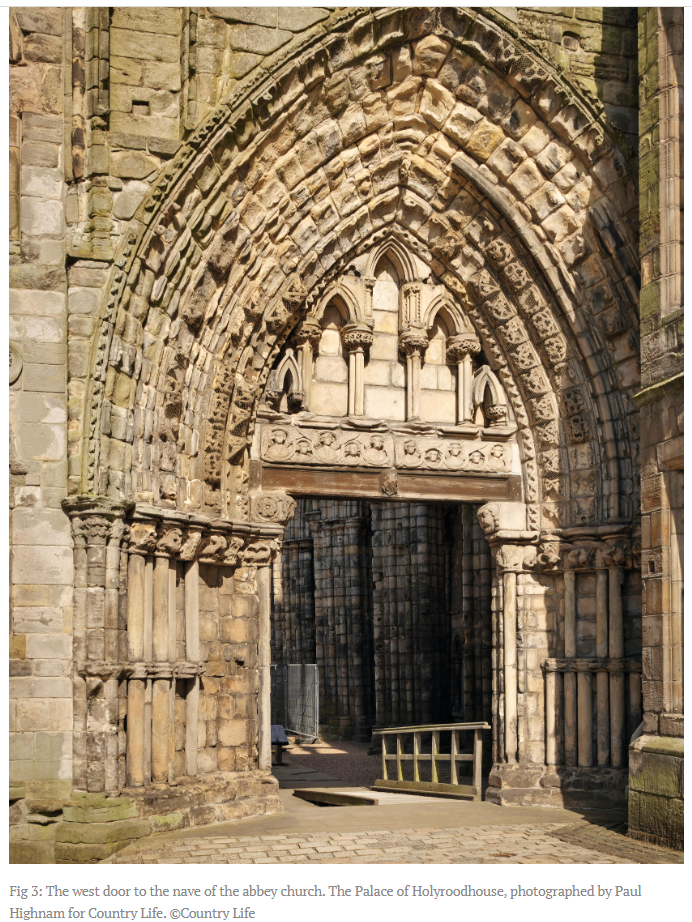
Holyrood is at the foot of volcanic Castle Rock, at the end of the Royal Mile, and “….was the offshoot of an [Augustinian] abbey established in 1128 by David I of Scotland and dedicated to the Holy Cross, the Virgin Mary and all the saints. ‘Holy Cross’, or Holyrood as it became known….”
Now, whenever I’m prompted to post about articles I’ve found in the pages of Country Life, it’s usually because they’re historically interesting, for sale and there are lots of photographs as well as information. Nothing is for sale this time, so please don’t leap to the conclusion that Holyrood Palace is on the market! Certainly not. This article https://tinyurl.com/3yen9ns6 is about the palace and its 900-years of history, with some excellent photographs thrown in. Well, perhaps not just that, because author of the article, John Goodall (https://www.countrylife.co.uk/author/johngoodall), hitherto known for his books on buildings of note and many articles for Country Life, has written a new history of Holyrood. At the moment I have no further information about this book, but there is certainly no shortage of history to write about!
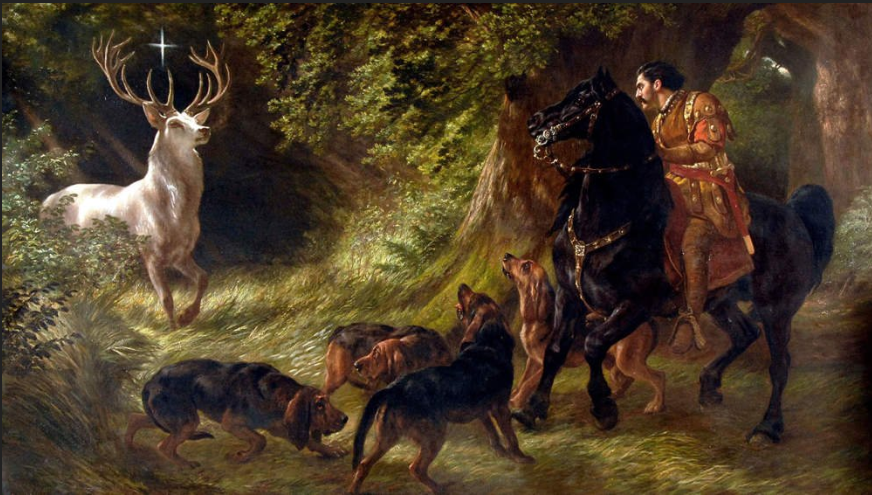
There is a legend about the origin of Holyrood Abbey. “….David I [1084-1153] was hunting in the royal forest of Drumsheugh when he was thrown from his horse below Salisbury Crags. He was speared in the thigh by the antlers of a ‘muckle white hart [stag]’….Had it not been for the ‘holy rood’ (crucifix) that miraculously appeared in the king’s hands [or between the stag’s antlers] as he grappled with the animal, he would surely have died. In thanks to God, David endowed a ‘monastery of the Holy Rood’ close to where he escaped death….” (see here for David I: https://www.encyclopedia.com/people/history/british-and-irish-history-biographies/david-i)
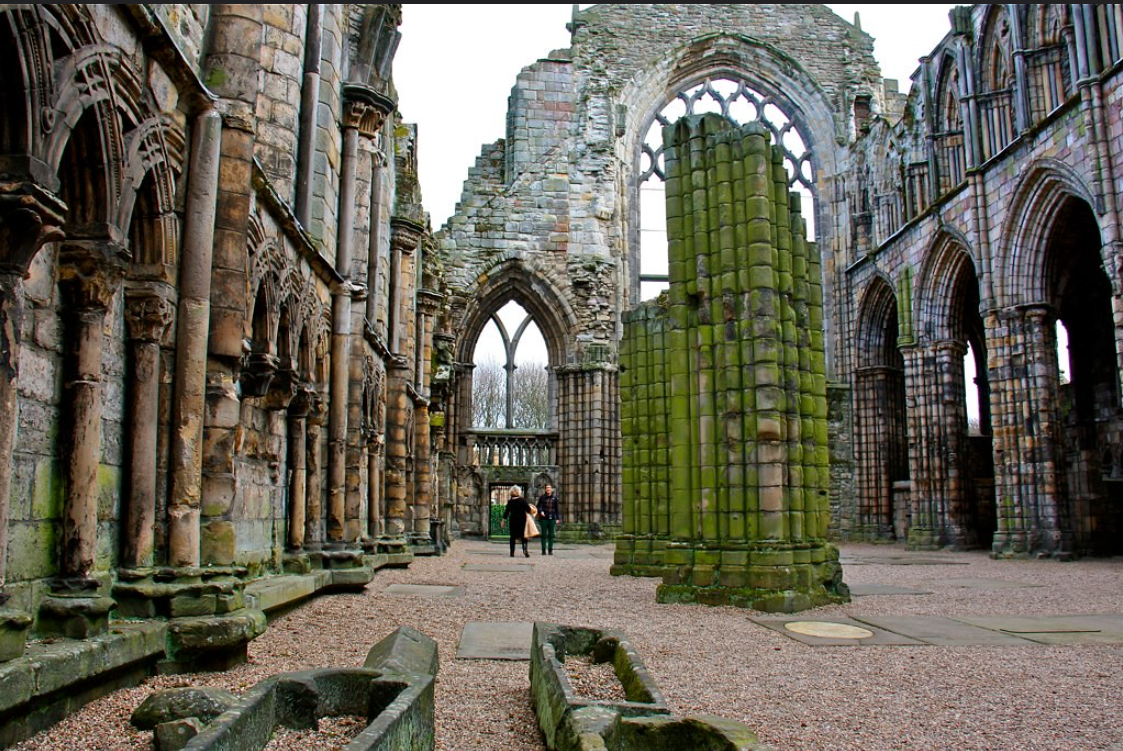
Since then Holyrood has—willingly and unwillingly—hosted numerous famous figures from the past. From being Holyrood Abbey to becoming a palace, it has seen a rollcall of names. James IV married Henry VIII’s sister Margaret Tudor there in 1503. In 1544 that same Henry’s attempt to “….force the infant Mary, Queen of Scots to marry the future Edward VI, the so-called ‘Rough Wooing’, brought an English army to Edinburgh….” Holyrood was looted and Scotland’s royal tombs were destroyed.
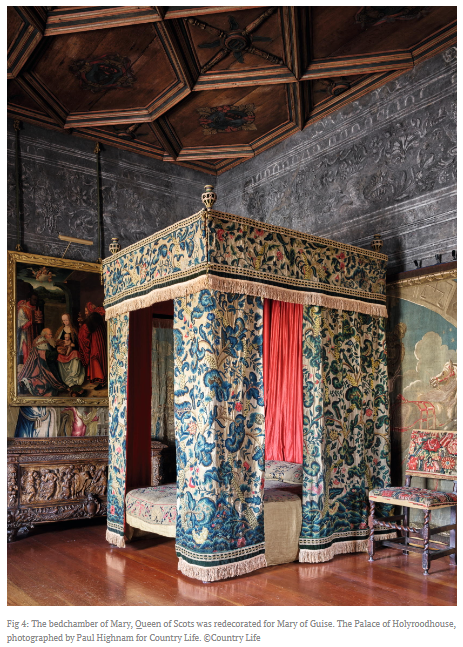
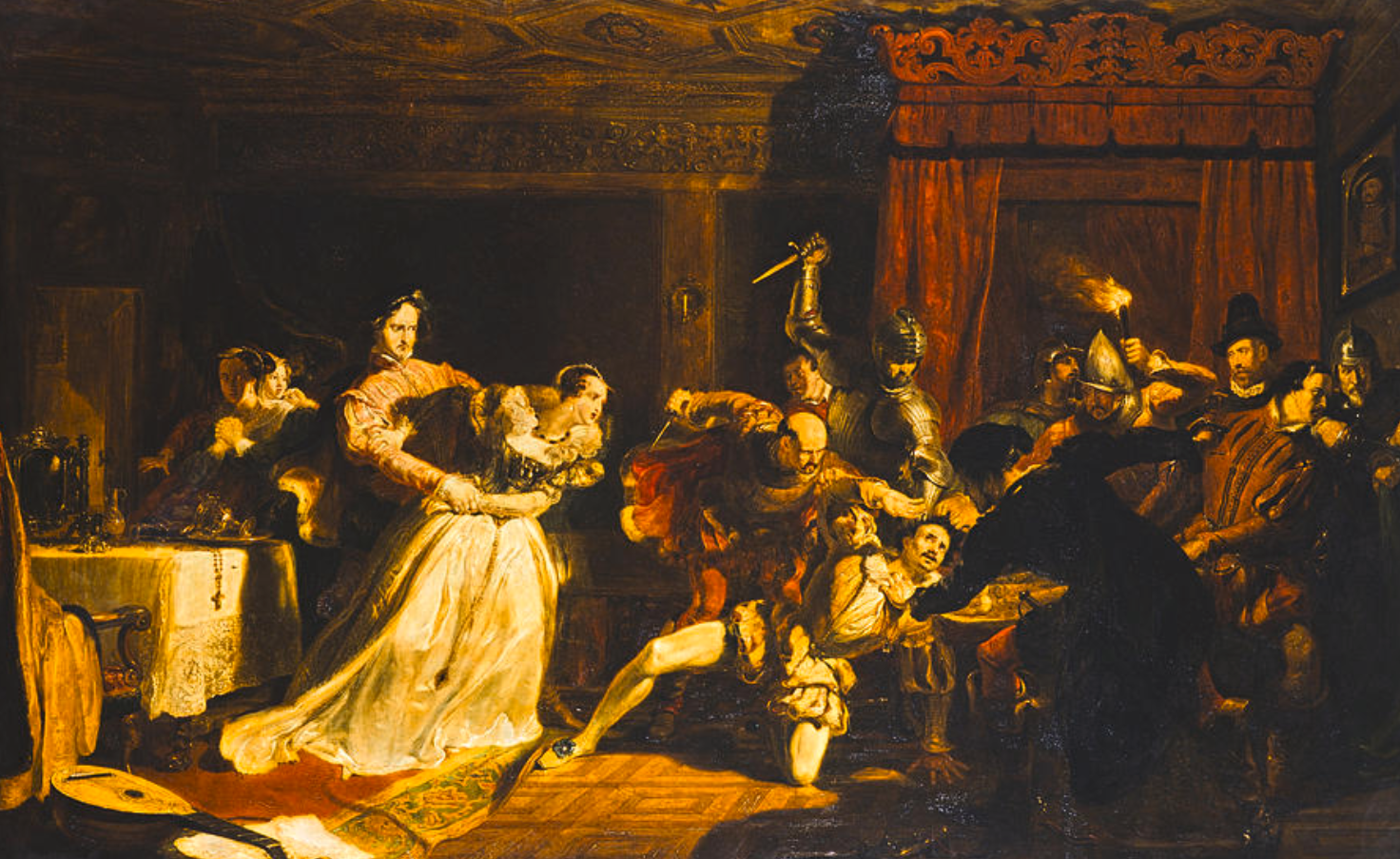
Mary, the Catholic Queen of Scots, is perhaps the most remembered occupant of Holyrood, marrying there twice, and in 1566 being present at the terrible murder of Rizzio, her Italian secretary. Then came the drama of her Protestant son, James VI of Scotland, being awakened in the middle of the night to be told he was now James I of Protestant England as well.
After the execution of Charles I on 30 January 1649, much of the palace was ruined by fire in 1650, when it was attacked and taken over by Oliver Cromwell’s troops. “….According to John Nicoll’s Diary, ‘the whole royal part of that palace was put in a flame, and burnt to the ground… except a little’….” The palace appears as it does now largely because of Charles II, Mary’s great-grandson.
In 1688, when word of the Glorious Revolution (https://www.history.com/topics/european-history/glorious-revolution) and the deposing of the Catholic James II reached Scotland, a furious mob ransacked Holyrood. “….They destroyed everything they could find, emptied the cellars and broke open the royal burial vault….”
Then the Act of Union was passed in 1707, and the palace, which was “….held in the hereditary care of the Dukes of Hamilton, was divided up into grace-and-favour apartments.…”
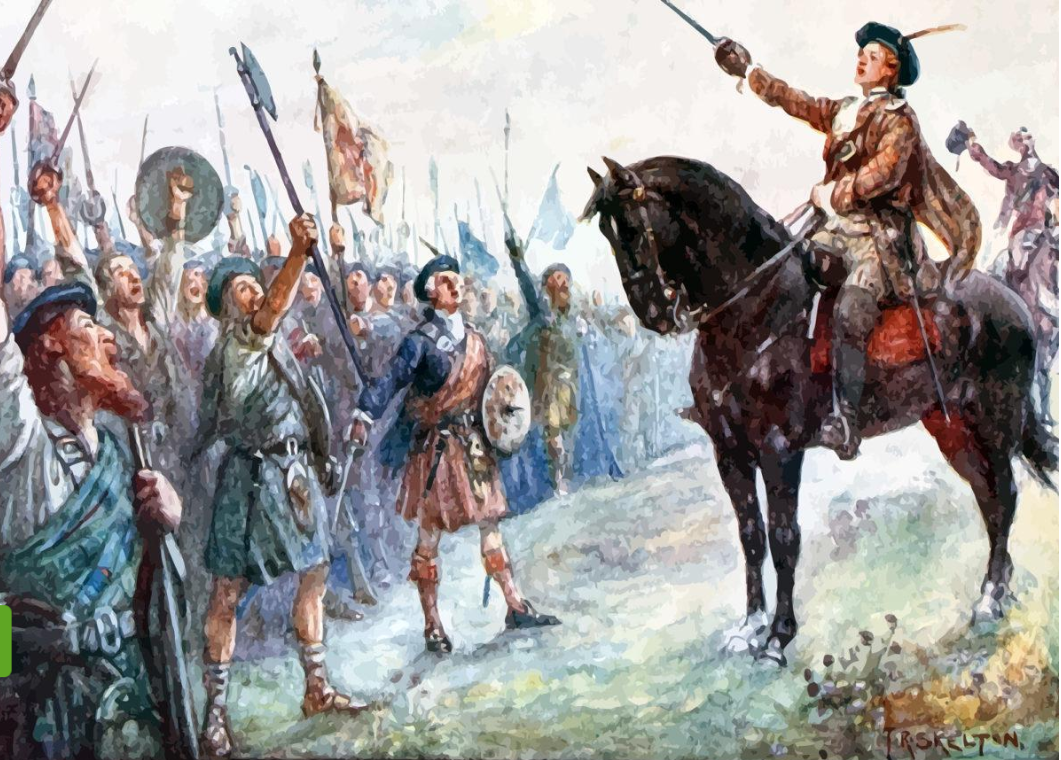
During the 1745 Jacobite Rising (https://www.history.co.uk/articles/a-brief-history-of-the-jacobite-risings) Holyroodhouse became Catholic Bonnie Prince Charlie’s palace for a while. When the palace was reoccupied by government troops, they defaced everything inside because of its association with the prince. In 1768 the repairs, which weren’t of the highest quality, led to the high vault of the abbey nave collapsing. Then, during the French Revolution, Holyrood Palace became “….a focus of the French court in exile….”
George IV visited Edinburgh in 1822 and sowed the seeds of tourism, which is such a great and deserved industry today. (see https://en.wikipedia.org/wiki/Visit_of_George_IV_to_Scotland) In 1850, Queen Victoria became the first reigning monarch to sleep at the palace since 1633.
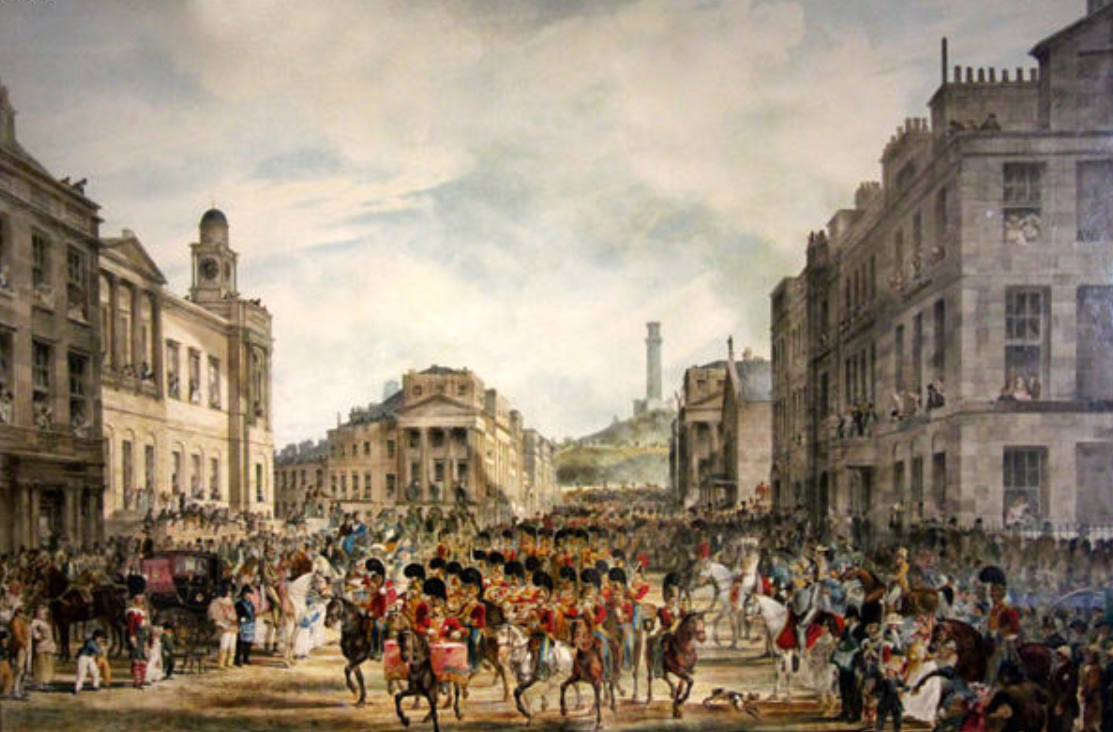
On the death of Queen Elizabeth II at Balmoral in 2022, she was brought to Holyrood Palace to stay overnight before being moved the short distance to St Giles’ Cathedral . After lying in state for four days, she was taken finally to London, to lie in state again at Westminster Abbey. Then she was interred at St George’s Chapel, Windsor Castle.
Read more about Holyrood here https://www.trip.com/blog/guide-to-palace-of-holyroodhouse-edinburgh/ and here https://www.rct.uk/visit/palace-of-holyroodhouse
 The New Murrey and Blue blog
Leave a comment