
We who enjoy all things medieval (but who prefer Plantagenets, especially if they’re Yorkists) will be accustomed to coming upon mention of the city of Exeter. It was a very important place back then—still is now, come to that. Spreading over a hill beside the River Exe, it’s surrounded by thick Roman walls, topped by a castle and a cathedral and it guards both a crossing of the River Exe and access to the sea. Such a site was always going to be essential to hold. The Romans certainly appreciated its importance and called it Isca Dumnoniorum (water or river of the Dumnonii), and their wall is still there to be admired.
If we go to Exeter now, can we still see the memorable sites with connections to our period? Well, some are still as they always were, but some are now mere echoes. But we can still stand where they once were, and all are worth a visit.
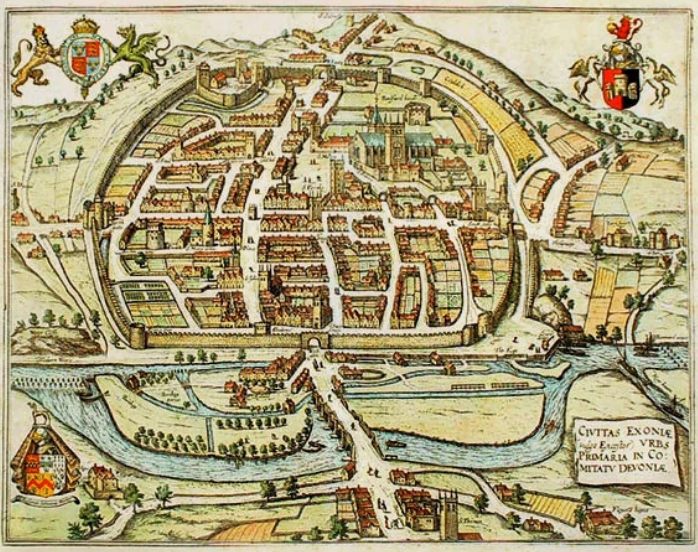
The first king of interest to us to visit Exeter was Henry VI. See here https://www.british-history.ac.uk/hist-mss-comm/vol73/pp340-382: “….A description of Henry VI’s coming to the City [i.e. in 1452], in Hooker’s [John Hooker https://tinyurl.com/yt3b8d9b] writing….Henry the syxthe….perusing and searching diverse parts of the Realme, came into Devon and lay the fyrst nighte at the Abbey of fforde, and from thenst came to S. Mary Otrey, and lay there ij nights, and from thence to this Cittie of Exester….” This visit is mentioned again here https://exetermemories.co.uk/em/_places/liverydole.php. On 1 January 1440 Henry taxed all foreigners living in Exeter, see here https://tinyurl.com/3dpmvubv.
In 1463, having ousted the Lancastrian Henry VI for the first time, the new Yorkist king Edward IV “….granted to the citizens [of Exeter] all goods forfeited by felons, a fair at the festival of St. Mary Magdalen, and other privileges….” But whether or not Edward was in the city at the time I don’t know.
In late 1470 Edward definitely was in Exeter when he and his youngest brother, Richard, Duke of Gloucester, arrived there in pursuit of his middle brother George, Duke of Clarence, and the “Kingmaker”, Richard Neville, 16th Earl of Warwick. They’d raised a failed rebellion and were trying to escape Edward’s fury. But the pursuers were five days too late, the fugitives had already escaped to sea, see here https://murreyandblue.org/2024/10/06/does-the-harrington-stanley-feud-harbour-a-secret-about-richard-of-gloucester/
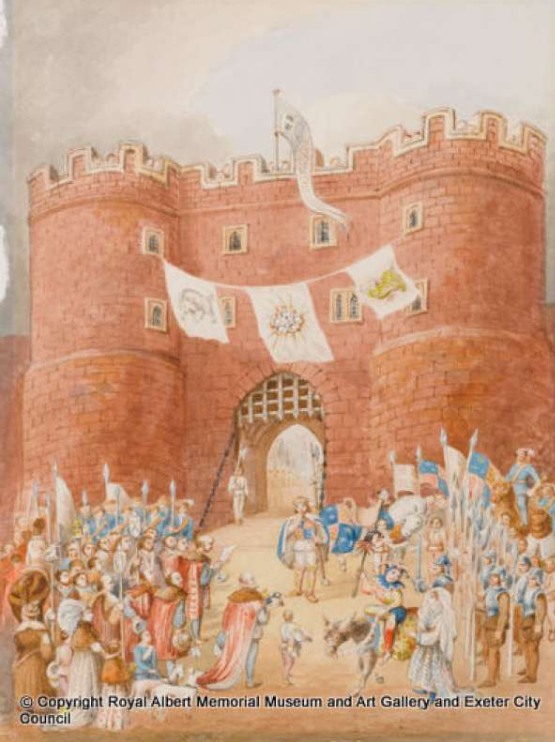
By 1483 Edward IV was dead and his brother Richard had become Richard III. (No need here to go into the nitty-gritty of that.) When reading Hoodman1’s excellent post https://murreyandblue.org/2017/03/20/richard-iii-in-exeter-a-painting-discovered/, I found the above illustration of Richard arriving at Exeter’s East Gate on his royal progress in that first year of his reign. He stayed from 9–13 November 1483, probably in the bishop’s palace. Hoodedman1’s post contains other useful information about Richard and Exeter. Thank you, hoodedman1 (and also Ian Churchward of The Legendary Ten Seconds). Unfortunately the West Gate is no longer there in its medieval form.
You can read more about Richard and Exeter here https://devonandexeterinstitution.org/wp-content/uploads/2016/06/May-2016_Richard-III-DEI-Press-Release.pdf.
When Henry Tudor usurped Richard’s throne through treachery and became Henry VII, his tenure wasn’t all plain sailing. There were rebellions and claimants, one of whom was Perkin Warbeck. When writing of Perkin, the ever-informative Sparkypus has also contributed to the story of medieval Exeter, see here https://tinyurl.com/3hcczz6n.
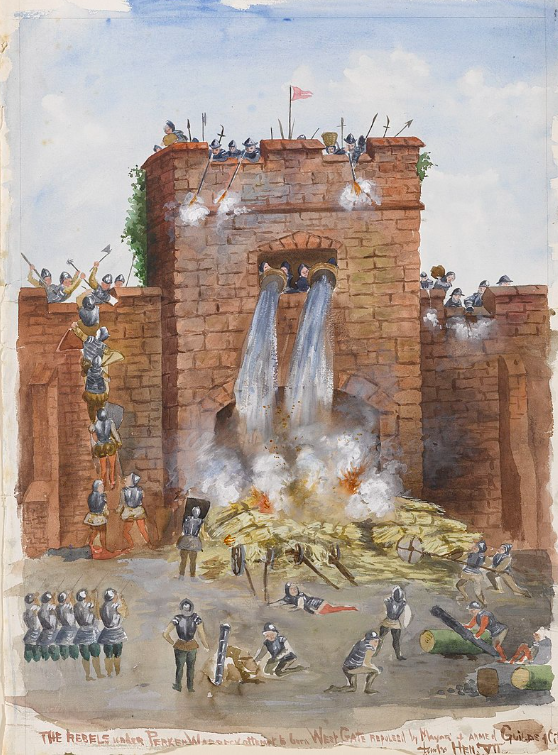
Perkin and his force of nearly 8,000 arrived at the city’s West Gate on 17 September 1497, St Lambert’s Day. But Exeter held out against him. (See illustration below) Sparkypus also refers to Coldridge—only eighteen miles away from Exeter as the crow flies—where Perkin’s older brother, Edward V, is now thought to have been living anonymously. The “Boys in the Tower” have now been virtually 100% proved to have survived, so might there have been a meeting between them as adults? Surely so if they were only eighteen miles apart. See here https://sparkypus.com/2021/04/13/a-portrait-of-edward-v-and-the-mystery-of-coldridge-church-part-ii-a-guest-post-by-john-dike/.
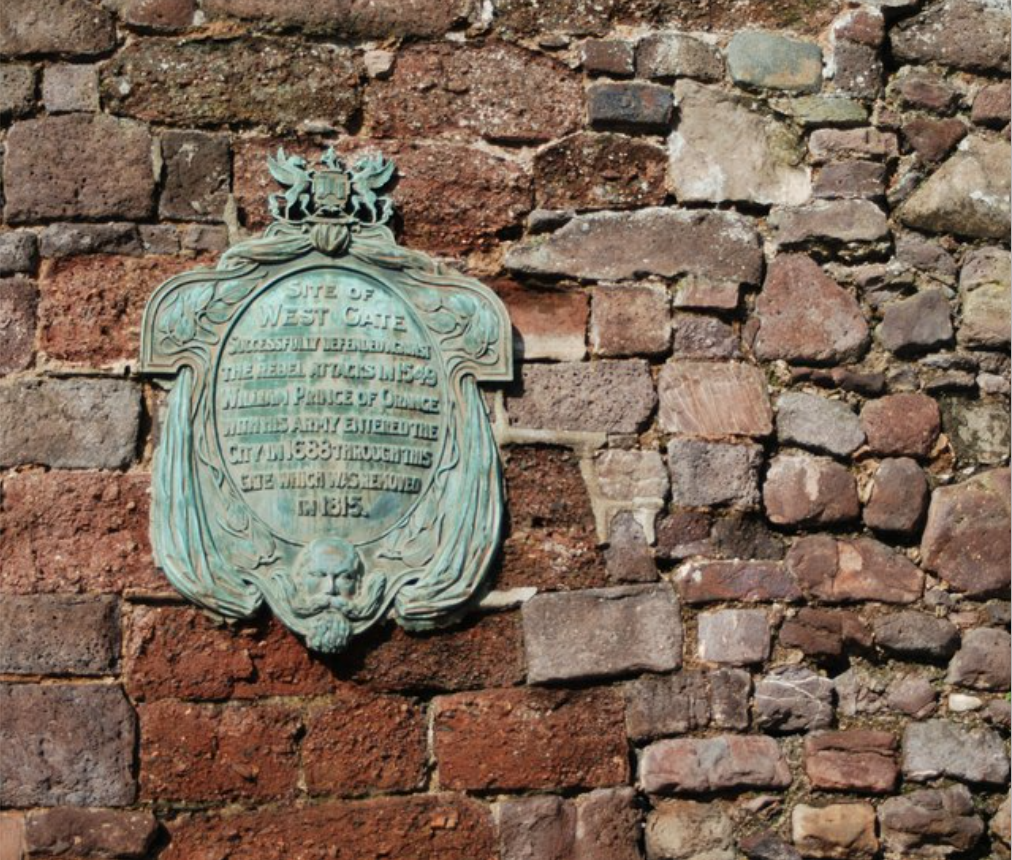
This plaque commemorates the original location of Exeter city’s west gate. It is near ‘The House That Moved’ (see below) and St Mary Steps church. It also commemorates some of the military campaigns in which it featured. From https://www.geograph.org.uk/photo/1727321
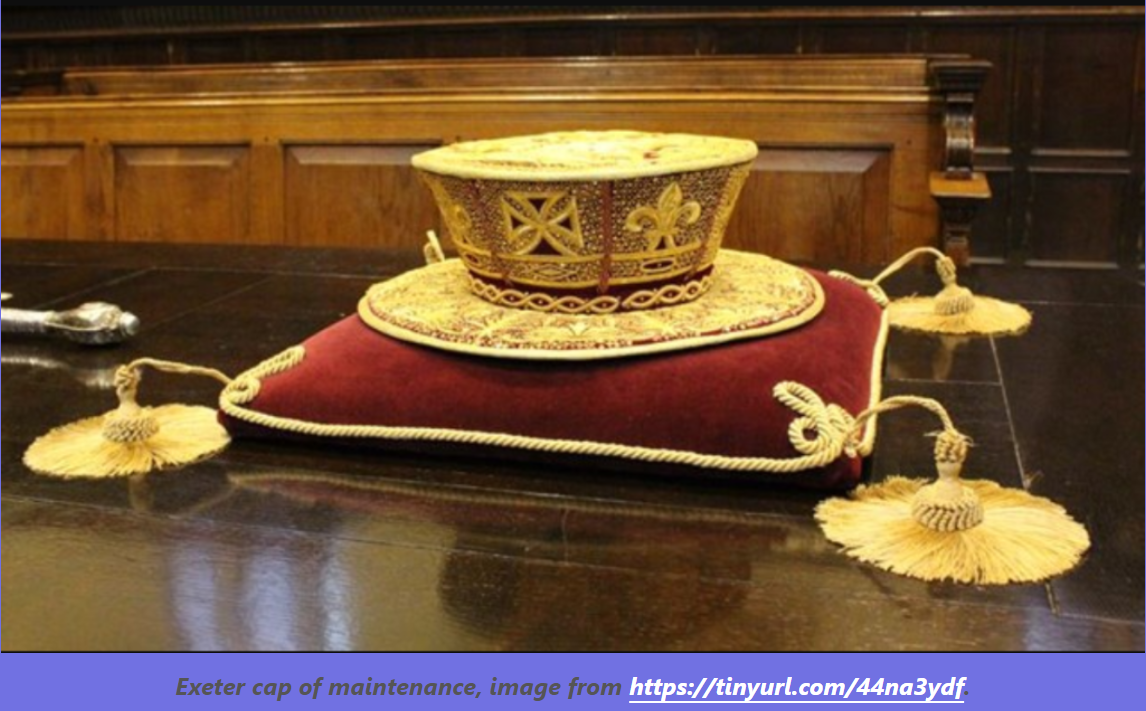
When the city (misguidedly!🙄) supported Henry VII against Perkin Warbeck the first Tudor king showed his gratitude by presenting Exeter with his cap of maintenance. I only wish some brave Yorkist had whacked him around the ears with it. Alas, it didn’t happen. https://www.devonperspectives.co.uk/exeter_1497.html)
On 1 January 1501 the ill-fated 15-year-old Catherine of Aragon passed through Exeter on her way from Plymouth to London to marry Henry VII’s son and heir, Prince Arthur. If she’d known what lay ahead for her, I don’t doubt she’d have turned around and gone home to Aragon again!
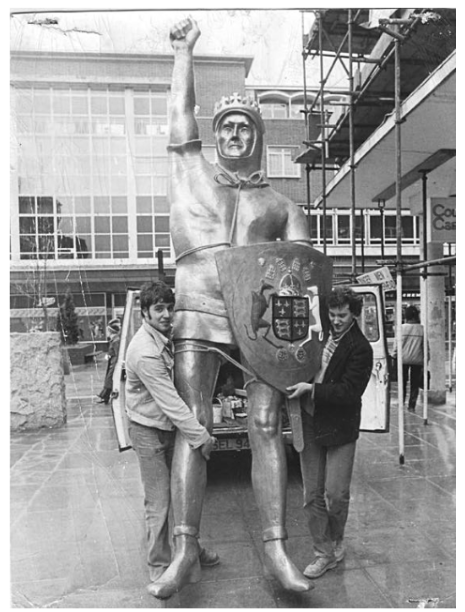
According to Super Blue, (see here https://murreyandblue.org/2016/01/29/henry-carved-in-stone/) “….There was a stone statue of Henry VII in Exeter, near Eastgate, but it seems to have been lost during the Blitz. A fibreglass version was then erected near Princesshay (above) but that was removed in 2005 and is in cold storage. Perhaps someone is trying to tell us something?….”
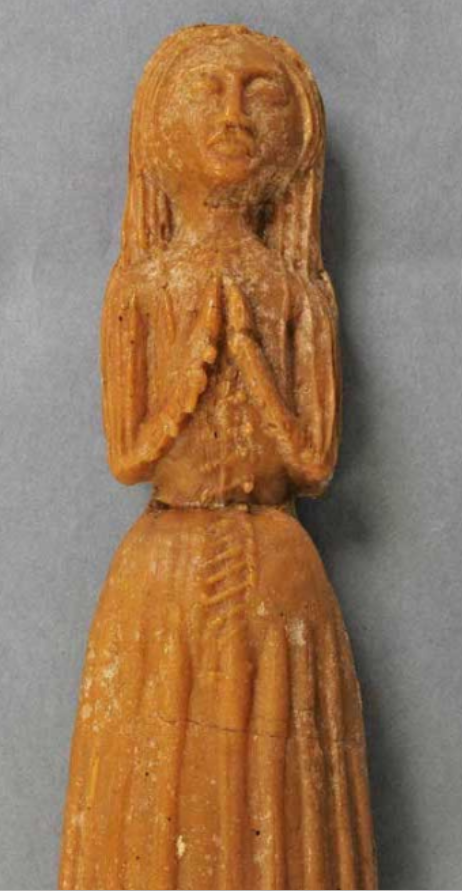
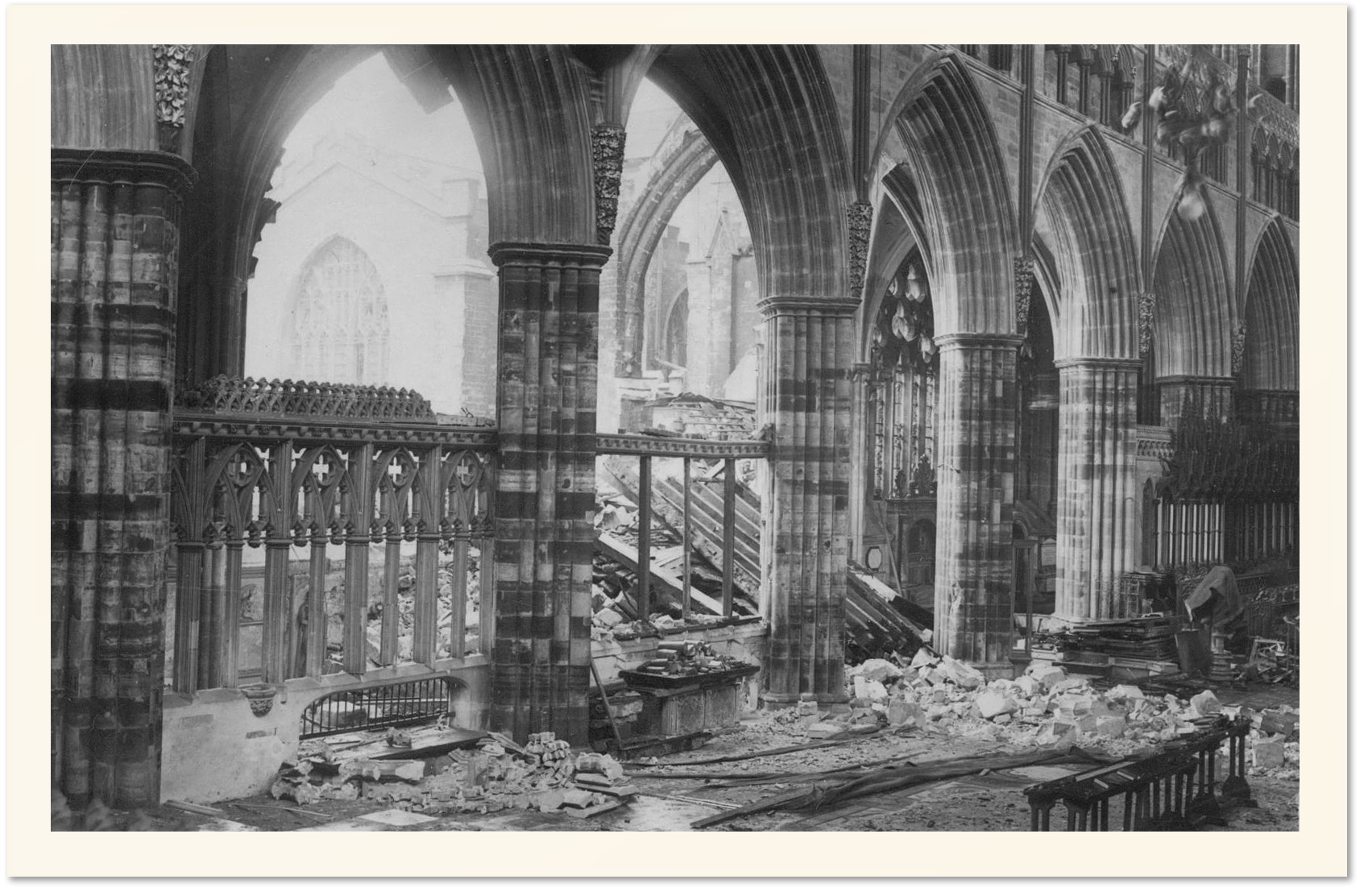
When damage was being cleared up at Exeter Cathedral after a Luftwaffe raid in May 1942, unique medieval wax votive offerings were found on top of the tomb of Bishop Edmond Lacy (circa 1370-1455). See here https://murreyandblue.org/2020/09/18/the-wax-votive-offerings-found-at-exeter-cathedral/
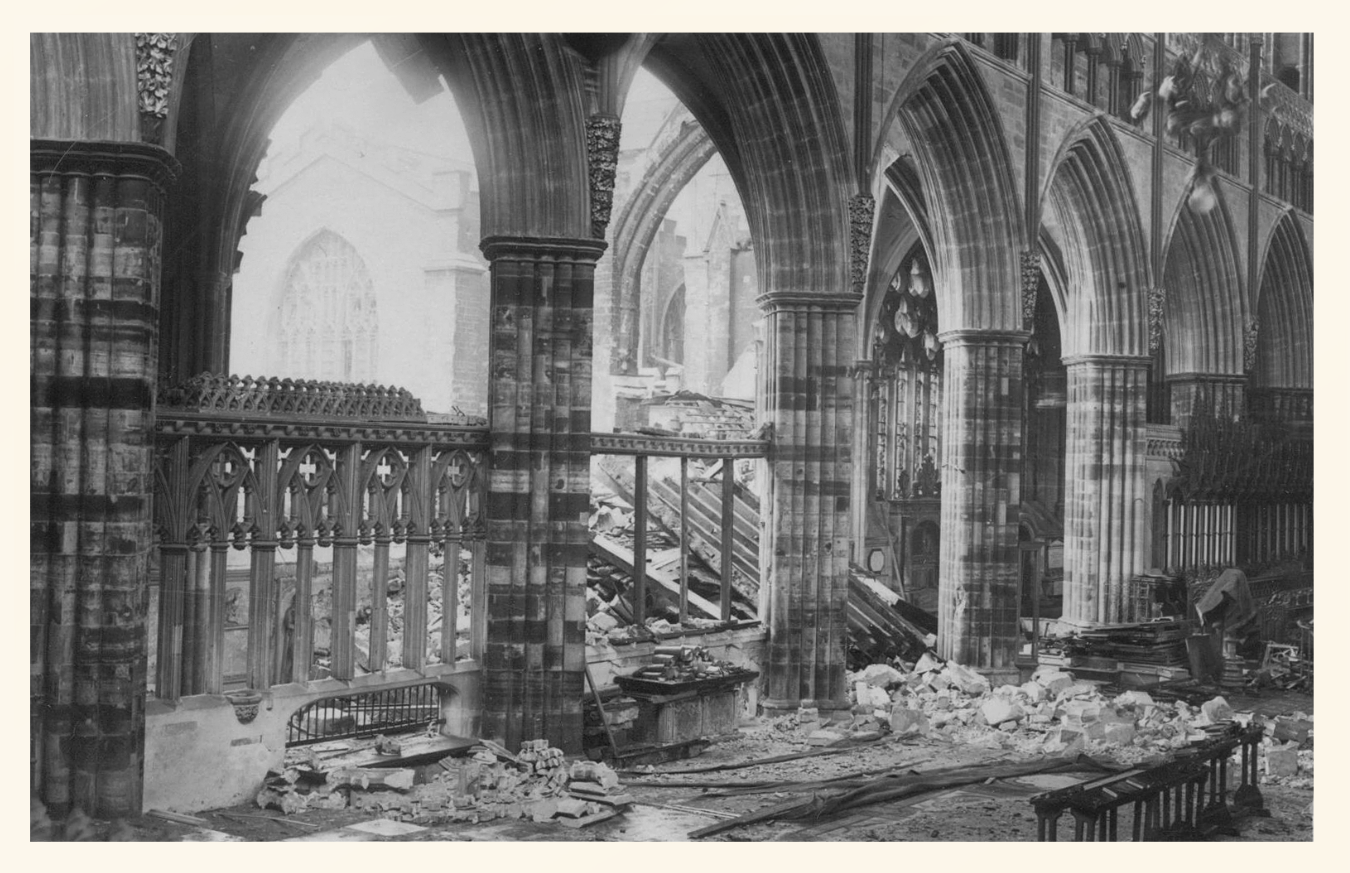
The above photograph is taken from https://www.exeter-cathedral.org.uk/wp-content/uploads/2020/05/ED-125.65-Interior_air-raid-damage-4-May-1942.png. Read more at https://www.exetermemories.co.uk/em/exeterblitz.php
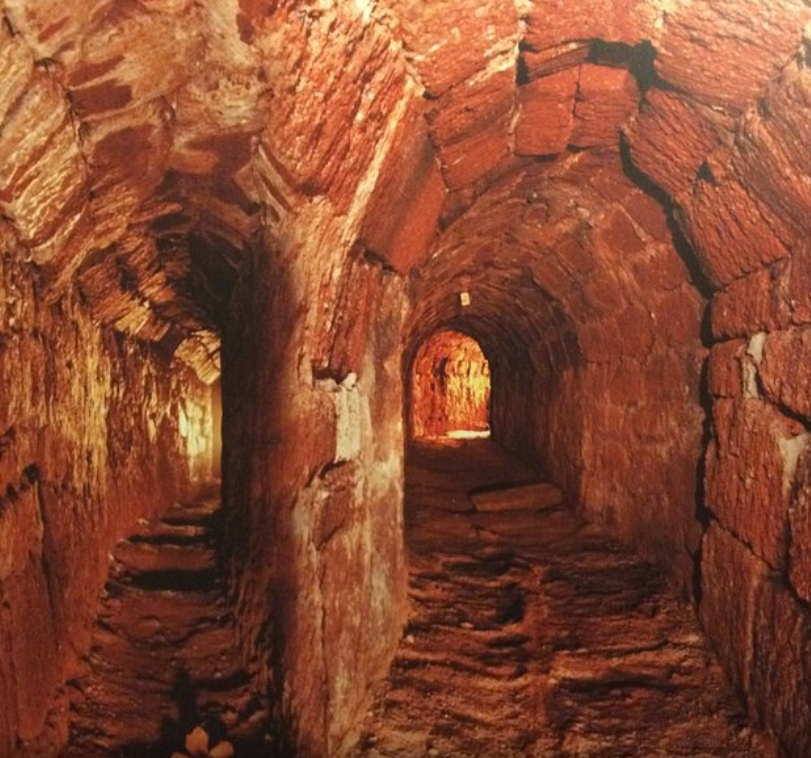
There is a network of medieval tunnels under Exeter, as you can read here https://archaeology-travel.com/england/underground-passages-in-exeter/. “….Beneath the streets of Exeter are what remains of a network of medieval tunnels built to supply the city with fresh water. Just a few hundred years later, they had fallen into disrepair and became all but forgotten….” But then they were opened again for tourists in the 20th century. Not for this lily-livered tourist! Looking at pictures is as close as I’m ever going to get to any tunnels, I assure you!
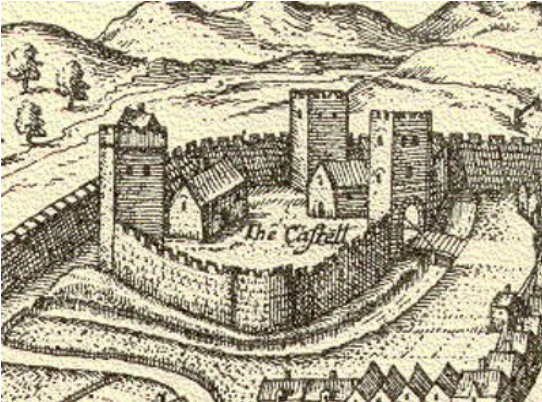
The above illustration of Exeter’s medieval castle is from https://www.exetercastle.uk/history/ which repeats the old chestnut about Richard III and Rougemont/Richmond. Unfortunately The original castle has long gone, and the buildings now are from later centuries. Also gone, therefore, is the luxury residence built by my favourite 14th-century nobleman, John Holand, Earl of Huntington, Duke of Exeter, half-brother of Richard II, when he was governor of the castle. If it still existed, I guess it might in some way resemble Dartingon Hall, the beautiful Devon home he built near Totnes.

As you can see from the photograph above, part of the medieval bridge over the Exe can still be seen. According to https://en.wikipedia.org/wiki/Old_Exe_Bridge “….construction of the bridge began in 1190, and was completed by 1214. The bridge is the oldest surviving bridge of its size in England and the oldest bridge in Britain with a chapel still on it….” And “….Eight and a half arches out of a likely total of 17 or 18 still survive today, although the ninth arch is mostly buried under the modern ring road….” It’s still impressive, but how must it have been in its prime? With nearly twenty arches? Breathtaking, I should think.
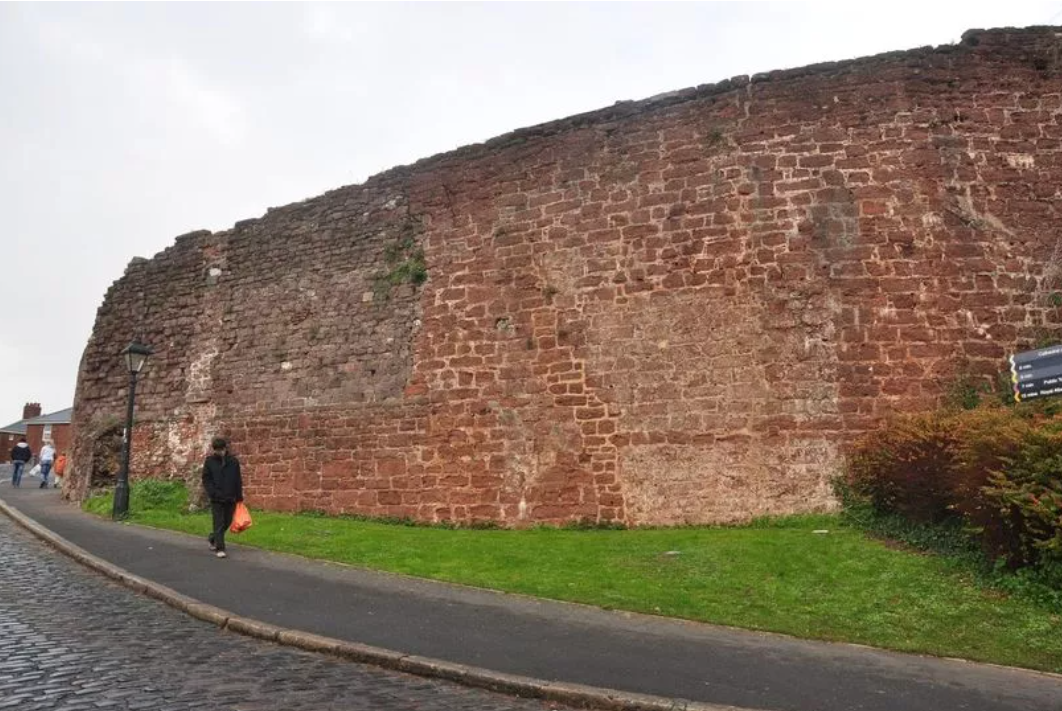
The old Roman city wall still survives, as you can see in the above photograph. There is a walk around them, read here http://www.pinns.co.uk/devon/exeterwall.html. And if you go here https://www.visitexeter.com/things-to-do/the-medieval-trail-p1457763 there’s a medieval trail to follow through the whole of Exeter. Another site to list Exeter’s attractions is this one https://www.visitexeter.com/things-to-do/attractions/history-attractions.
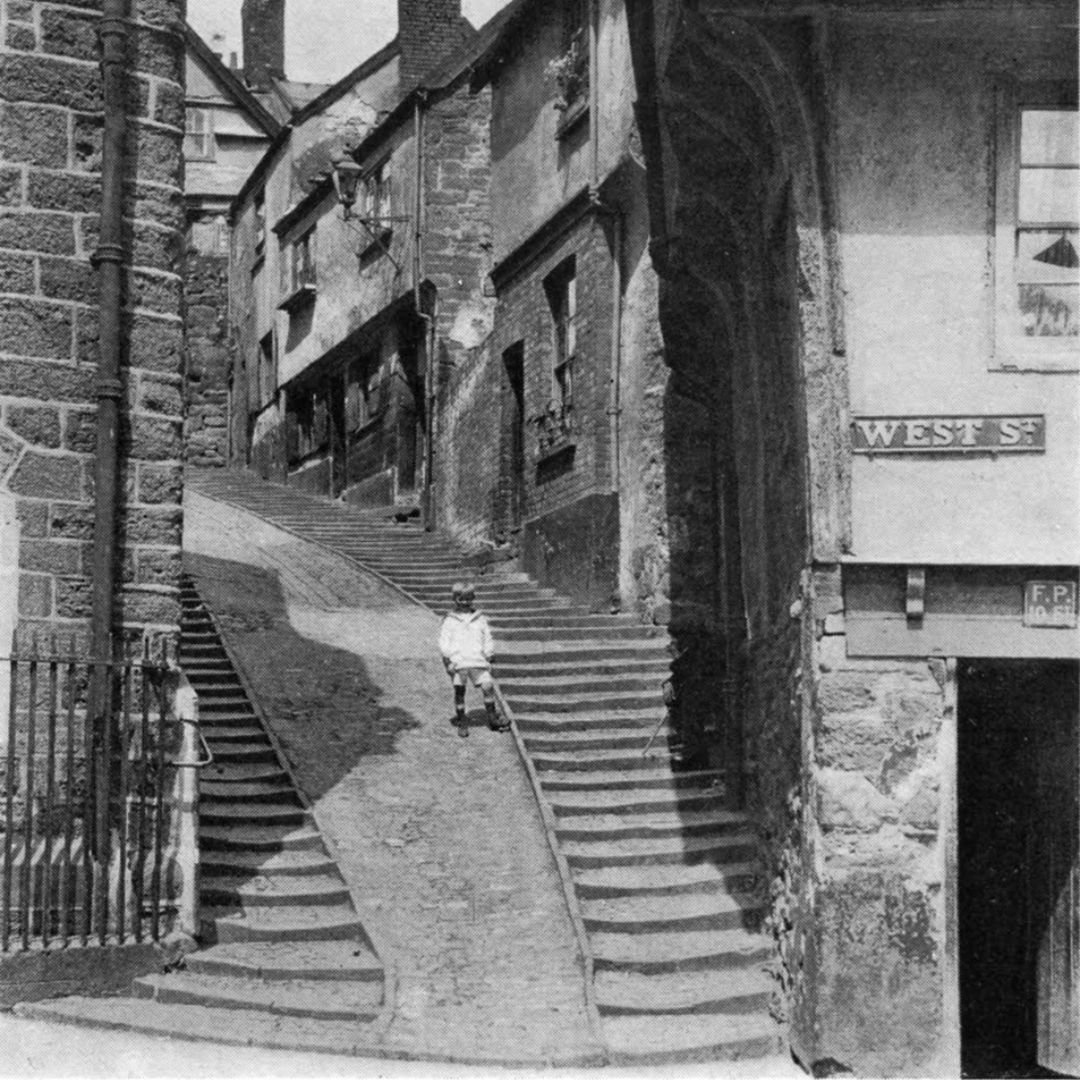

At the foot of the hill you’ll find “The House That Moved” which was built circa 1450 and is one of the oldest timber-framed houses in Exeter. In 1961 it was moved 200’ to be saved from demolition.


You can read more about this house here https://www.devonlive.com/news/devon-news/strange-true-story-house-moved-4762361 but will someone PLEASE tell me why a building that dates from the 1420s/1430s is TUDOR? A number of sites insist on using this infuriating misnomer. The house was there 50-60 years before the squinty-eyed Tudor Weasel set foot near Bosworth! It’s Henry V/VI. What’s so hard to understand? I’m so tired of being force-fed with this drip-drip-drip of the House of Tudor.
Anyway, you’ll find a really informative history of Exeter here https://www.british-history.ac.uk/magna-britannia/vol6/pp177-234.
Exeter is well worth a visit, so if you can go there, do! The history buff in you will not be disappointed.
 The New Murrey and Blue blog
Leave a comment