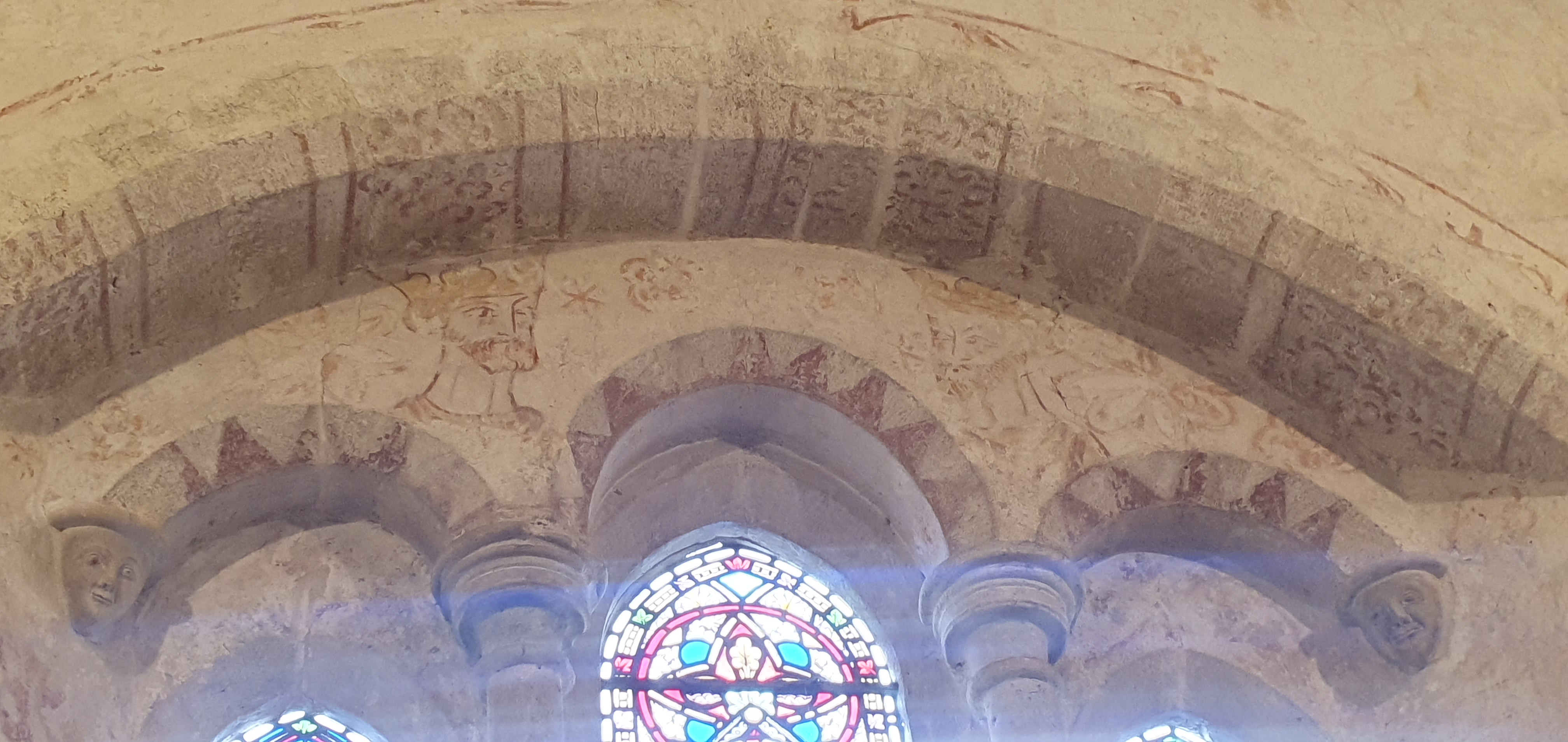
Recently on my travels I came across the remote little church of St Margaret of Antioch at East Wellow in Hampshire on the edge of the New Forest. Known best as the resting place of the famous nurse, Florence Nightingale, it also has a collection of well-preserved medieval wall-paintings.
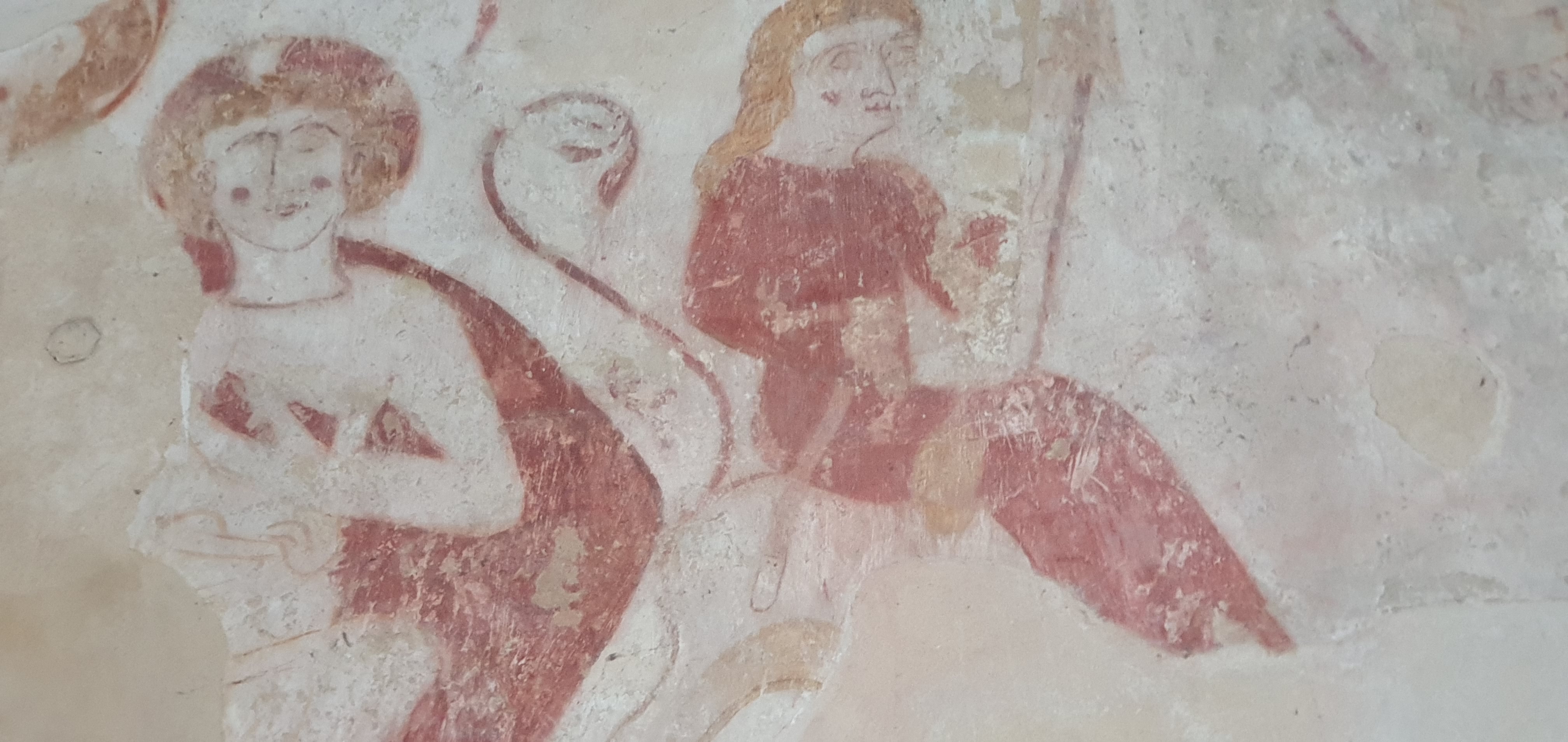
The church itself was built in the 1200’s and most of the paintings are believed to date from around the same time, with some perhaps a bit later. Subjects include St Christopher treading carefully over a sea-serpent, and a lady with long blonde hair who is spinning. Apparently there was once a painting of a knight come to rescue her, but that figure is no longer visible save for a pair of keys. The woman may be a depiction of St Margaret herself and in that case the missing knight was not coming to rescue her but to seduce her! There are other fragmentary paintings too, including (possibly) St Edmund of Abingdon, archbishop of Canterbury from 1233. Edmund was a great scholar, and founded St Edmund’s Hall at Oxford.
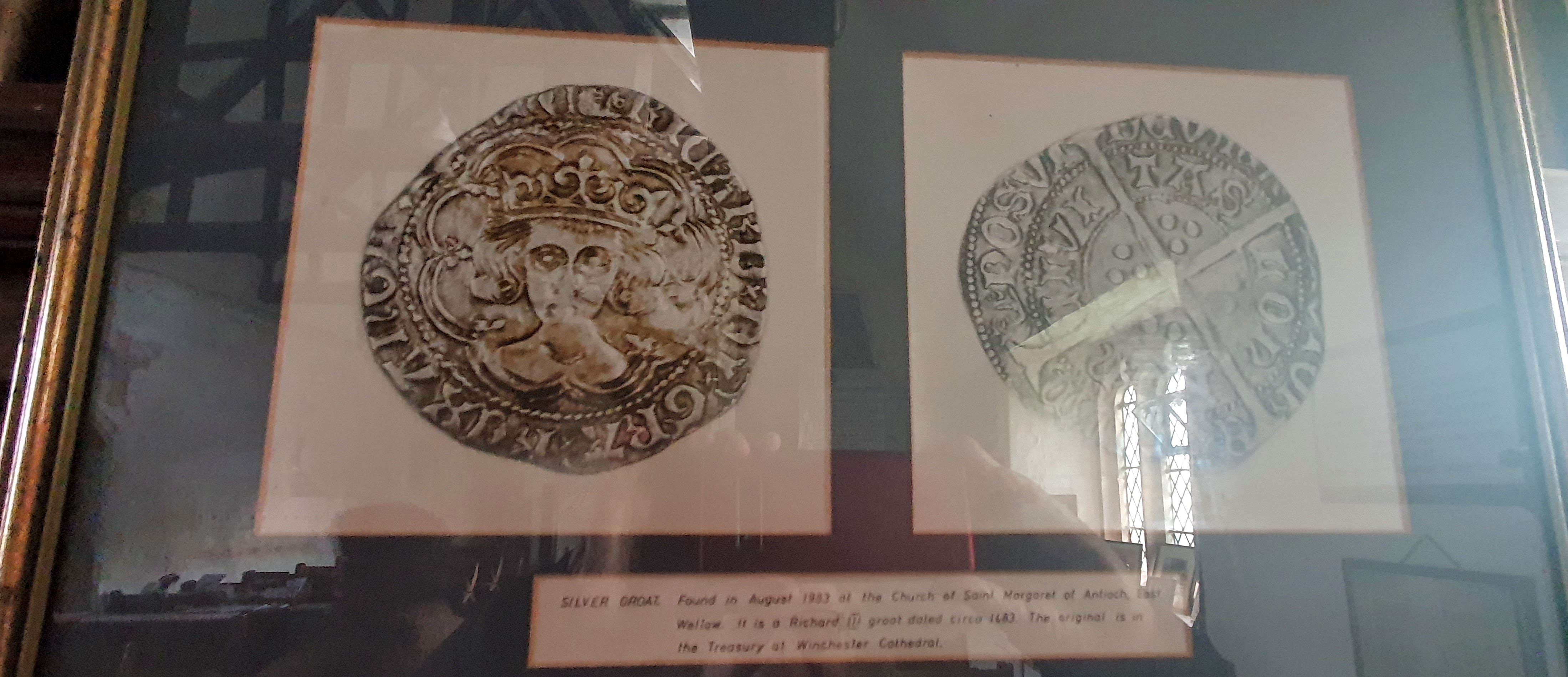
I know about the paintings, but what came as a great surprise to me was a display in a glass case on one of the walls. In 1983, exactly 500 years after it was minted and lost, a coin from the reign of Richard III was found in an archaeological investigation in the church. A silver groat, which is now in the Treasury at Winchester. One wonders how it came to be in that remote church, which always seems to have stood quite a distance from the nearest village. There had, apparently, been repairs done to the church in the 1480’s–perhaps the mason or one of the workers dropped it? I am sure he was extremely annoyed if that was the case!
 The New Murrey and Blue blog
Leave a comment