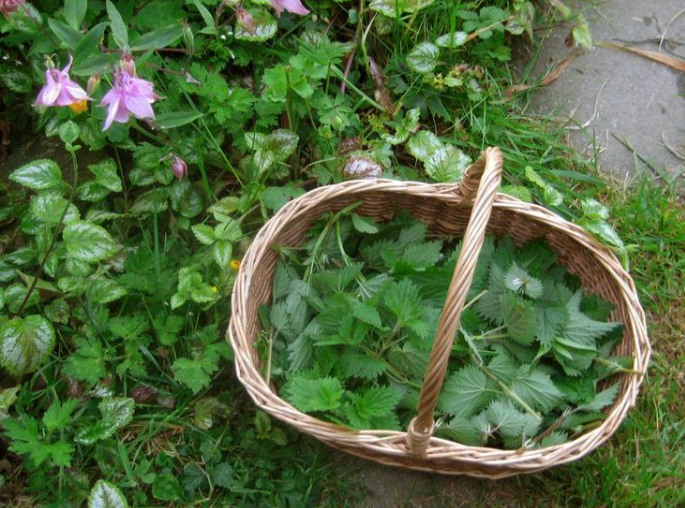
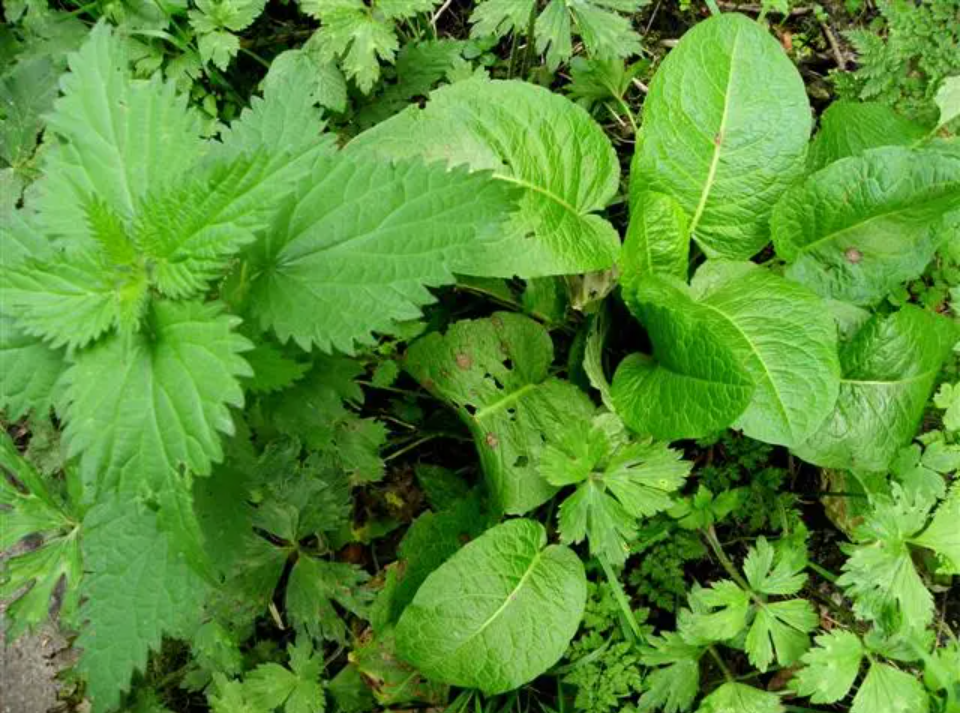
If you’ve ever been the victim of the notorious stinging nettle, urtica dioica (see the image above,) you’ll know it darned well does sting! It also itches and continues to do so for quite some time. As a child the remedy I knew was the well-known folk cure of rubbing the sap of dock leaves on the affected area. The dock plant—rumex obtusifolius—often grows with nettles (see the image below). In my childhood circles we had to chant “Docky, docky in, stingy, stingy out….!” (Or was it the other way around?) Did it work? Well, I suppose smearing the cool pleasant sap on the itching made it felt better for a while, but it didn’t banish anything permanently. Like the common cold, it will depart in its own good time (seven days) no matter what medication or remedy you use in the interim.
You can read about this dock leaf folk cure here Debunking the myth of stinging nettles and dock leaves – A tang of science.
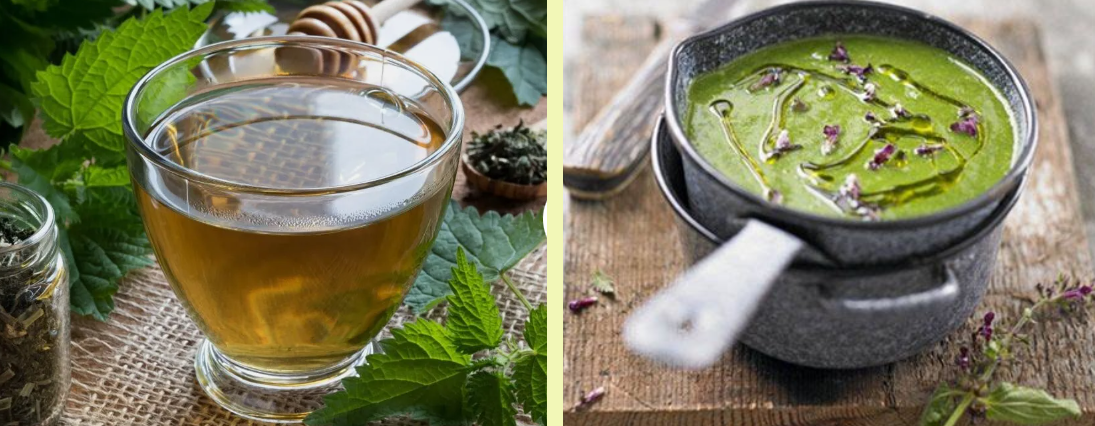
We use nettles medicinally (see here https://www.eatweeds.co.uk/stinging-nettle-urtica-dioica) and as dye. When cooked, it’s food. See the double illustration below. But did you know it has also been long used to make cloth? I didn’t. Oh, a great many plants have provided mankind with fabrics and so on for aeons, for example flax for linen, but I wasn’t aware of the multi-purpose nettle being another.
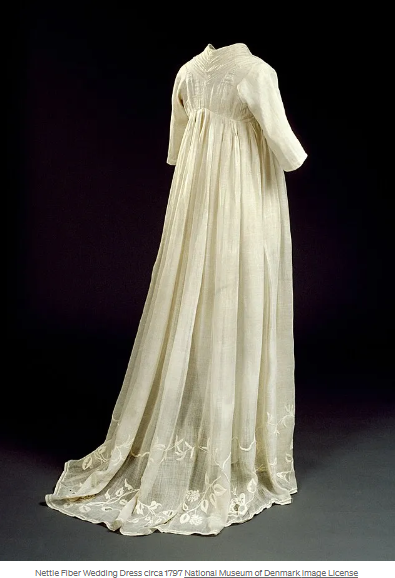
It’s hard to imagine that the fibres inside mature, woody nettle stems can be woven into fabrics as delicate as the 18th-century wedding dress below.
Nettle fibres can also be woven into shawls, blankets, and knitted garments too, as see the jerkin and the man’s shirt below.
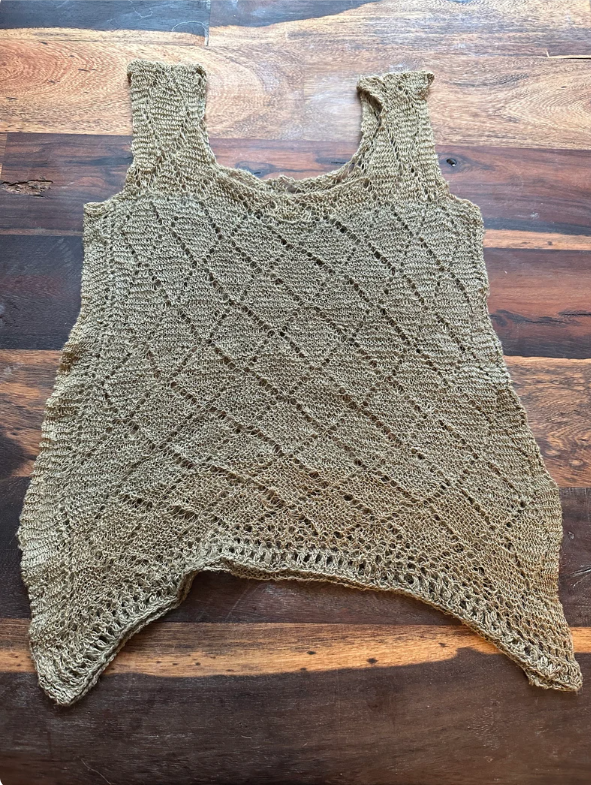
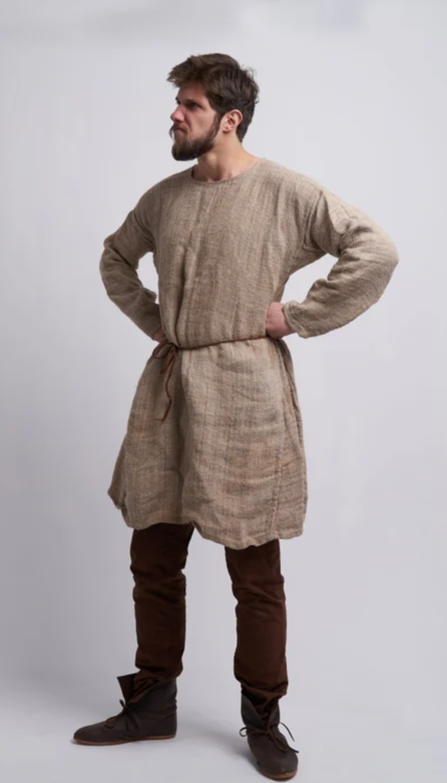
It seems impossible such a hostile plant (one that’s just waiting to get you!) could provide any garments as exquisite as the wedding dress. Mind you, just think, we all know better than to prod bees around because we know that they too deliver a nasty sting. Yet they produce the sweet honey we love. It’s all a matter of approach; just be very careful around bees and stinging nettles!
As you will read here Natural Fibres from Nettle and Hemp | Wild Fibres natural fibres, using the nettle for cloth has been around since at least the Bronze Age, and the plant flourishes here in northern Europe, especially where there has been human habitation. Where we were, there too was (and still is!) the nettle.
Not everyone could afford the rich fabrics worn by the better-off, so the nettle filled the breach. Nettles were plentiful, free and didn’t need any upkeep. They’d grow anywhere and all you had to do was gather them when they were full-grown and get to work. Those desirably silky fibres nestled in the long stems (it’s the leaves that provide the sting) and once extracted were easily prepared to be woven into continuous lengths, just like any other thread. See this video Bing Videos to learn exactly what has to be done. It’s clearly a peaceful and rewarding task that can be carried out anywhere.
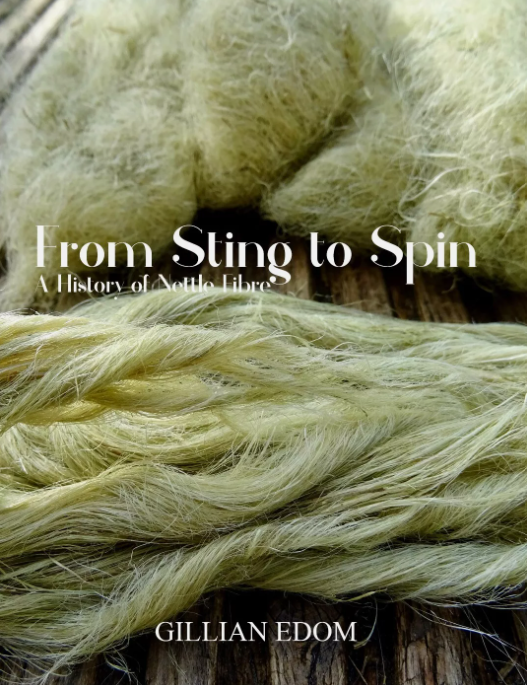
There are books about the nettle and its uses, of which the image below is just one.
And you can read more here Stinging Nettles: A Man’s Best Friend? – (medievalhistoria.com), here https://www.resilience.org/stories/2023-05-25/the-nettle-dress/, here https://medium.com/plant-based-past/silk-of-the-north-nettles-a-botanical-history-6326e9b9f871 and here https://www.motherearthnews.com/diy/turning-nettles-into-textiles-zbcz2101/

Of course, there is another aspect of the nettle….its appearance in fairytales. In the story The Six Swans (Grimm) an evil step-mother curses her six stepsons with swan skin shirts that transform them into swans. They can only be cured by six nettle shirts made by their younger sister.
And if If you go to this link The Wild Swans – Wikipedia you will read of the 1838 story by Hans Christian Anderson, in which the heroine again has to create vests made of nettles in order to free her eleven brothers from the spell of their evil stepmother. They have been turned into swans.
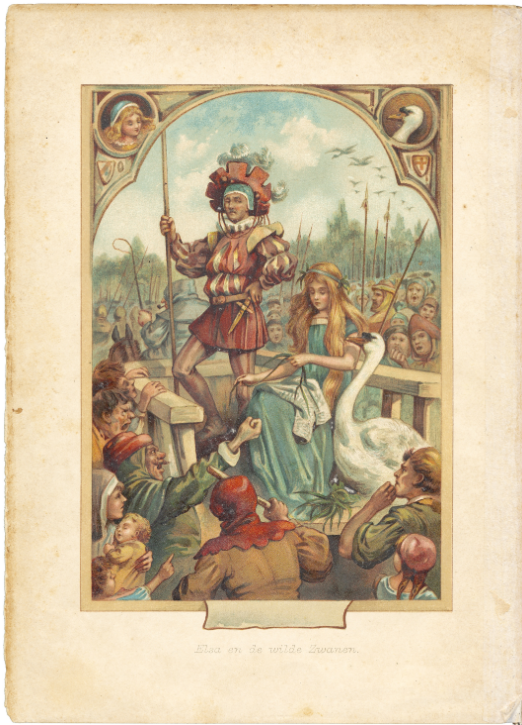
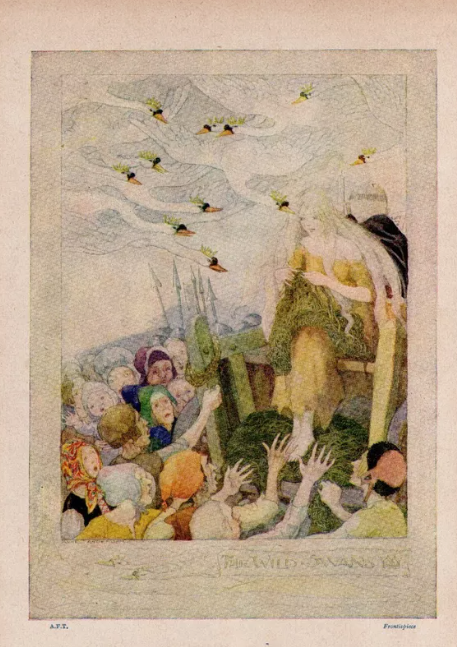
Stories of swan maidens can be found everywhere, and go a long way back. They appear in Welsh and Irish folklore. In Germany The Twelve Brothers (in German Die zwölf Brüder) was collected by the Brothers Grimm. Another Germany story collected by the Grimms is The Seven Ravens (In German: Die sieben Raben), while in Norway the fairy tale is called The Twelve Wild Ducks (in Norwegian De tolv villender). Udea and her Seven Brothers is from further afield, Libya! Not all feature nettles, but some do.
When the stories originated I don’t know, or where, but swan maiden tales are certainly widespread to this day. And the humble nettle has its part to play in them.
 The New Murrey and Blue blog
Leave a comment