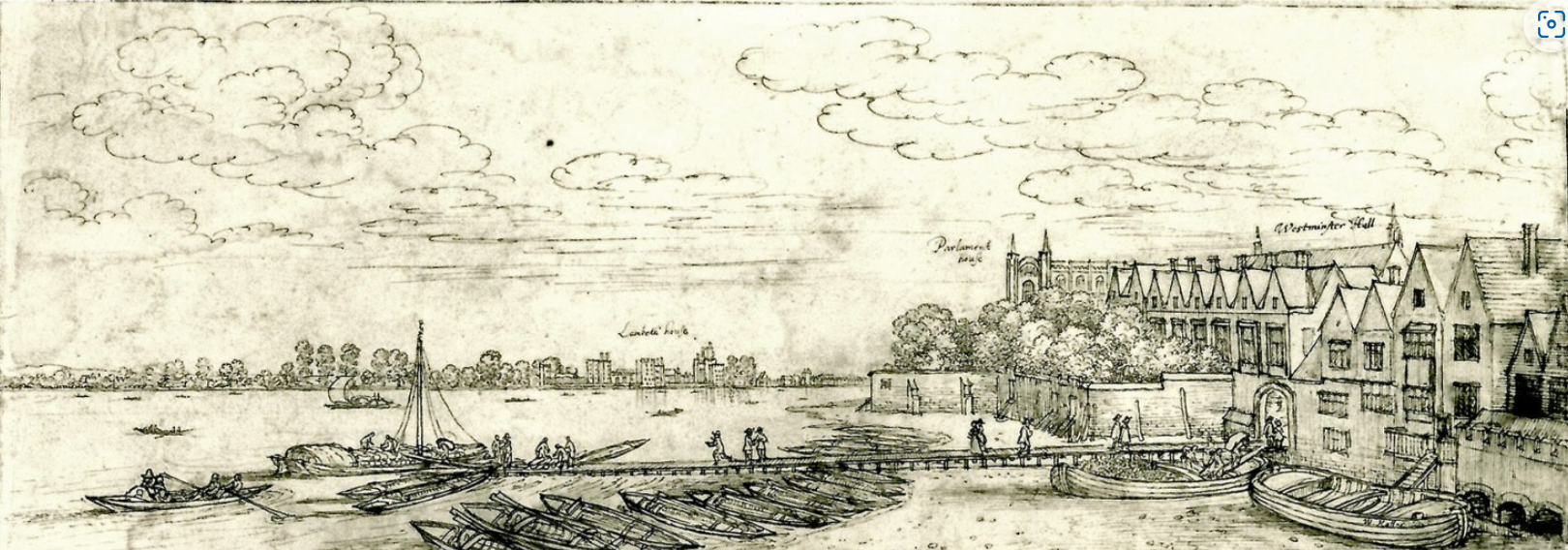
“….March 1486….Henry VII went on [his first] Progress….Elizabeth of York went with Henry on a progress to the north of England. They were accompanied by 200 bowmen. Henry wanted to show the north of England that he was secure in London which he hoped would put off any would be Yorkist pretender to the throne. He made a great show of richness and grandeur which he hoped would inspire awe, respect and the affection of his people….”(a)
“….When he returned to Westminster from this….progress around the kingdom, he was met at the Watergate by St Stephen’s canons and Westminster Abbey’s monks for a procession to the abbey….”(b)
(a) Henry VII Chronology – What Happened 1485-1486? – Tudor Nation 2024 (b) The Chapel’s Surroundings – 1520s | Virtual St Stephens

The Thames was the highway of London until quite recent times. In the medieval period, it was a very busy waterway, with skiffs and other small vessels performing the task of today’s black cabs. Most people hired one to go wherever they wished, but the nobility, of course, had elegant and richly decorated private barges. Many of the latter craft were always to be found upriver at Westminster Palace.
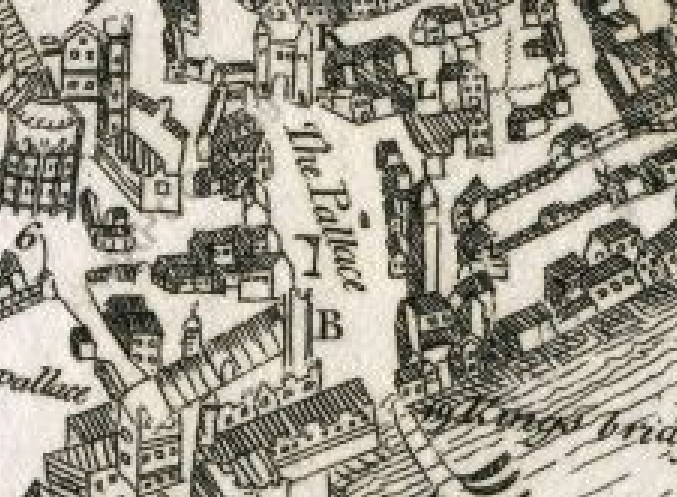
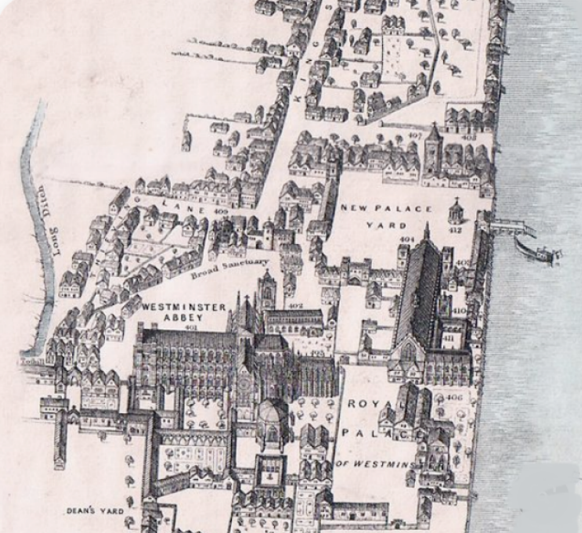
Westminster was centre of power, and therefore it was the place to be seen. It had (as far as I know) two main accesses from the river, one more exclusive upstream at the privy palace known as the Queen’s Stairs. The other was downstream at the Westminster Hall end of the palace, and known as….well, various names, but it seems it was eventually called the Watergate. I have seen it called the King’s Stairs, the King’s Bridge, Westminster Pier and so on and so on.
Now, I don’t know about you, but it seems to me that the most important royal palace in England, the one that housed the government, should have an impressive stone entrance from the Thames. Perhaps something akin to the Queen’s Stairs at the Tower of London, synonymous with Anne Boleyn.

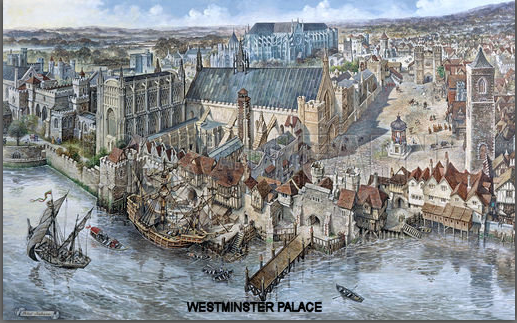
But no, illustrations show what (to me) is a plain wooden landing stage or jetty, although obviously at a palace it would be rather bigger than in the photograph immediately below which is from Landing stages & moorings – Cooks Marine. I know they’re also called piers and a few other things, but to me a pier that reaches into water is something very large indeed that you might find at Brighton or Southend! ☺️ That’s just me!

Following this present paragraph you will find maps/images of Westminster that depict the Water Gate/King’s Stairs/King’s Bridge. Quite clearly it was a wood landing stage, not a grand stone entrance.

You can read more about Westminster Palace here https://britishheritage.org/en/palace-of-westminster.
There is also a video about St Stephen’s Chapel, but beware, it speaks of “….the English Parliament of the United Kingdom….” Oh dear. You can watch it here The Chapel’s Surroundings – 1520s | Virtual St Stephens
 The New Murrey and Blue blog
Leave a comment