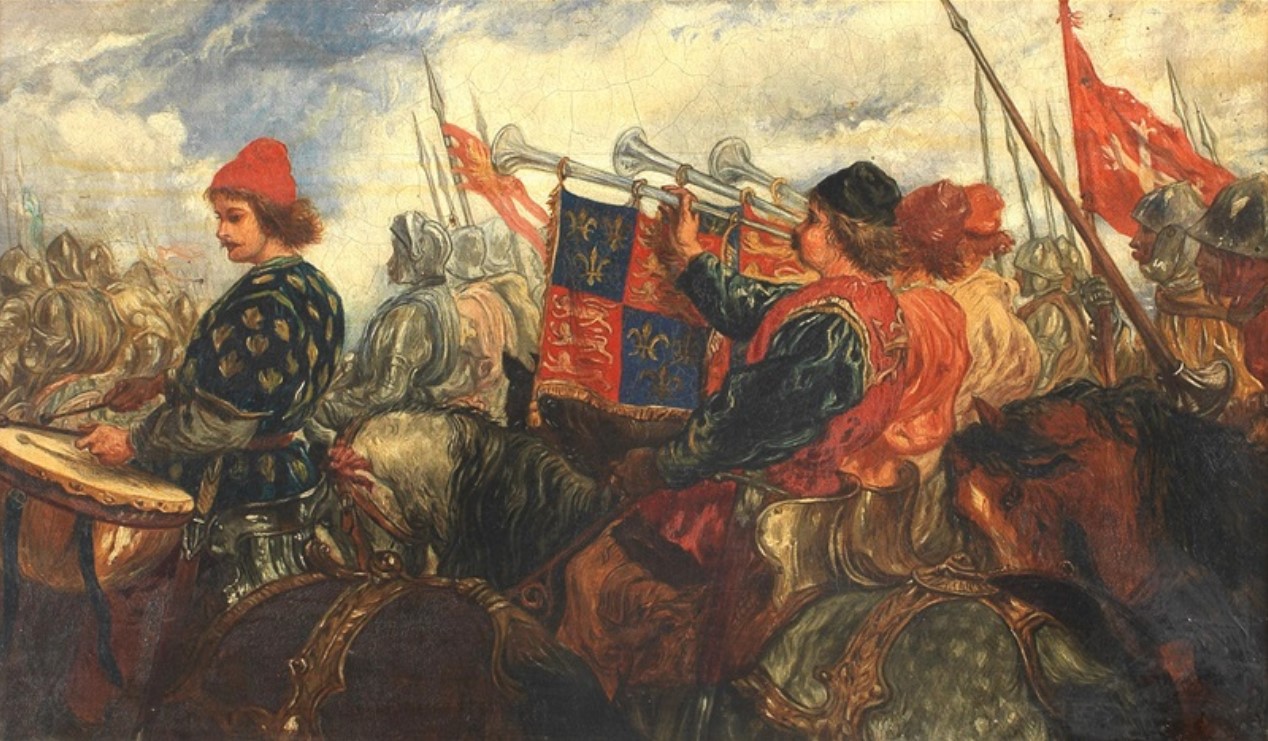
“…..’Richmond! When last I was at Exeter,
The mayor in courtesy show’d me the castle,
And call’d it Rougemont: at which name I started,
Because a bard of Ireland told me once
I should not live long after I saw Richmond.’…”
from Richard III by Shakespeare (Act 4, Scene 2, Lines 103-7)
So wrote Shakespeare of Richard III’s arrival at Exeter on his royal progress of 1483. And a very clever little anecdote it is, but highly unlikely. At the Battle of Bosworth Field in 1485, where Richard was killed through treachery and deceit, it’s doubtful Richard even glimpsed Henry Tudor, who called himself the Earl of Richmond. Tudor skulked at the rear throughout, hiding behind guards, too cowardly to even confront Richard face to face.
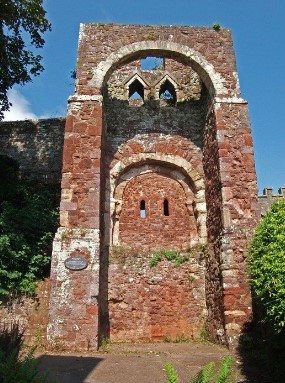
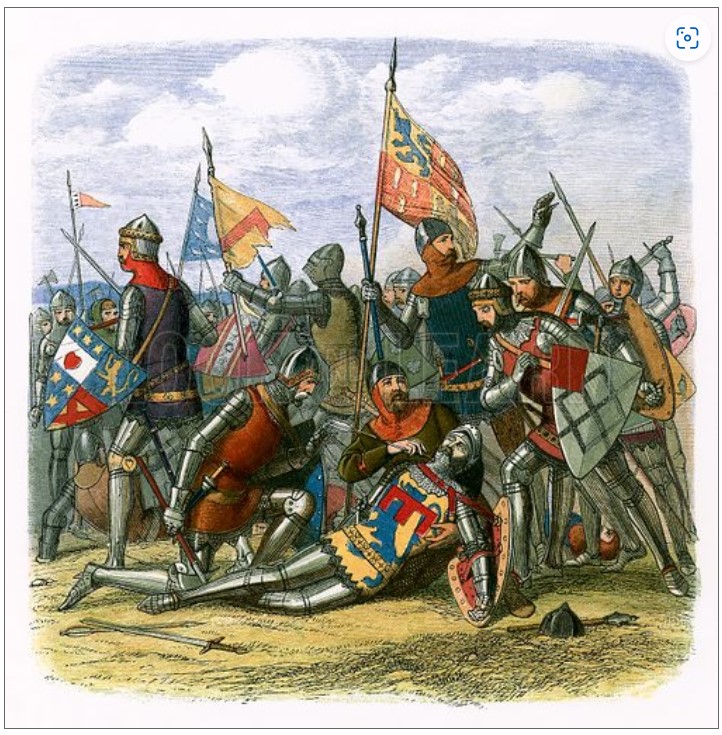
I wonder how many, if any, examples there are of someone actually leaping to a (usually fearful) conclusion over a name? I have just come across one of these premonitions—or prophecies—which, alas, is probably not factual either. It happened almost exactly eighty years earlier and concerns the death of Henry “Hotspur” Percy at the Battle of Shrewsbury on 21 July 1403. I found it in a delightful and beautifully presented little book by Dorothy Nicolle, titled Shropshire Walks with Ghosts and Legends. She contends that Shropshire is the county with most of said ghosts and legends. I don’t like to disillusion her, but first prize for that goes to Gloucestershire! 😊
Anyway, back to Hotspur. His strange warning involves an old witch, maybe even an old Irish witch. Why do I suggest this? Because when he was still a young man Hotspur accompanied his father-in-law, Edmund Mortimer, 3rd Earl of March, to Ireland, where March was the Lieutenant. This was in May 1380, when Hotspur was about sixteen, so maybe it was there that the witch told him he would die near Berwick.
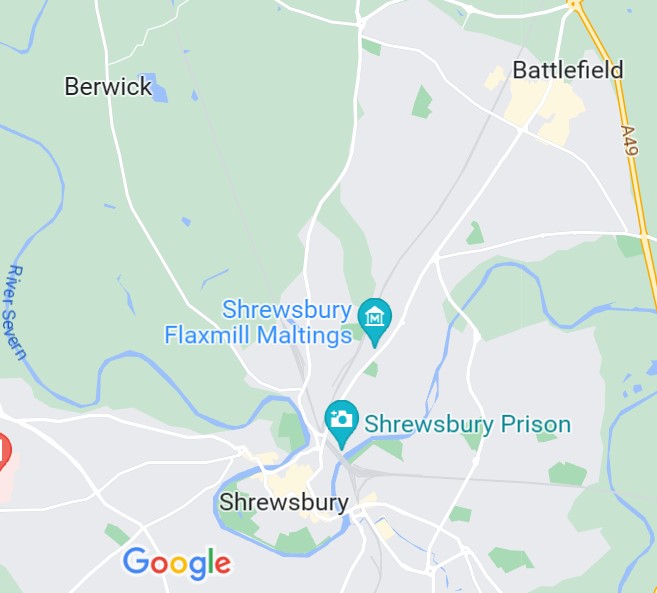
Well, the important Percy family hailed from Northumberland so Hotspur’s immediate thought was that the prophecy was about Berwick-upon Tweed, near the Scottish border. But in 1403, as the Battle of Shrewsbury was about to begin, he discovered that the field was close to a hamlet known as Berwick (see the above map from Google Maps). On being told this he went ghastly pale and knew that his fate was to die in the battle. And he did.


 The New Murrey and Blue blog
Leave a comment