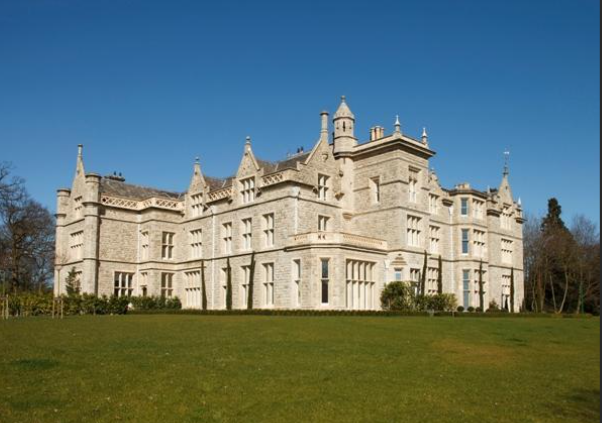
The Gaynes Park of today (Epping) has been converted into luxury flats (see here here) and the grounds are described as “….[including] the remains of a medieval deer park and its ancient trees and shrubbery….] Well, indeed it does, because although the present house is only 19th century, its medieval incarnation was a 14th-century (possibly even 13th– century) manor house. One of this earlier house’s occupants may have been one of the most infamous women of the England of Edward III and Richard II. Her name was Alice Perrers (see here). Please note, I only say may have been because there appear to be two Gaynes (also spelled Gaines but I will use Gaynes throughout) Parks, the other being in Upminster. Epping and Upminster are hardly one and the same. Are they? (There is another in Cambridgeshire/Huntingdonshire, but I don’t think it counts in this instance.)
Alice is always derided as Edward III’s grasping, unscrupulous mistress, the one who supposedly robbed the very rings from his fingers as he lay dying. Did she do such an abhorrent thing? Or was it more that he’d told her to take them, as his final, dying gift to her? To be honest, I think the latter is more likely. Does this mean I’m on her side in the old argument? No, it means that I’m not prepared to accept the very worse that can be said of anyone. If I was that way inclined, I’d believe every lie about Richard III, down to the very teensiest fibling, the Tudors heaped in spades upon the eyes, ears and very history of England.
In spite of her notoriety very little is actually known about Alice herself. Her place of birth, parents, age and so on remain as mysterious today as they were at the time. She is derided as being of low birth, but that hardly seems likely if she was one of Queen Philippa’s ladies. Philippa was Edward III’s queen, and this is how Alice came to know—and captivate—Edward III. He’d been that amazing thing, a faithful medieval husband, until his queen, when she was fading toward a painful death, became too ill to sleep with him anymore. This is when Alice took over, maybe even with Philippa’s knowledge and consent. Everything’s uncertain in this story. Edward was as faithful to Alice as he had been to his queen. He’d certainly loved his wife, and maybe there was something about Alice that brought the young Philippa back to life for him? An echo that was too compelling to resist?
It’s not known to whom Alice was married before she became Edward’s mistress. Was Perrers her maiden name? Or had she had a husband of that name? There are rumours, but nothing that can be pinpointed as the truth. One thing is known, and that is that in around 1377 (after her disgrace and banishment from court at the hands of the Good Parliament) she married, secretly, Sir William de Wyndesore, see here here. I choose to spell his name as Wyndesore to differentiate it from the town and castle of Windsor, having recently had a tiresome time reading something that featured both, and spelled them both Windsor! William was an old soldier who became notorious in his own right as a cruel, hated Lieutenant of Ireland. So intensely was he loathed by the Irish (with good reason) that he was recalled several times, investigated by the King’s Council, and, unbelievably, sent back to Ireland yet again. The Irish were outraged, and I sympathise with them completely. He was an appalling man.
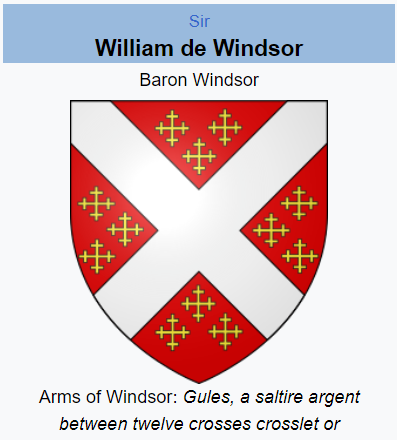
When and why William and Alice were married is a mystery. Was it a matter of the heart? Or of expediency? Medieval women were in a better legal position if they were married, and she knew Edward III’s days were numbered. She’d be out on her dainty ear, so a husband might be useful, not only for his protection but also because he would become liable for her debts. How far into the future was she looking regarding debts? And perhaps, as her side of the bargain, she was able to settle William’s immediate debts? (Please note that there is another theory about this marriage, which is that it was Gaunt‘s doing. It’s suggested that Gaunt offered William freedom from prosecution if he married Alice and kept her quiet in future. My only quibble with this is to wonder why Alice would consent….unless she’d already chosen and approached William about marriage but he’d been resisting quite adamantly. Until, that is, Gaunt offered the Wyndesore donkey the extra juicy carrot of escaping prosecution for his many sins. I should imagine all reluctance would be elbowed aside!)
Who can say what the truth of it is, but it is known that one of the places where Alice and William lived was Gaynes, which was Alice’s by right. It was a sort of retirement home for them, because Alice’s days in power were numbered and William was no spring chicken. Alice seems to have loved Gaynes, and it’s where she was still residing when she died in 1401/2. Long before then she and William seem to have parted, and there was considerable acrimony over money, estates and so on. In fact, all the usual gripes that apply when marriages go sour. The passing of centuries don’t change that!
So Gaynes had always been morally Alice’s personal property, but legally it had become William’s when they married. Then he died in Westmorland in 1384, and left his own property, and everything that had been Alice’s on their marriage, to his sisters and nephew, John Wyndesore. Alice was furious. She didn’t regard the Wyndesores as having any moral right whatsoever to anything that had been hers. She had children by Edward III. The son, John de Southeray, had died the year before William) and she wanted to leave what was hers to to her daughters! Quite right too. All modern women will be with her on this!
She hauled the case through the courts and at one time had John Wyndesore put in gaol. But he didn’t stay there (think about it, the medieval legal profession was a man’s world and women were tiresome irritants) and in the end John Wyndesore won almost everything in William’s will.
But Gaynes was one of the properties that were handed back to Alice, and which she left to her daughters. In her eventual will she also left all the property that had gone to William Wyndesore and which she still regarded as hers! If she could have come back from the hereafter to haunt John Wyndesore, she would!
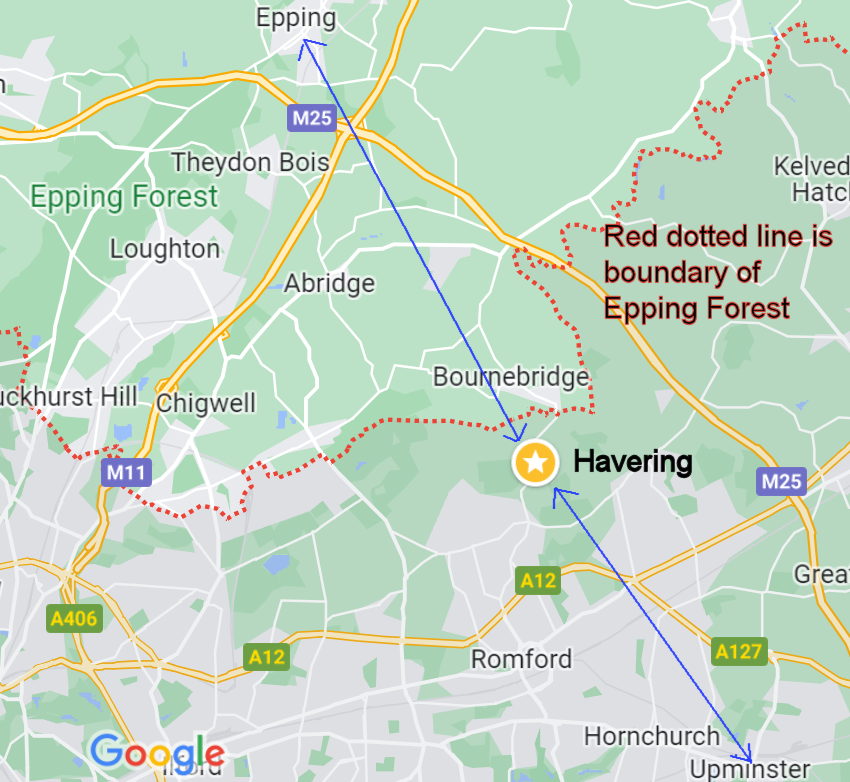
Well, this is all beside the point because I started this article by questioning where Gaynes actually was. Epping and Upminster are certainly not one and the same, so which medieval manor did Alice and William occupy? Upminster isn’t even in Epping Forest, let alone the town. What is close to Upminster, however, is Havering-atte-Bower, 7 miles away. Havering was one of Edward III’s favourite residences and he and Alice were often there together. One is tempted to see why she may have chosen her property in Upminster, only seven miles away. Epping is nine miles from Havering, and Epping around twenty-one miles from Upminster.
This article https://upminsterhistory.net/2014/02/18/gaynes-park-perhaps-upminsters-least-loved-manor-house/comment-page-1/ is about the Upminster Gaynes Park and doesn’t mention Alice Perrers. But then again, if you go here https://www.unofficialroyalty.com/alice-perrers-mistress-of-edward-iii-king-of-england/ Alice and Upminster are definitely connected. According to the only biography of Alice of which I know, Lady of the Sun by F. George Kay, page 196, Alice’s house was “close to the church in Upminster”. So that settles it for me. Upminster wins the day.

Now for another mystery which takes me off at a tangent, to events during the so-called Peasants’ Revolt. You’d think that Alice’s property, she being a hated symbol of everything the people were rising against, would definitely receive a great deal of unwelcome attention from the Essex mob. After all, John of Gaunt’s Savoy Palace was burned and razed! So why did Gaynes get away scot free? Does a curious tale hang thereby? Let’s examine what is known or thought to be known.
Alice seems to have been acquainted with Wat Tyler (about whom see here). He was the Kent leader of the “peasants”, who certainly weren’t all serfs and the like, and who were well organised, so they were definitely not a rabble. There is a strong likelihood that Tyler must have known Alice. How? Because he was once employed by Richard Lyons, a wealthy vintner who rose to be in the government itself. Lyons was always hated because of his years of extortion and fraud, his monopolising of the sweet wine trade, and many other unpleasant little activities. See about him here Richard Lyons ). His head was removed in Cheapside by the mob, who could add another reason to loathe him—this was the way he’d maltreated Tyler. The link between Lyons and Alice is the many past dealings between two, and Tyler would definitely have known her because he was Lyons’ armed money-collector. He fell foul of Lyons, who had him beaten and chucked out.
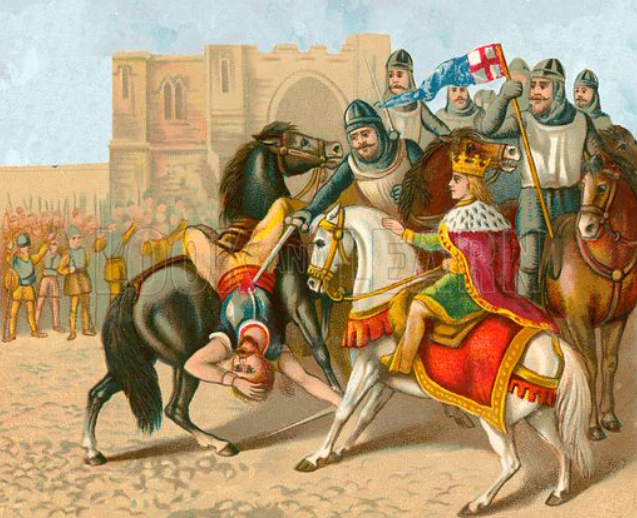
Tyler may have risen to lead the Kent rebels, and died during the revolt, but he is strongly believed to have originally been a man of Essex. Maybe it was before he moved to Kent that he became acquainted with a certain John Wrawe, who led the Essex rebels during the revolt and who is described in Summer of Blood by Dan Jones as ‘a renegade priest’ whose men were ‘peculiarly vicious’. It’s possible that Tyler and Wrawe only became acquainted due to the preparations for and carrying out of the revolt, but they may too have been old acquaintances.
Now Alice enters the proceedings. When Lyons was impeached in Parliament in 1376 for fraud and other misdemeanours, and his goods and land taken away, said goods and land were given back to him with the help of none other than Alice Perrers. This would surely have counted against her as far as the rebels were concerned, but she knew Tyler and he knew Wrawe. When the latter and his men were wreaking havoc in Essex in 1381, see here and here , they rather oddly left Gaynes alone. You’d think that the property of an infamous woman who personified everything the revolt was about would have received special attention. Why didn’t it? Wrawe and his gang were certainly all over the area and went for the manors of Lyons and the Chief Justice Cavendish, whom they also executed. But Alice was left alone. Maybe the rebels wouldn’t behead a woman, but they’d certainly plunder and destroy her goods and property. And worse. Was Alice’s escape something to do with her acquaintance with Tyler? Did they perhaps get on? Not romantically, but in some other way? Had she helped him at the time of his punishment and dismissal by Lyons? Did he now help her by pre-warning Wrawe and other Essex leaders that her property wasn’t to be plundered?
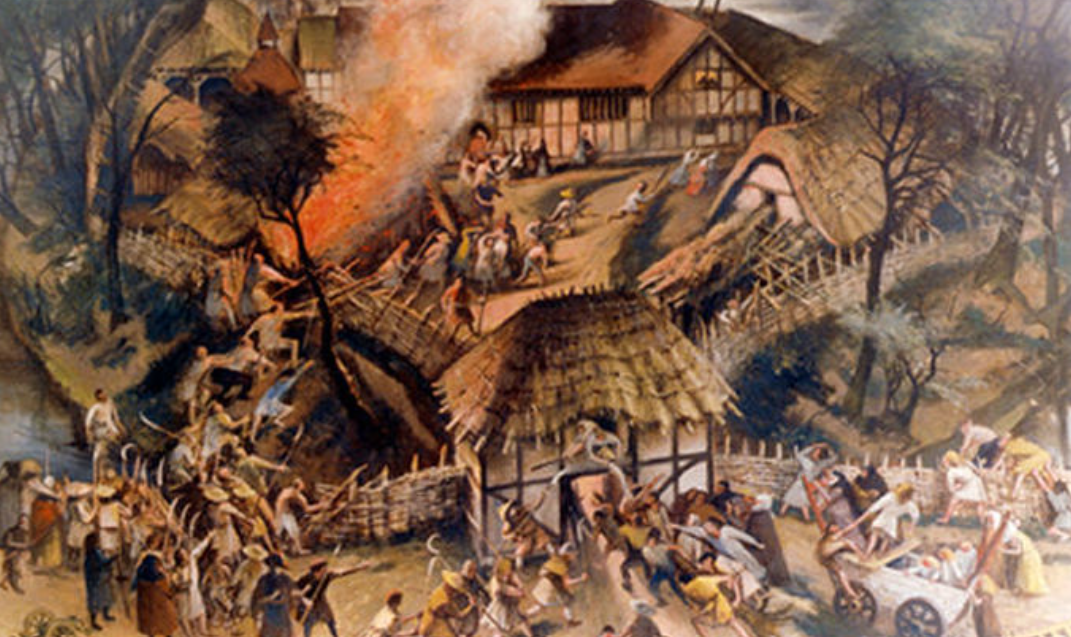
We’ll never know, and the fiction writer in me will always seek both probable and improbable answers, but Alice was still safely ensconced at Gaynes when she passed away in (it’s believed) the winter of 1401/2. No actual date of death is known, but her will was dated 15 August 1400. In it she asked to be buried in Upminster Church, which she duly was, but unfortunately almost all trace of this original church were lost to Cromwell’s predations. See about the church here
BUT WAIT!!!! That’s not the end of it, because there’s still the question of Epping versus Upminster. The unofficialroyalty.com article above, which places the house in Epping, states: “….Some claim that the manor of Gaynes Park originated in the thirteenth century but was demolished in around 1740….A new house is said to have been built on the same estate by 1777 which, after the middle on the nineteenth century, was incorporated into a large mansion….This is the first incarnation of today’s Gaynes Park Mansion. This building is said to have been completed in 1870….”
Now if I go to Lady of the Sun, page 197, which I mentioned earlier, states that her house was described as near the church in Upminster, I find “….All traces of the original house disappeared when an ostentatious residence was built on the site in the seventeenth century at a cost of £8,000. This house was demolished in 1740, and much of its material use to construct new house called Park Hall alongside it in 1777. This house was in turn largely destroyed to make way for a Victorian house built in 1870. Thus every vestige of the home which meant so much to Alice Perrers has been destroyed long since….”
So there you have it, Epping and Upminster are one and the same after all. Although, I confess to still having a niggle of doubt about Epping. How can something in Epping be built close to the church in Upminster, twenty or so miles away….?
 The New Murrey and Blue blog
Leave a comment