During the first quarter of the second millennium, Scotland did not have a clear northern or western border. There was the North Sea to the east and England to the south, where the exact line varied on occasion, but the status of the west coast was far more nebulous. There was a Gaelic kingdom of Dal Riata that stretched towards Ireland but there was also a degree of Norwegian influence, occupation even, in Ayrshire and the major island groups. This began at the dawn of the tenth century and only came to an end under two of the last Dunkeld monarchs: Alexander II and Alexander III, whose legacy was (largely) Scotland as we know it.
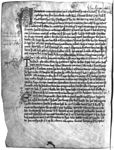
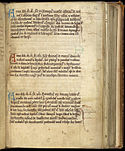
The campaign to oust the Scandinavians really began under Alexander II, an authoritarian ruler known for killing an infant born to the McWilliam descendants of Malcolm III‘s first marriage. Just as the Scots had made some progress and the Norsemen consolidated their position much further north around Iceland, Alexander II died in 1249 whilst attacking the Hebrides. The conflict was paused until the 7 year-old Alexander III attained his majority, by which time he had married Margaret, a daughter of Henry III. In 1262, the campaign resumed. As Haakon IV was reluctant to sell the Western Isles and neared the west coast, a Scottish army approached from the south the following year and battle was joined on 2nd October. Haakon led the Norwegian army in person, opposed by Alexander (Stewart) of Dundonald, then the hereditary High Steward. Sources (1) attest that about a thousand invaders were divided into unequal parts and that the Scots drove a wedge between them, forcing a retreat that became a rout. The following day, the Norsemen burned their damaged boats and sailed away in the others. Haakon, nearing sixty and King of Norway since his early teens, died at Kirkwall in mid-December. His grandson, Eric II, married Alexander’s daughter (another) Margaret, making them the parents of (yet another) Margaret, the Maid of Norway, who was briefly Alexander III’s successor.
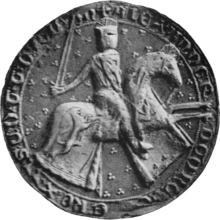
Although the battle wasn’t immediately decisive, the Hebrides, Inner and Outer, were soon leased to the Scottish realm, as confirmed by the treaty of Perth in 1266. The Orkney and Shetland Islands were added in 1472, in connection with the dowry of as she married James III, a few years before the loss of Berwick crystallised the nation’s southern boundary. The quasi-independent (McDonald) Lordship of the Isles ended in 1493 and the Dukes of Rothesay, heirs to the Scots throne, have held the title since then.
(1) Chronicle of Melrose (in Latin) and Hakonar saga Hakonarsona.
 The New Murrey and Blue blog
Leave a comment