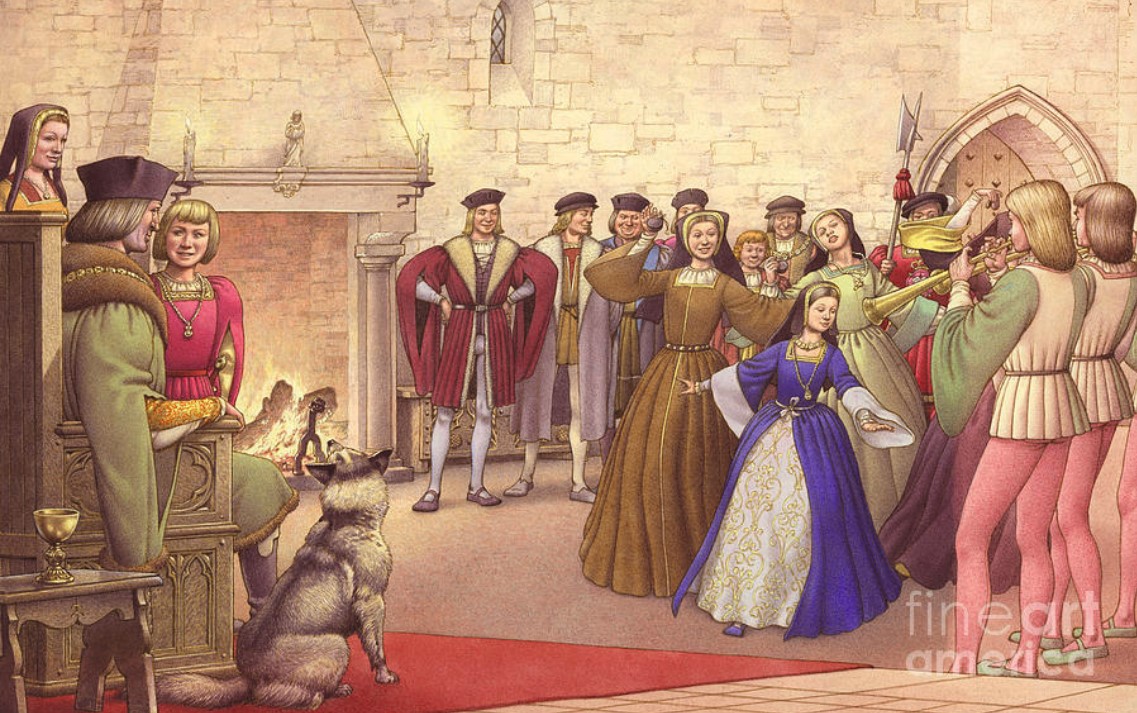
Why the illustration of Catherine of Aragon’s arrival in England? Well, it starts with this article, where you’ll find the following opening paragraph:
“….The castle was previously thought to have been constructed following the Arab conquest of the Iberian Peninsula, which became part of Umayyad Caliphate around AD 711–732. However, very little is known about the history of the castle, with sources indicating that it was destroyed on the orders of Ferdinand II of Aragon in AD 1505….”
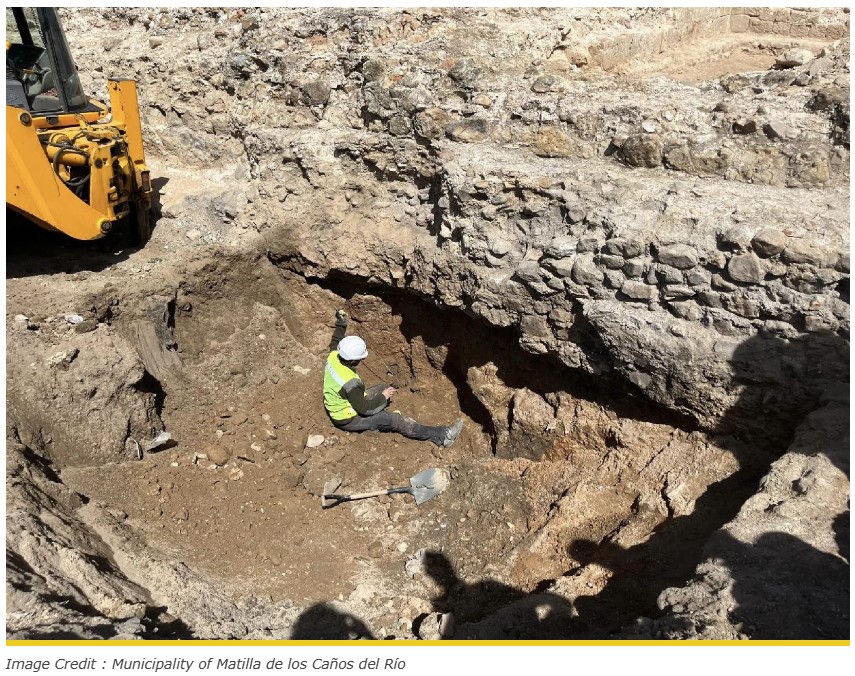
So, presumably, the suit of armour found in this Castilian castle doesn’t date any later than 1505, which places it in “our” period. Especially considering dear Henry VII’s frantic efforts to marry his eldest son to Catherine of Aragon. Her parents Ferdinand and Isabella (of Aragon and Castile respectively) wouldn’t let their daughter marry anyone whose family’s security on the throne was under threat. So Henry VII was prepared to execute anyone of Yorkist blood who might conceivably have challenged his crown.
The most tragic victim of this foreign match was the innocent young Edward, Earl of Warwick. He was the son of George, Duke of Clarence, and his maternal grandfather was the great Kingmaker. After being cruelly imprisoned as a child he was later framed by Henry and at the age of twenty-four was executed as a traitor on Tower Hill on 28 November 1499. The Weasel Tudor king was a man without conscience.
The marriage negotiations concerning Catherine of Aragon were conducted by the Spanish ambassador Rodrigo González de la Puebla and resulted in the Treaty of Medina del Campo signed at the eponymous castle on (27 March 1489). According to this article:
“….The Treaty of Medina del Campo was an agreement developed on March 26, 1489 between England and Spain. Its provisions accomplished three goals: the establishment of a common policy for the two countries regarding France, the reduction of tariffs between the two countries, and, most centrally, the arrangement of a marriage contract between Arthur Tudor, eldest son of Henry VII of England and Catherine of Aragon, daughter of Isabella I of Castile and Ferdinand II of Aragon. The treaty was signed on March 27 by the Spanish sovereigns, but its ratification by Henry did not occur until September 1490 by the Treaty of Woking….”
Somehow Woking doesn’t quite have the same ring as Medina del Campo.
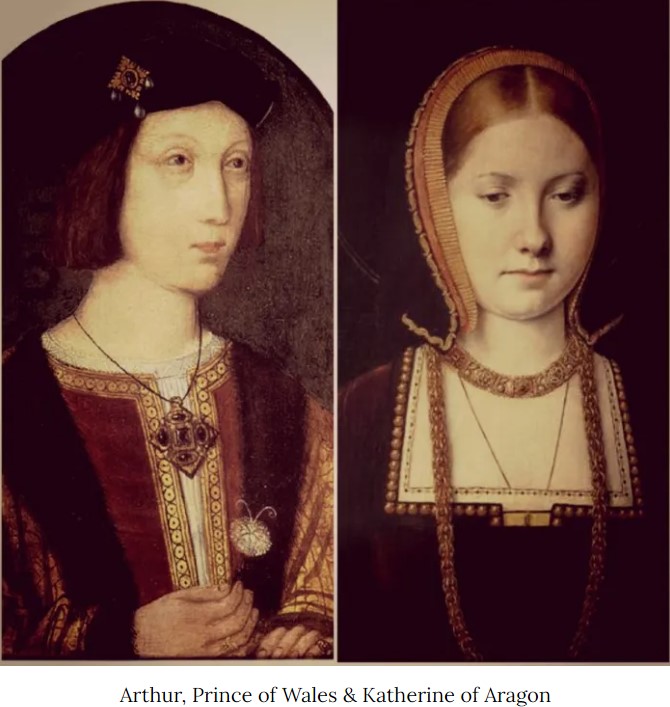
Anyway, Catherine was nearly four at this time, and Arthur nearly three. They were formally betrothed when they were twelve and eleven respectively, and then truly married in 1501, when they were both of an age to consummate the match. Five months later Arthur was dead, it’s thought maybe of the sweating sickness. Eventually the little widow was to be married to his younger brother, who became Henry VIII….the rest of the grim story is history, as they say.
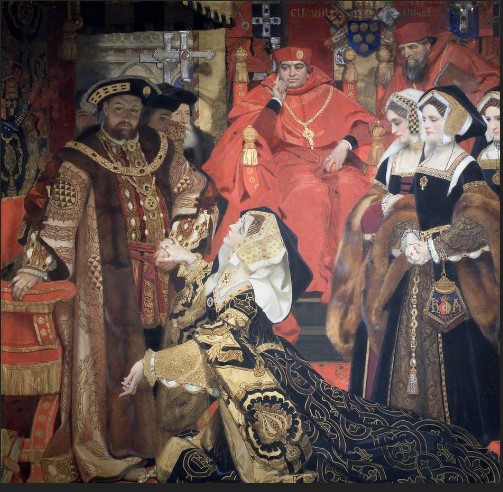
When Arthur died the Weasel went through hoops within hoops to avoid paying back Catherine’s 200,000-ducat dowry, only half of which he’d actually got his paws on. The eventual marriage to Henry VIII was in 1509, so in 1505 the argy-bargying over the dowry was still a hot topic. One wonders (or likes to hazard a wild guess 😊) that if Ferdinand destroyed the castle in 1505, it was in a fit of pique over the marriage that was included in the Treaty of Medina del Campo in 1489!
All of which explains the top illustration of Catherine’s arrival in England, and also rather puts the newly-discovered suit of armour into perspective from an English point of view.
 The New Murrey and Blue blog
Leave a comment