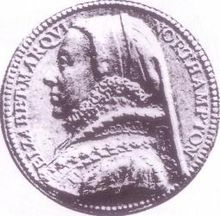
 Elisabeth Brooke had a very eventful life! My attention was drawn to her as she was a descendant of Constance of York and Thomas Despenser through their daughter Isabelle’s first marriage to Richard Beauchamp – the Richard Beauchamp who became Earl of Worcester as opposed to her second husband, also Richard Beauchamp, the Earl of Warwick.
Elisabeth was born in 1526, the daughter of George Brooke, Lord Cobham and his wife, Anne Bray. She went to court as an attendant to Queen Catherine Howard and apparently was viewed by some as a potential replacement for Catherine after that Queen’s fall. Fortunately for Elisabeth, Henry VIII did not take up the option.
Instead, she fell in love with William Parr at about the time when William’s sister, Catherine, became Henry’s sixth queen. There was just one tiny snag. William was already married. It is true that his wife was unfaithful, but then, in fairness, William was unfaithful too. Elisabeth was not the first lady-in-waiting to receive his attention.
Obtaining a divorce was not straightforward in those days. William seems to have been a popular man, with few enemies, but that was no help. Under Edward VI he was made Marquess of Northampton, but that, in itself, did not help either. Elisabeth remained his mistress for about five years.
A commission was set up to consider whether a divorce should be granted, but the wheels turned slowly. In the summer of 1548, the lovers married secretly, or at least, they went through a ceremony of marriage. This pre-empted the decision of the commission, of course, and when Protector Somerset found out about it early in 1549 he was infuriated. The Council ordered Parr to separate from his ‘wife’ and never speak to her again. It is said this was under the penalty of death, which does seem a tad extreme.
Elisabeth was thus reduced to the status of discarded mistress and had to rely on her friends and birth family for support. However, Parr still loved her, and after Somerset was deposed and replaced by John Dudley, Duke of Northumberland, a Bill was passed through Parliament in 1551 which annulled Parr’s earlier marriage and declared his marriage to Elisabeth valid. So suddenly she was one of the great ladies of the court. Very beautiful and vivacious too, by all accounts. Since Dudley’s wife was not interested in public life, Elisabeth took on some of the social and diplomatic tasks that would normally have fallen to the Queen, had there been one.
Elisabeth is said to have been one of those instrumental in establishing Lady Jane Grey as Queen. However, this backfired badly. Queen Mary did not execute Parr and his lady – no doubt there was insufficient evidence – but she attainted William for high treason and stripped him of his titles so that he reverted to being plain Sir William Parr again. He was released from prison after a few months but Mary also ordered the couple to part and required Parr to take back his first wife, Anne Bourchier, who happened to be her friend.
So once again, Elisabeth was in limbo, until the accession of Queen Elizabeth I, who happened to be her friend. Parr was restored to his titles, was given back most of the lands he had forfeited and his marriage to Elisabeth was deemed valid again.
Elisabeth is said to have been very influential over the Queen in her early years, even to a similar degree as Robert Dudley. Sadly, though, her health and prosperity were not to last. She developed cancer of the breast. She travelled to Europe in search of a cure, but despite the attention of a number of famous physicians, this proved to be impossible. She died in April 1565 in the Netherlands, aged about 39, to the great distress of her friend the Queen.
Parr remarried five years later, to a sixteen-year-old Swedish girl who was said to resemble Elisabeth in looks. However, this marriage lasted a mere five months before William’s own death.
 The New Murrey and Blue blog
Leave a comment