695 years ago today, Edward III became King of England at the age of fourteen and was crowned a week later. His father was definitely alive for almost another eight months and probably several more years. His mother, Isabella of France is regularly described by some writers as having a relationship with Roger Mortimer, 1st Earl of March, although the evidence for this is scant. Nevertheless, Mortimer was highly influential until Edward ordered his arrest and execution in 1330.

The two comparable monarchs are:
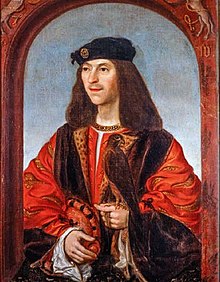
1) James IV was also fourteen when he succeeded to the Scottish throne following a rebellion that concluded at Sauchieburn, where his father James III was killed. He was crowned thirteen days later, having actively participated in the revolt and accelerating his succession.
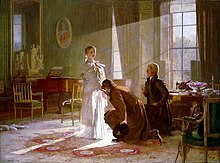
2) Victoria, succeeded at eighteen years and four weeks, thereby avoiding an official regency. Her widowed mother, Victoria Duchess of Kent, however, sought to control her life until her marriage in January 1840, with the assistance of Sir John Conroy, her comptroller. Again, there were rumours that Sir John was the Duchess’s lover, although they also seem to be unfounded.

Subscribe to my newsletter

  1. Thank you for posting this.

    Liked by 1 person

  2. William IV was desperate to stay alive long enough so Victoria would come to the throne as an adult and her mother could not get her hands on a regency.

    Liked by 1 person

  3. […] 1350 King Edward III founded in the parish of St. Botolph without Aldgate a monastery to be called St. Mary of Graces in […]

    Like

  4. […] were instrumental in making England great, but at the same time England had reached its peak under Edward III, who preceded the other two. Logic? Honestly, you couldn’t make it up. This article is a load of […]

    Like

  5. […] infamous favourite Piers Gaveston was buried at King’s Langley Priory. His tomb is now lost. Edward III spent a lot of time at the royal hunting lodge….especially with his notoriously grasping […]

    Like

  6. […] descended from or connected to prominent figures and the monarchs of the past, like Edward I and Edward III. Some of them were very busy in the procreation […]

    Like

  7. […] than in the case of Philippa of Clarence, only daughter of Lionel of Clarence, second son of King Edward III. Lionel was next brother to Edward of Woodstock, the Black Prince, who left only one small son, […]

    Like

  8. […] Edward III also spent much time at the palace, adding or improving many buildings in the three courts. He added a counting house and piped hot water…and a camel was also in residence! A clock that struck the hour was given to the nearby Friary. […]

    Like

  9. […] formalised the Anglo-Portuguese alliance. This was on 10 July 1372 and the signatories were King Edward III of England and King Fernando and Queen Leonor of Portugal. “….The alliance, based on the […]

    Like

  10. […] de Coucy VII, Sire de Coucy, a very prominent French nobleman who was married to a daughter of King Edward III of England and was very welcome and popular this side of La Manche. Well, he was until he decided […]

    Like

  11. […] answer was the ludicrous pretence that they were, in fact, the legitimate heirs of Edward III, that the nasty Yorks had somehow usurped. This is such a stretch that even Margaret Beaufort […]

    Like

  12. […] of both countries at the time were Robert II of Scotland, about whom you can read here, and either Edward III or his grandson Richard II in England, depending upon whether or not the year was […]

    Like

  13. […] obscure. Lady Elizabeth Grey, as a daughter of the Marquess of Dorset, provides a link to Edward III via Joan Beaufort and Ralph Neville, as well as joining up with the Mowbrays and Lancastrians […]

    Like

  14. […] was extravagant. In fact, at this point, he was spending less on his household than the sainted Edward III, his grandfather, had done. So if Richard was extravagant, what was Edward […]

    Like

  15. […] is always derided as Edward III’s grasping, unscrupulous mistress, the one who supposedly robbed the very rings from his fingers […]

    Like

  16. […] Edward III know it? Who is actually in the lavish tomb in Gloucester? There are clues that suggest Edward III did know, and that Edward II took another name and died many years […]

    Like

  17. […] of Elizabeth Stafford, daughter of Edward, Duke of Buckingham. He was three times descended from Edward III, through Thomas of Woodstock and John of Gaunt (twice), although you will note that there are still […]

    Like

  18. […] Edward III, it seemed, gave credence to this tale, and as I pointed out in 2017, his grandson Richard II definitely had unusual, slanting eyes. It could also be said that Edward did himself, as did his eldest son, Richard’s father, the Black Prince. So, although the story of Mélusine has more recently become rather attached to the so-called witchery of the likes of Elizabeth Woodville and her mother Jacquetta of Luxembourg, it was actually around a long, long time before then. […]

    Like

  19. […] who was one of Edward III’s trusted captains and scandalous husband of the equally scandalous Joan of Kent (who, when […]

    Like

  20. […] this new settlement replaced the one of 1316, so the Warenne inheritance went to the Crown. King Edward III wasted no time! Within a few days of Warenne’s demise he made an appointment by Letters Patent of […]

    Like

  21. […] health and make-up, but quite a few important monarchs are omitted: William I who conceived it, Edward III who was born there, Richard III who moved Henry VI‘s remains there and the Stuarts, even […]

    Like

  22. […] Although the battle of Crécy itself took place on 25 August 1346, the presenting of the cuirass by Edward III to his son seems as likely to have happened the previous month, on 12 July, when the English army […]

    Like

  23. […] was once one of the most favoured royal palaces, much resorted to by the likes of Edward III and Richard II. Its situation was convenient and its atmosphere peaceful. It remained popular, so […]

    Like

  24. […] although England and France were officially abiding by a temporary truce, on Christmas Eve 1349 Edward III heard of a sneaky French plot to retake Calais, which had been English for a couple of […]

    Like

Leave a comment