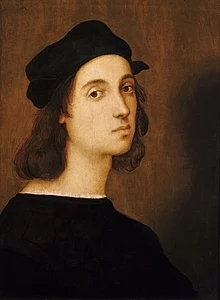
 So now we examine the case of the artist Raphael (d’Urbino), who lived from 1483-1520. He was officially betrothed, in 1514, to Maria Bibbiena, the niece of a Cardinal (left, painted in 1516), which implies the need for
 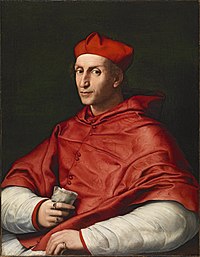 some propriety in the relationship. Canon law would definitely apply and the chance of secretly marrying her either per verba de presenti or per verba de futura is very low. In any case, she also died in 1520, before they could marry in public.
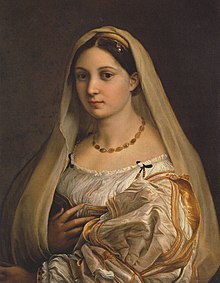 Those points obviously don’t appply to his muse Margareta Luti (“La fornarina” or the baker’s daughter”). Indeed, art experts have found evidence (a ribbon, a pearl and a ring) in one image of her that strongly suggests that she was secretly married to Raphael from 1516. Indeed, in August 1520, she became a nun, declaring herself to be a widow.
So now we need to add Rafael to the list of Louis XIV, King Fahd of Saudi Arabia, John Lennon, Sir Andre Previn, Dan Snow, Princess Beatrice, Adele, Emma Bunton and Ed Sheeran. A further nail in the coffin of the idea that Edward IV couldn’t have married in secret during 1461 but must have done in 1464.
 The New Murrey and Blue blog
Leave a comment