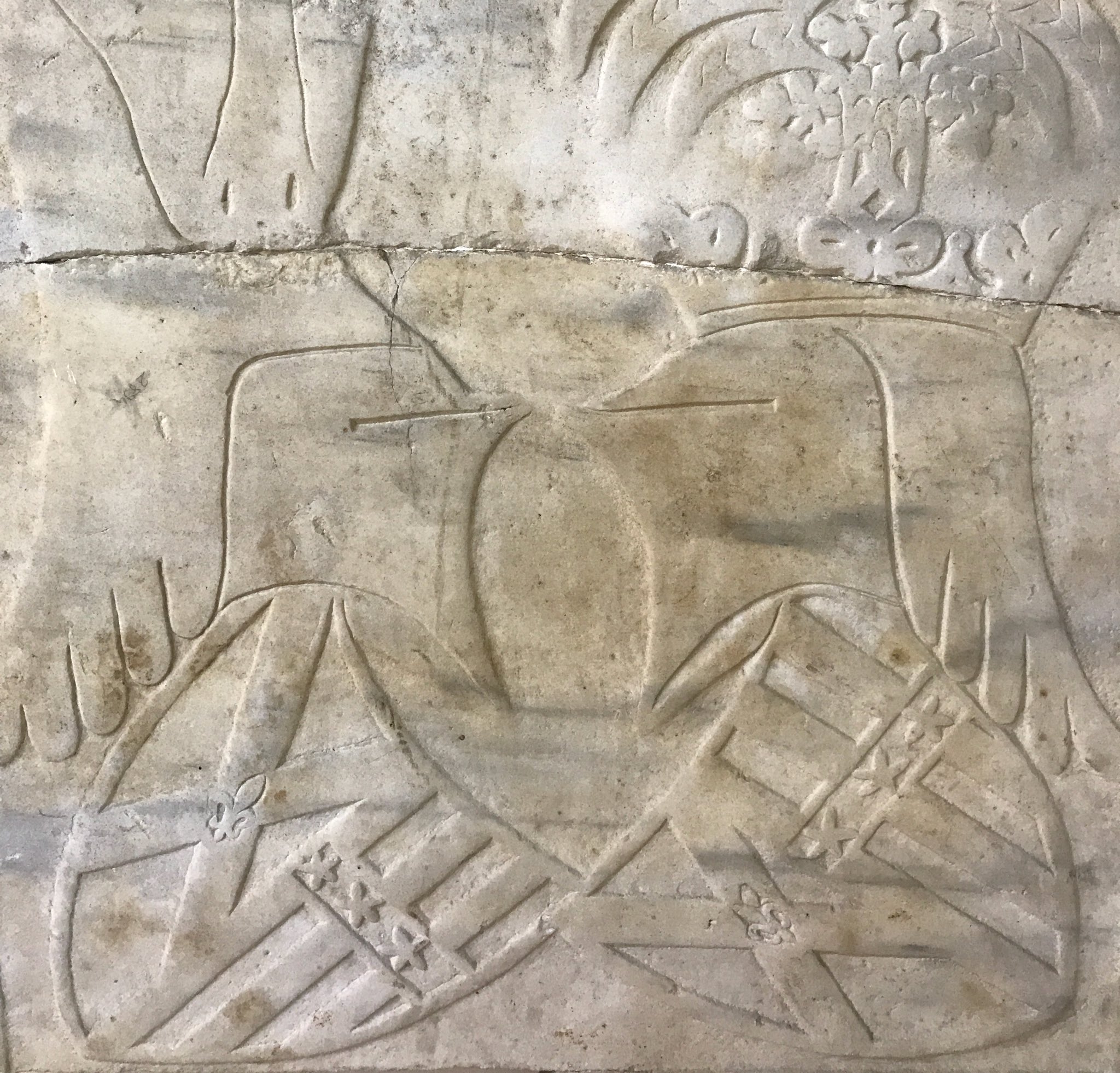
In 1913 a medieval tomb was unearthed during excavations at the Arap Mosque in modern day Istanbul. It dated from 1391 and was a double tomb of two English knights, Sir William Neville and Sir John Clanvowe. That they were buried together is strange enough, but the carving on the tomb depicts them facing each other, helmets almost touching – some say “as if in a kiss”. They were known to be very close, and both carry the same shield, which is a blend of their families’ arms. Both men were Lollards, which meant they followed the teaching of John Wycliffe. You can read about this latter aspect of their lives here.
Sir John was from a modest Herefordshire family, and rose to be a fine poet and one of Richard II’s knights of the chamber. Sir William’s background was much grander, for he was a son of Ralph Neville, 2nd Baron Neville. He became Constable of Nottingham Castle and, like Sir John, was a knight of the chamber.
In the 14th century friendship was regarded in a very different way from now, and binding vows of friendship/fellowship were taken, especially between men about to go on campaign/crusade/whatever. It wasn’t to do with their sexual orientation, but with brotherhood, chivalry, valour and honour, but modern viewpoints have it that this tomb is proof that the two men were lovers. But were they? Or were they “blood brothers” in the spirit of their time?
To me the nature of their relationship is immaterial. It was their lives, not anyone else’s. The tragedy for me is that when Sir John Clanvowe died on 6th October 1391, his friend was so devastated and grief-stricken that he refused food and drink and died a few days later on the 10th. (other dates do occur) A true instance of dying of a broken heart? It’s a very affecting tale, and even across the intervening centuries I feel deeply for them.
You can read their story here. And elsewhere, of course, for you only have to search their names.

 The New Murrey and Blue blog
Leave a comment