Reblogged from A Medieval Potpourri sparkypus.com
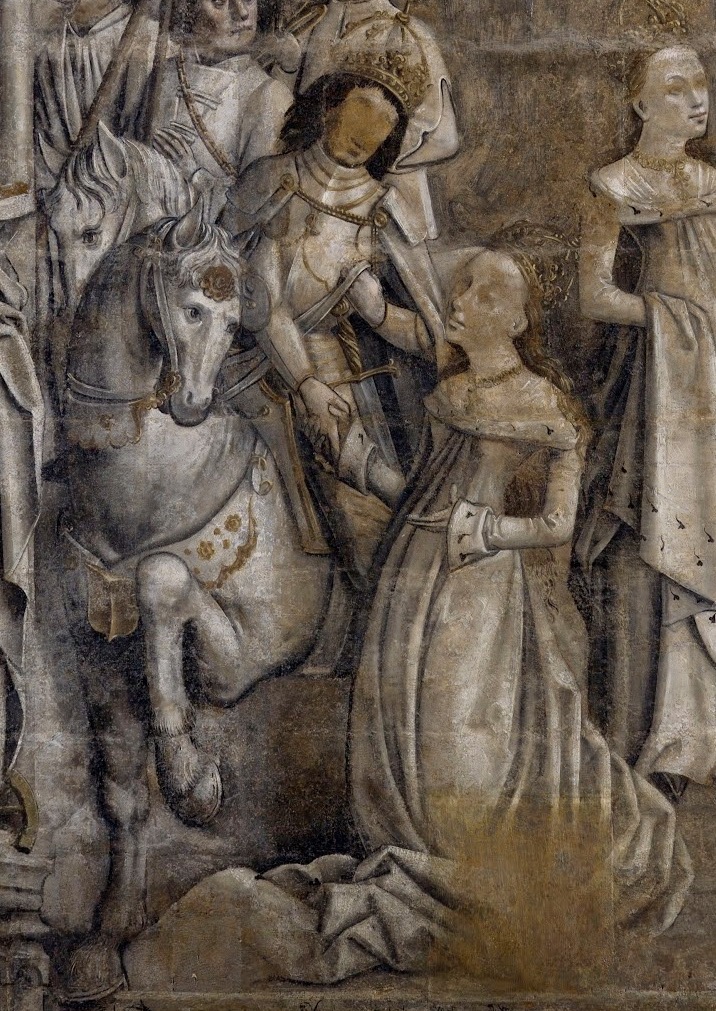
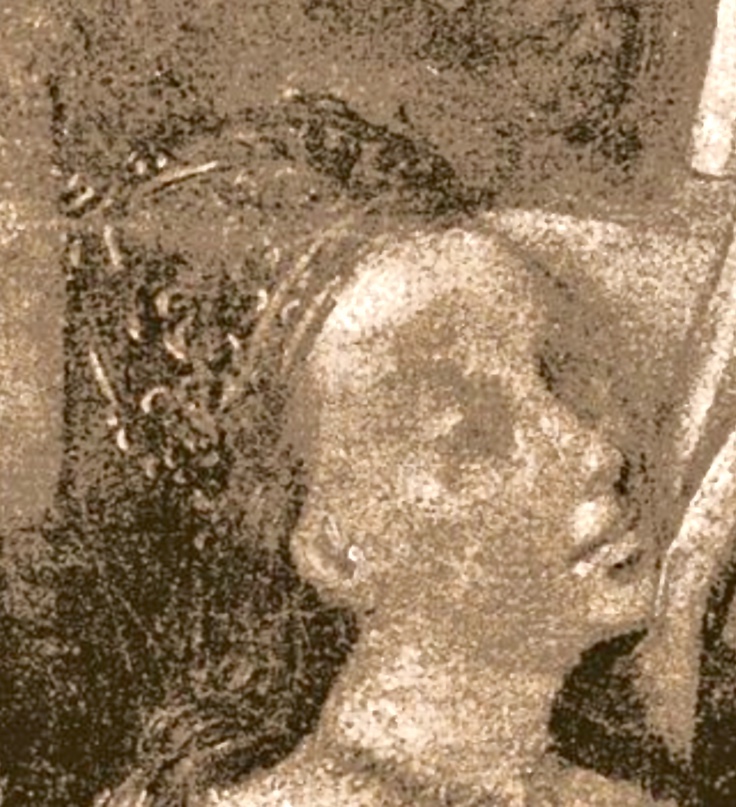
The Empress from the Eton Wall Paintings. Her eyes have been deliberately damaged.
If you should happen to visit Eton College and enter the chapel there you will find the glorious range of medieval murals now known as the Eton Chapel Wall Paintings. Painted between 1479-87 and thought to be the work of at least four different artists they were whitewashed over by the College barber in 1560 as part of the drive by the Protestant Church to ban pictures of apocryphal miracles and largely forgotten until 1847 when they were discovered and finally, with the removal of stall canopies making it possible, restored in 1923.
The paintings on the north side of the chapel tell the story of the miracles of the Virgin Mary while those on the south the popular medieval story of ‘The Empress Falsely Accused‘ (for a synopsis of this story see below). Its the latter paintings I find the most intriguing not the least because I believe some of the portraits, particularly the Empress and the Emperor were based on actual members of the royal family at the time – namely Queen Anne Neville and King Richard III. Interestingly the Emperor and Empress have been painted wearing the closed crowns of Edward the Confessor and Queen Edith which are so recognisable in portraits of our medieval monarchs. It is this which caused me to take a closer look at the portraits.
The first facial representation of the Empress is the most detailed and with more of her personality shining through. Could this be a portrait of Queen Anne Neville? Compare it with the drawing of Anne from the Rous Roll. Rous’ drawing should be a good likeness as he would have known Anne by sight. Is it just wishful thinking on my part but I can see a resemblance particularly around the mouth although the eyes have been obliterated.

Queen Anne Neville from the Rous Roll wearing the closed crown of Queen Edith – almost identical to the crown in the Eton Mural.
Sadly the portrait of the Emperor, amongst others, has, with his livery collar been deliberately defaced. But we are still able to discern the hairstyle is one very similar to the hairstyle worn by Richard in his portraits.

Portrait of the Emperor from the Eton mural, Note the strong chin.

Portrait of Richard III Society of Antiquaries.
We do know Richard – no doubt sometimes accompanied by Anne – visited Windsor, which is but a short distance from Eton on numerous occasions ranging from 19th July 1483 to 16th May 1485 – the last visit shortly after Anne’s sad death 16th March 1485. Did they also visit Eton on some of their visits? If they did they would have seen the murals which were then a work in progress having been begun in 1479. Did the royal couple give their permission and were indeed pleased to see their portraits featured in the mural? OR was the legend tweaked and the portraits added after Richard’s death at Bosworth in 1485 to be used as another fine piece of mud to be thrown at the now dead king. Of course if this were the case then the likelihood of the portraits being those of the Yorkist King and his Queen grows more certain. It does seem a little odd that Richard would have no objections to being depicted as the Emperor who, to be honest comes across as a bit of a plonker and is portrayed assaulting his wife. Of course the legend predates the reign of Richard III and it’s just an unfortunate coincidence that it contains a couple of similarities with the false story – given out by Richard’s enemies and hostile historians – including a wicked brother who committed infanticide.
To continue reading click here.
?

 The New Murrey and Blue blog
Leave a comment