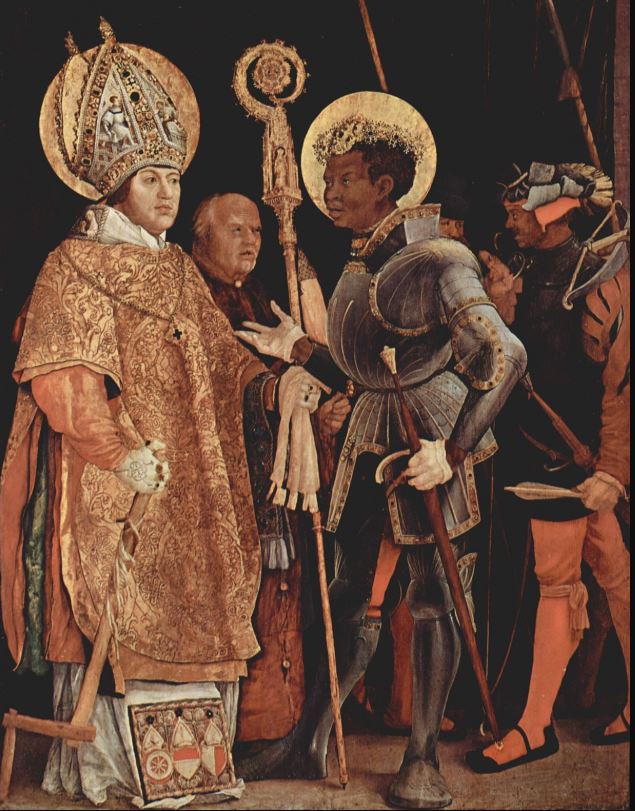
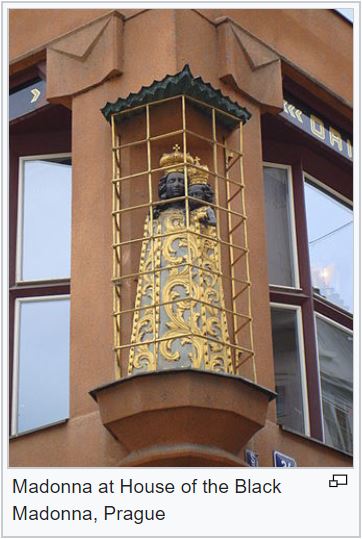
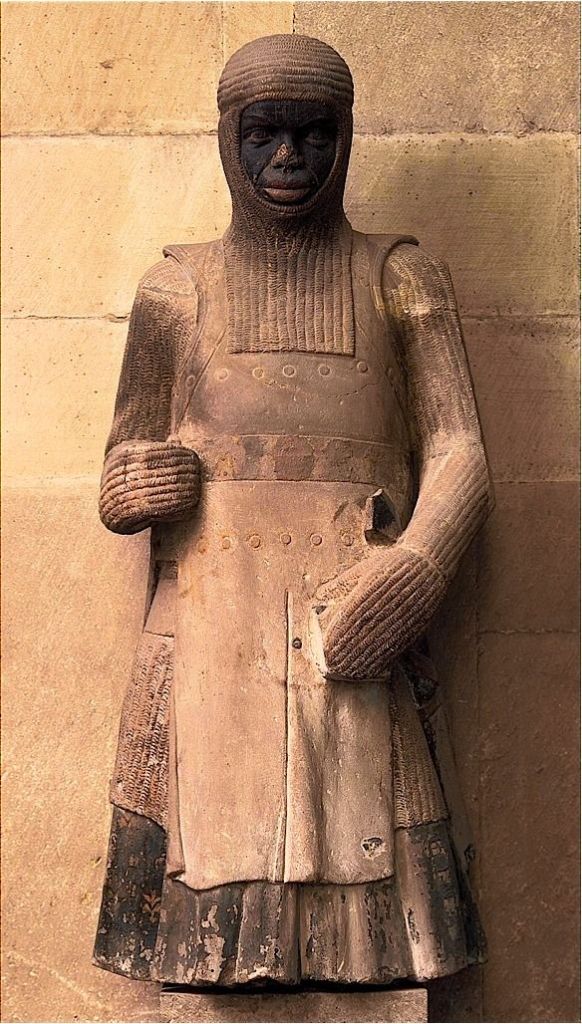
On reading Chivalry by Léon Gautier, I learned that St Maurice was the patron saint of knights. Another interesting fact about him is that he’s often depicted as a Black African man in armour. He apparently came from Upper Egypt, so he probably was black. I’m reminded of the Black Madonnas. We’re always surprised by such images, yet why? The southern shores of the Mediterranean are the continent of Africa, so go figure!
Anyway, the book Chivalry is French, and so I must believe St Maurice may have been the patron saint in France, and the rest of Europe perhaps, but I can’t find any reference to him being the patron saint of knights in England. In this country it was St George. As I’m a writer, I’m always on the lookout for facts to add as background, and I thought that as a lot of my present characters are knights who are often embroiled in army campaigns, St Maurice should surely get a mention. Easier said than done.
St Maurice is rather rare here. There don’t seem to be all that many parish churches dedicated to him. I went to catholic.org and found the following:-
“….Maurice was an officer of the Theban Legion of Emperor Maximian Herculius’ army, which was composed of Christians from Upper Egypt. He and his fellow legionnaires refused to sacrifice to the gods as ordered by the Emperor to insure victory over rebelling Bagaudae. When they refused to obey repeated orders to do so and withdrew from the army encamped at Octodurum (Martigny) near Lake Geneva to Agaunum (St. Maurice-en-Valais), Maximian had the entire Legion of over six thousand men put to death. To the end they were encouraged in their constancy by Maurice and two fellow officers, Exuperius and Candidus. Also executed was Victor (October 10th), who refused to accept any of the belongings of the dead soldiers. In a follow-up action, other Christians put to death were Ursus and another Victor at Solothurin (September 30th); Alexander at Bergamo; Octavius, Innocent, Adventor, and Solutar at Turin; and Gereon (October 10th) at Cologne. Their story was told by St. Eucherius, who became Bishop of Lyons about 434, but scholars doubt that an entire Legion was massacred; but there is no doubt that Maurice and some of his comrades did suffer martyrdom at Agaunum. Feast day – September 22nd….”
Nothing there about being patron saint of knights, although to be sure he was a Christian soldier in the time of the Emperor Maximian Herculius. (250 – c. July 310)
Wikipedia Wikipedia says St Maurice is patron saint of weavers and dyers , as well as patron saint of the Duchy of Savoy (France) and of the Valais (Switzerland) as well as of soldiers, swordsmiths, armies, and infantrymen. Aha! Maybe that’s it – he was patron saints of fighting men in general. That fits…but why isn’t he around much in England?
I was curious, and so had a poke around on Google, and soon came upon Plympton St Maurice in Devon. Surely the history of this town would explain the St Maurice part of its name?
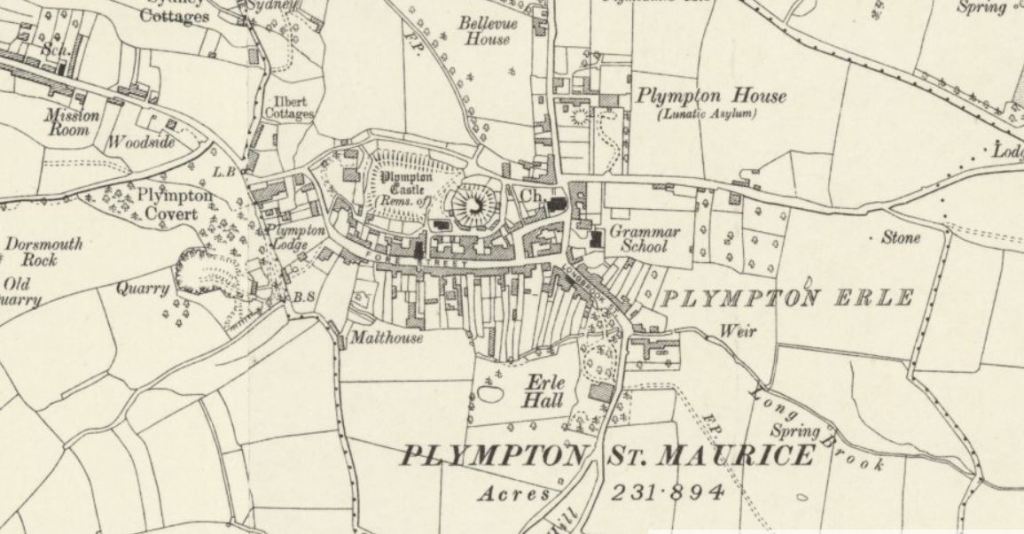
According to local history “….Plympton St Maurice was originally called St Thomas, although when the name changed was uncertain, but it changed between St Maurice and St Thomas several times before St Maurice became more generally used….During the 13th and 14th century, Plympton St Maurice was bigger than Plymouth and far more important as a port. There is an old rhyme which states that ‘When Plympton was a Busy Vale, Plymouth was a fuzzy dale’. However the life blood of Plympton soon became it’s poison, as the Tin Mines on Dartmoor produced a lot of silt which was washed downstream, this caused the river to silt up, and took away the port….” Not much luck there. Nothing at all to suggest why St Maurice took root there.
So I guess it’s just one of those things. St Maurice didn’t really make it to England. The best I can do to mention him is have a character say in passing that he’s the patron saint of knights on the other side of La Manche.


 The New Murrey and Blue blog
Leave a comment