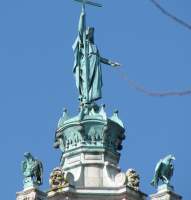
 Like other towns near the east coast, Colchester was partially settled by Hugenot refugees from the Low Countries in the sixteenth century. The Dutch Quarter is defined as being to the immediate north of the middle of High Street, as West Stockwell Street turns off at the Town Hall. This Victorian structure has six historic statues, from Boudicca to Harsnett, together with some abstract statues and St. Helena (left), mother of Constantine I, on the roof. She is, improbably, said to be the daughter of “Coel”, a local chieftain, although her birthplace in the Middle East is quite well established.
 John Ball Walk and Wat Tyler Walk, commemorating the Peasants’ Revolt leaders the former of whom had an Essex connection, lie at the lower end of West Stockwell Street.
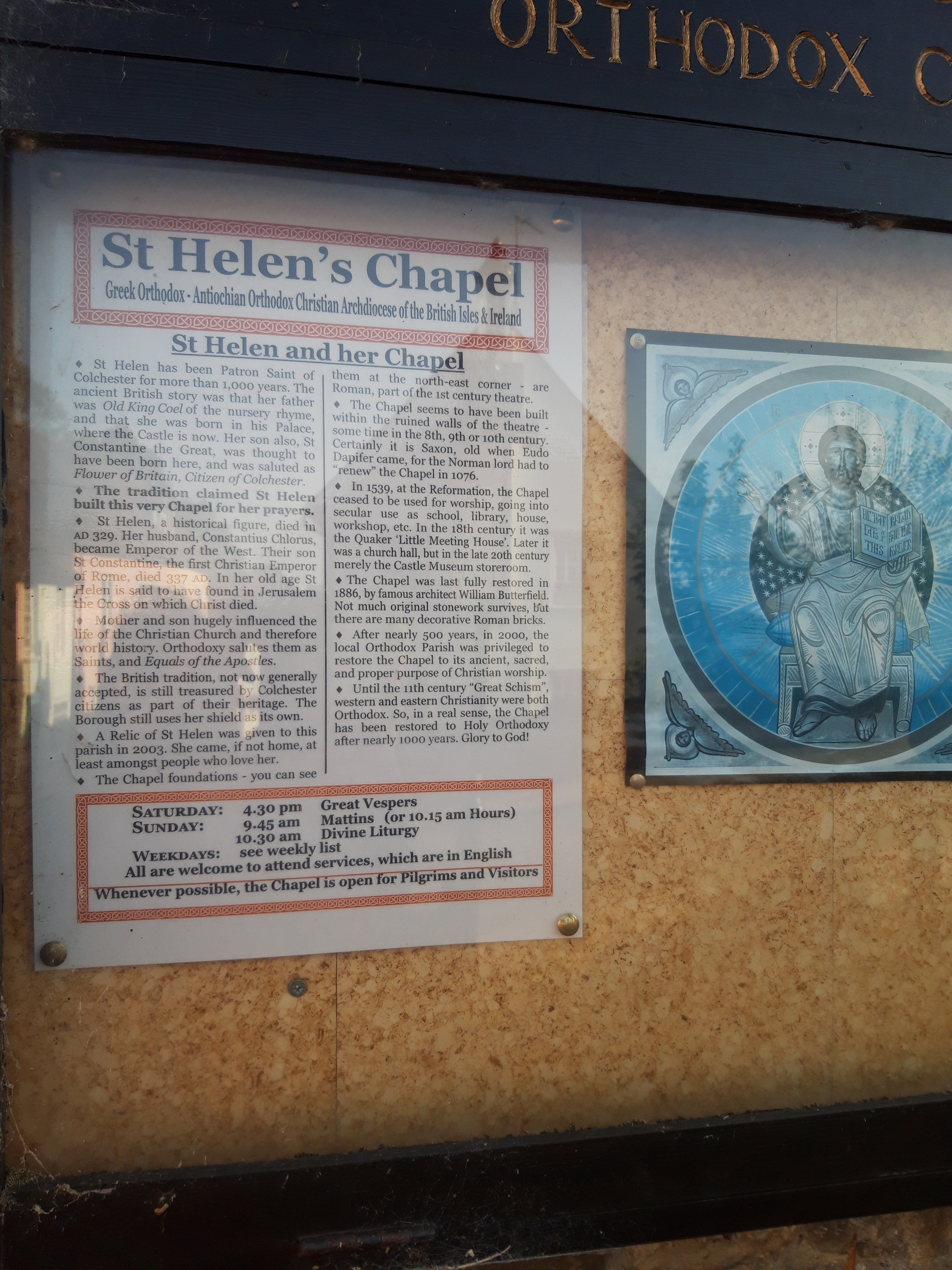
 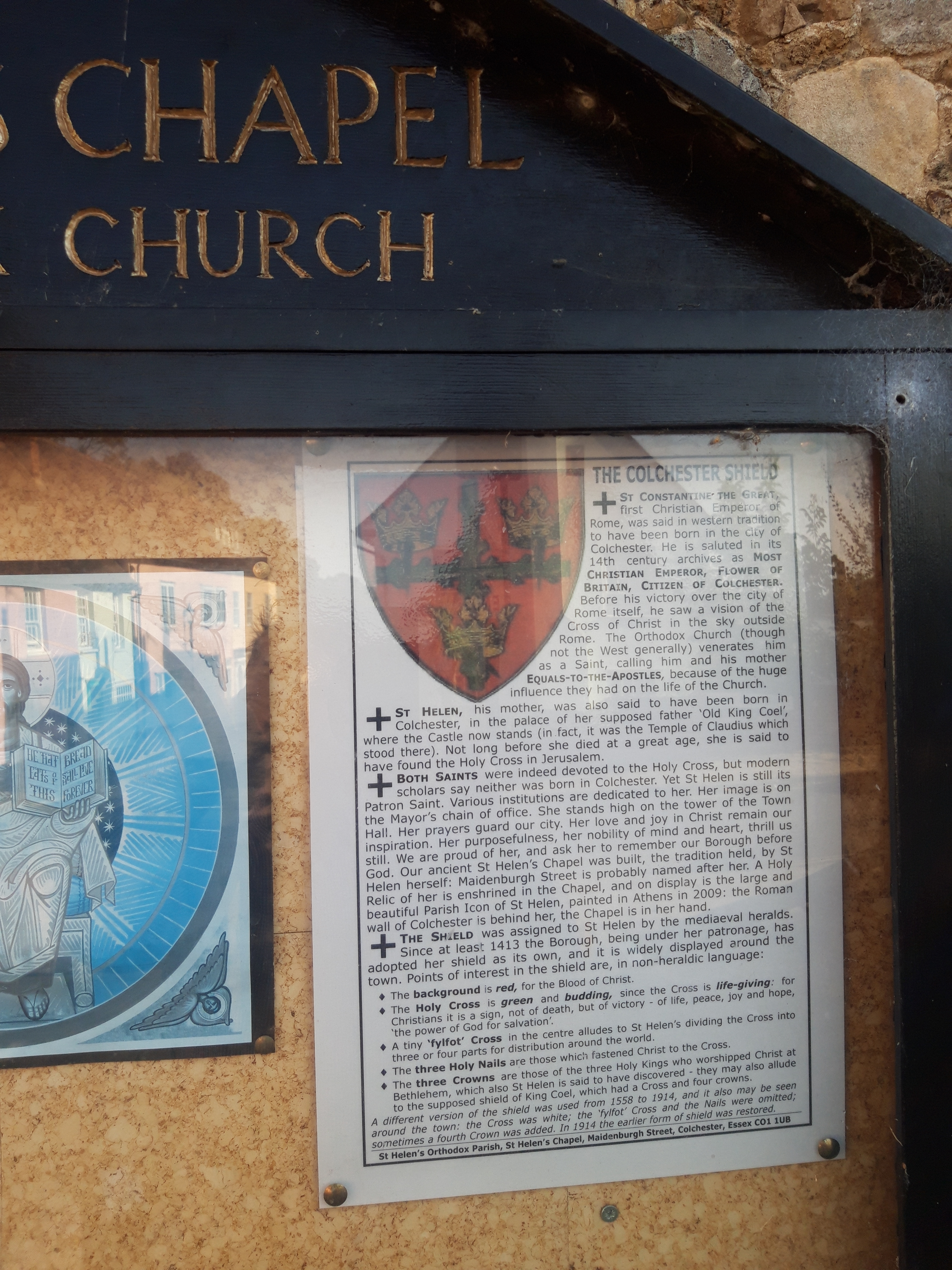 The nearby St. Helen’s Lane incorporates a church, now part of the Russian Orthodox Church, dedicated to the Empress.
 The New Murrey and Blue blog
Leave a comment