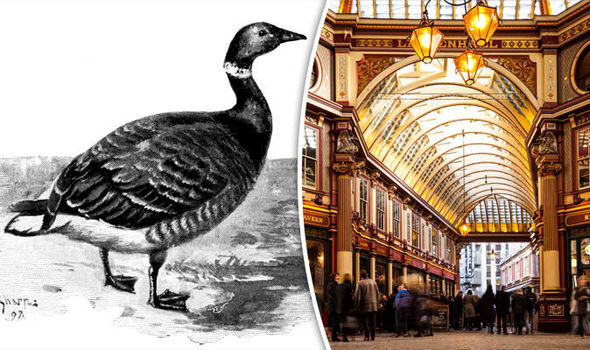
from this Daily Express column
When looking for information about a residence associated with the ill-fated Sir Simon Burley (executed by the Lords Appellant in 1388) I had cause to investigate the properties around London’s Leadenhall Market. It seems Leadenhall stems from a mansion on the site, owned at the beginning of the 14th century by Sir Hugh Neville, which had a lead roof, and was thus called Leaden Hall/Leadenhall.
Anyway, Sir Simon and his brother possessed a residential property in the grounds of Leadenhall mansion. But that is by the by, because the search lead me to the fascinating 19th-century tale of a gander called Old Tom. If you want to read about this valorous bird, who survived to the age of 37 in a market where poultry was sold (!) go to this article.
He passed away of natural causes on 19th March 1835, and his obituary was published in The Times:-
In memory of Old Tom the Gander.
Obit 19th March, 1835, aetat, 37 years, 9 months, and 6 days.
‘This famous gander, while in stubble,
Fed freely, without care or trouble:
Grew fat with corn and sitting still,
And scarce could cross the barn-door sill:
And seldom waddled forth to cool
His belly in the neighbouring pool.
Transplanted to another scene,
He stalk’d in state o’er Calais-green,
With full five hundred geese behind,
To his superior care consign’d,
Whom readily he would engage
To lead in march ten miles a-stage.
Thus a decoy he lived and died,
The chief of geese, the poulterer’s pride.’
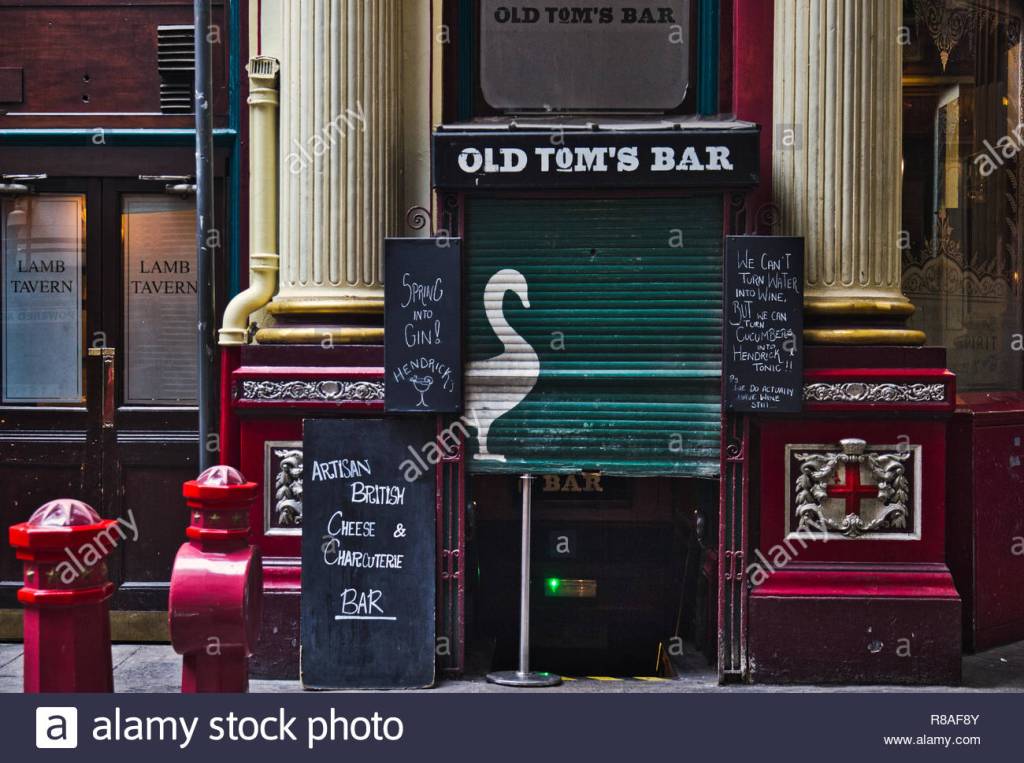
And he has a bar named after him!
 The New Murrey and Blue blog
Leave a comment