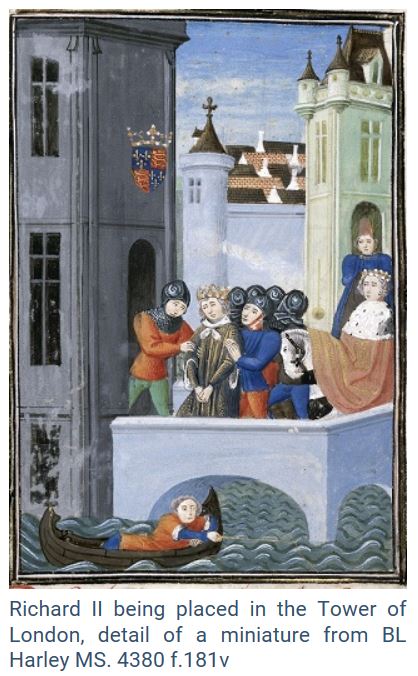
Here is the opening paragraph of an intriguing article by the excellent Professor Nigel Saul:-
“As increasing numbers of early copies of Magna Carta are identified in fourteenth- and early fifteenth century registers and cartularies, so we are becoming more aware of the close interest taken in the document by lawyers and political actors in the late Middle Ages. Of especial interest in this connection are the copies of the Charter made at two Gloucestershire monasteries at the end of the fourteenth century. Both copies attest to the revival of interest in the Charter at a time when Richard II’s bold autocracy was raising vital questions about how royal authority might legitimately be constrained and how such constraint might be maintained in the long term….”
Enter another Duke of Gloucester who was also the king’s uncle. In this instance, Thomas of Woodstock, youngest son of King Edward III. In his article, Professor Saul deals with the reasons why a new copy of Magna Carta was created in 1397, at a point in Richard’s reign when he, like King John, was being confronted by his angry barons (who are known to posterity as the Lords Appellant).
Professor Saul is always immensely readable, and he certainly knows his stuff when it comes to Richard II and the 14th century. The article is well worth reading, not least for the subtle political machinations of the Lords Appellant.


 The New Murrey and Blue blog
Leave a comment