If you can stomach paragraph two of the article below (by Henry James) the rest is quite interesting! I have taken the precaution of copying the entire article because of a server problem that messed me around after a minute so. So I opened it again, copied, and it’s below, complete with link to the original.
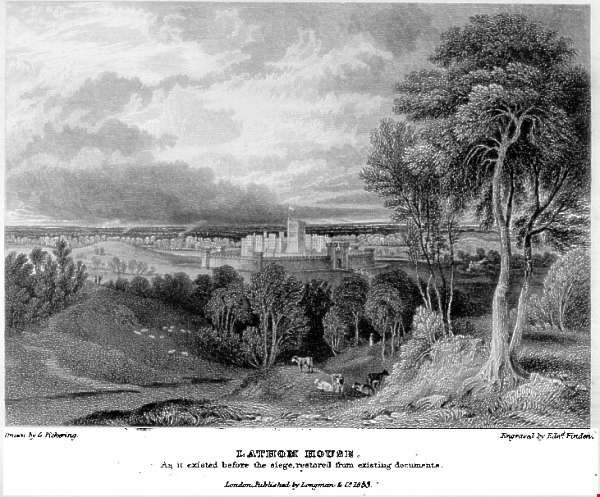
“A GROUP of military veterans, including some injured in Afghanistan and the Falklands, are taking part in an archaeological project at Lathom to help with their recovery.
The aim of Project Valhalla is to excavate part of the medieval palace fortress site at Lathom, which was the home of Sir Thomas Stanley, 1st Earl of Derby and his wife Lady Margaret Beaufort, mother of Henry VII.
“Stanley is immortalised as one of the heroes in Shakespeare’s Richard III as ‘The King Slayer’, as well as crowning Henry Tudor king at the battle of Bosworth in 1485. (Viscountessw: Heroes? He probably wasn’t even there – and Henry Tudor was only persuaded because he could hide at the back behind a curtain wall of bodyguards! So bah, humbug to them both.)
“In addition to its Tudor links, Lathom was also the site of one of the largest and longest sieges of the English Civil War and the only battle that was commanded by a woman, Lady Charlotte Stanley, Countess of Derby.
Lathom is listed in the Domesday Book. The original buildings and defences at this time may well have been wooden.
“A new castle was built in the 13th century of which no details survive and was probably replaced by the structure currently being excavated.
“This new structure, known as Lathom House and built in 1496, was possibly one of the largest castles in England. It had nine towers and was surrounded by a wall two yards thick and a moat eight yards wide. Its drawbridge was heavily defended by a gateway tower. In the centre of the site was a tall tower known as the Eagle Tower.
“However, nothing survives of this massive structure as a result of the English Civil War sieges of 1644-45, a series of armed conflicts between the Parliamentarians and Royalists.
After the Battle of Marston Moor in July, 1644, the north of England was largely under Parliamentary control apart from areas close to Royalist garrisons such as Lathom.
But in July, 1645 4,000 Parliamentary troops returned to begin the second siege. And although the garrison did not capitulate quickly, when it became clear that no relief could be expected, and supplies were running short, famine forced Colonel Rawstorne’s hand and he surrendered to Colonel Egerton on December 2.
The Parliamentary party regarded the fall of Lathom as an event of major importance and to prevent its reuse the fortifications were totally demolished.
The Lathom Castle Project team will be assisted on site by military veterans from the Forces Archaeological Heritage Association (FAHA) which gives veterans the opportunity to learn a series of skills including excavation, land survey, drawing and mapping techniques and building recording on a site of national importance. It also helps them rebuild self-esteem and learn skills that will help in securing employment and helping build community cohesion.
“The excavation at Lathom will start on Saturday, July 29 and run until August 13 involving more than 20 local volunteers and veterans.
“Head of the project, Paul Sherman, said: “Lathom Castle is one of the most significant post-medieval archaeological sites in the north of England. It also occupied a prominent role in the political and social history of our nation.
“This project is a unique opportunity to cast new light on some of the key people and events that shaped our history and culture. It also gives people the opportunity to walk in the footsteps of Richard III, The Tudors, Shakespeare, the events of the Wars of The Roses and the English Civil War.”
 The New Murrey and Blue blog
Leave a comment