Herefordshire Archive and Records Centre (HARC)
& Logaston Press
invite you to celebrate the launch of three Parish histories
at 7.30pm on Tuesday 7th November
at HARC, Fir Tree Lane, Rotherwas, Hereford HR2 6LA
With short talks by the authors Refreshments available
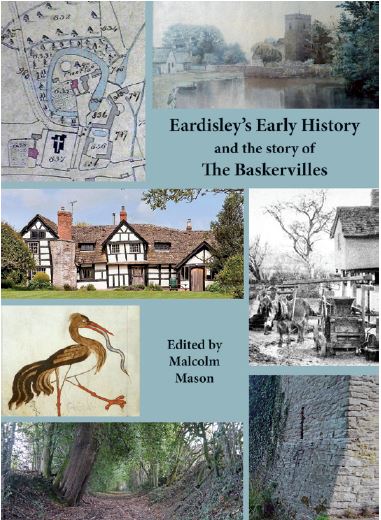 Eardisley’s Early History
and the story of The Baskervilles
Edited by Malcolm Mason
This book details the results of research projects commissioned by Eardisley History Group, including a geophysical survey and archaeological excavation of the castle; a building survey of some of the outlying farms and their barns by Duncan James; an evaluation of the earthwork remains at Bollingham and in The Pitts, an area between The Field and Eardisley Wootton; and an account of the changes in the road pattern in recent centuries, and the various projected routes of the tramway. It also includes new research by Bruce Coplestone-Crow on the Baskerville family
 The Story of Dilwyn
by Tony Hobbs & Andrew Stirling-Brown
This book gives an outline history of some of the post Domesday landowners and their families, along with what is known of the castle site and development of the churches at both Dilwyn and Stretford, and the brief appearance Dilwyn made in the Civil War. Much of the book then focuses on the past 150 or so years, giving the history of various properties, the school, and those of the local shops, pubs, businesses and some of the farms, together with much social history on the recent life of the village.

A History of Lyonshall
From Prehistory to 1850
by Sarah & John Zaluckyj
This book covers the evidence for both prehistoric man in the parish and for settlement in the Roman period, the building of the Saxon dyke, and the arrival of the Normans. It relates the history of the lords of the castle, some of whom had a role on the national stage, and then, from the 1600s, that of the wider population of the parish. The effects of enclosure as strip fields were amalgamated is detailed. Included are various overseers’ efforts to help the poor, as well as accounts of theft, slander and drunken misbehaviour. The shift of the village centre and the effect industries and the industrial revolution with the coming of the tramway are also explored.
ALL PROFITS GO TO HARC
 The New Murrey and Blue blog
Leave a comment