 Wingfield is a village in the middle of North Suffolk, just a few miles off the A140. There is a “castle”, but this is privately occupied and the owner is a little secretive. The village also features a small “college” and wedding venue, also known as Wingfield Barns, but its main features are St. Andrew’s Church and the “de la Pole Arms”, an excellent hostelry which is directly opposite the churchyard.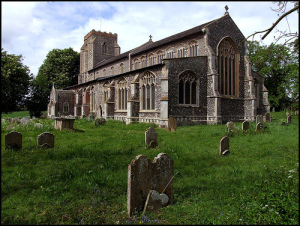
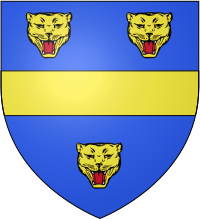
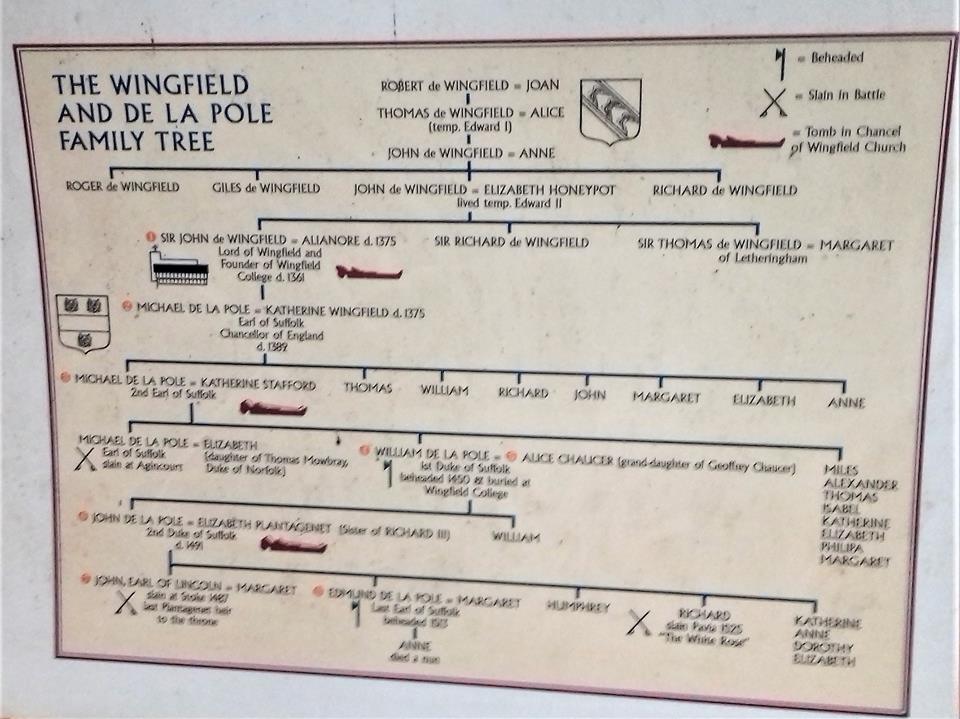
This Church tells the story of the de la Poles as they expanded from their mercantile origins in Hull and married an heiress of the Wingfield line. Monuments to three heads of the family and their spouses lie near the altar, which was moved further east as the church grew to accommodate the last of these tombs. Nearer to the door, a board (left) summarises the de la Pole genealogy as they experienced close association with the Black Prince, the wrath of Richard II, the vagaries of Henry V’s French expedition, sudden death aboard the Nicolas of the Tower, marriage to the sister of Edward IV and Richard III – and the reigns of the first two “Tudors”, the last confirmed family member dying in the Tower of London in 1538, although a mystery remains in France and in Italy. John de la Pole’s shield, replete with leopards, is among many in the church.
 By then the Brandons, descended through another Wingfield heiress, and their son-in-law Henry Grey had been assigned the Duchy of Suffolk but this tenure ended in 1553-4 as Grey backed his daughter’s claim to the throne and was attainted and executed.
Additionally, a tomb to Robert Leman DD (right) lies beneath the flagstones. This Georgian cleric may well be related to Sir John of Beccles, particularly as he seems to have enjoyed the living of Pakefield, which is also by the A12, further east.

 The New Murrey and Blue blog
Leave a comment