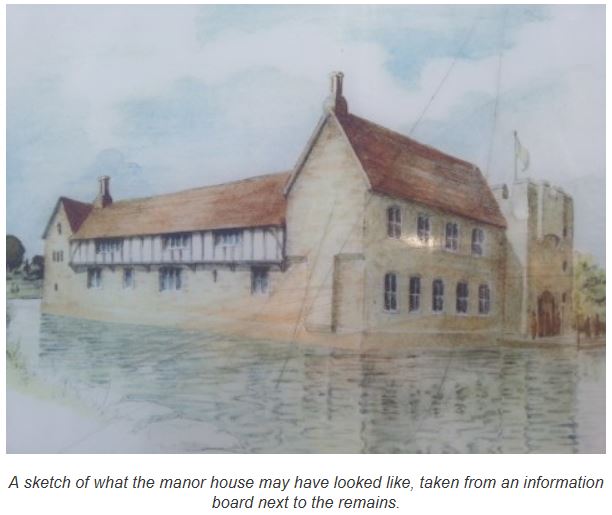
“King Edward III is remembered in history for starting the Hundred Years War, annexing large parts of France for England, as well as being the reigning king during the period of the Black Death. What he is infinitely less well-known for, is building a small royal residence at Rotherhithe in South East London, the remains of which can still be seen today.
“When the residence was constructed in around 1350, Rotherhithe was a small hamlet set in low lying marshland. The manor house itself was built upon a small island directly next to the River Thames and consisted of a range of stone buildings around a central courtyard.
“There was a moat on three sides of the complex, with the north side being completely open to the River Thames. This allowed the king to arrive by boat and at high tide to moor up against the steps that led from the river to a gatehouse located in a tower. There was also a hall with a large and imposing fireplace, the king’s private chambers, kitchens and other buildings. Further south, on drier land, was an outer court with other buildings surrounded by an earth bank.”
Taken from http://www.historic-uk.com/HistoryMagazine/DestinationsUK/Edward-IIIs-Manor-House-Rotherhithe/ where more can be learned of this manor house.
 The New Murrey and Blue blog
Leave a comment